Problem Statement
Palmetto offers end‑to‑end solar services, but their original customer app was fragmented, unreliable, and abandoned by users. I was brought in as a Principal‑level product and systems designer to redefine the role of the app within Palmetto’s broader service ecosystem, align it with business growth goals, and deliver a MVP in four months.
Palmetto offers end‑to‑end solar services, but their original customer app was fragmented, unreliable, and abandoned by users. I was brought in as a Principal‑level product and systems designer to redefine the role of the app within Palmetto’s broader service ecosystem, align it with business growth goals, and deliver a MVP in four months.
Role
Lead Product Designer – Systems & Service Design
Lead Product Designer – Systems & Service Design
I was accountable for redefining the product vision, design strategy, and execution for Palmetto’s consumer app, reporting to the Product VP and Product Owner. Operating at Staff/Principal level, my UX strategy covered how the app fit into Palmetto’s end‑to‑end service model, data infrastructure, and operational workflows.
Methods
Competitor landscape, research, design audit, service design, customer journey, user story, user flow, desktop/mobile mock up, information architecture, redesign, branding, data visualization, gamification, user interface, and design system.
Duration
6‑month+ engagement, from product framing through MVP launch and handoff to internal teams.
Competitor landscape, research, design audit, service design, customer journey, user story, user flow, desktop/mobile mock up, information architecture, redesign, branding, data visualization, gamification, user interface, and design system.
Duration
6‑month+ engagement, from product framing through MVP launch and handoff to internal teams.
Expertise
• Product & systems strategy: defined the role of the app in Palmetto’s end‑to‑end service model and growth plan.
• Service and experience design: mapped customer journeys and designed new programs that connected installation, support, and ongoing engagement through the app.
• Interaction and visualization model: established how energy production, consumption, and alerts would be represented and interacted with across devices.
• Design system: created reusable components and patterns for Palmetto’s internal teams to extend the product after launch.
• Product & systems strategy: defined the role of the app in Palmetto’s end‑to‑end service model and growth plan.
• Service and experience design: mapped customer journeys and designed new programs that connected installation, support, and ongoing engagement through the app.
• Interaction and visualization model: established how energy production, consumption, and alerts would be represented and interacted with across devices.
• Design system: created reusable components and patterns for Palmetto’s internal teams to extend the product after launch.
Broken Web and Mobile App (aka Palmetto Home)
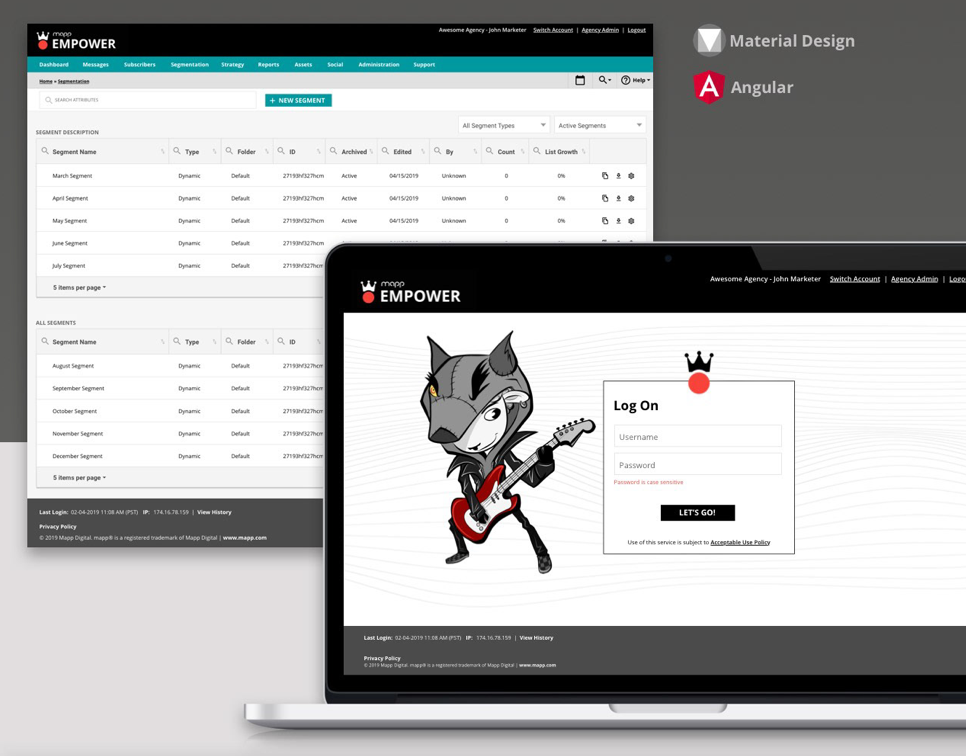
The original Palmetto Home app had low engagement, inconsistent data, and no clear ownership within the organization. Customers were receiving critical solar and billing information via disconnected channels (email, phone, web), which increased support costs and eroded trust.
The original Palmetto Home app had low engagement, inconsistent data, and no clear ownership within the organization. Customers were receiving critical solar and billing information via disconnected channels (email, phone, web), which increased support costs and eroded trust.
Systems Audit
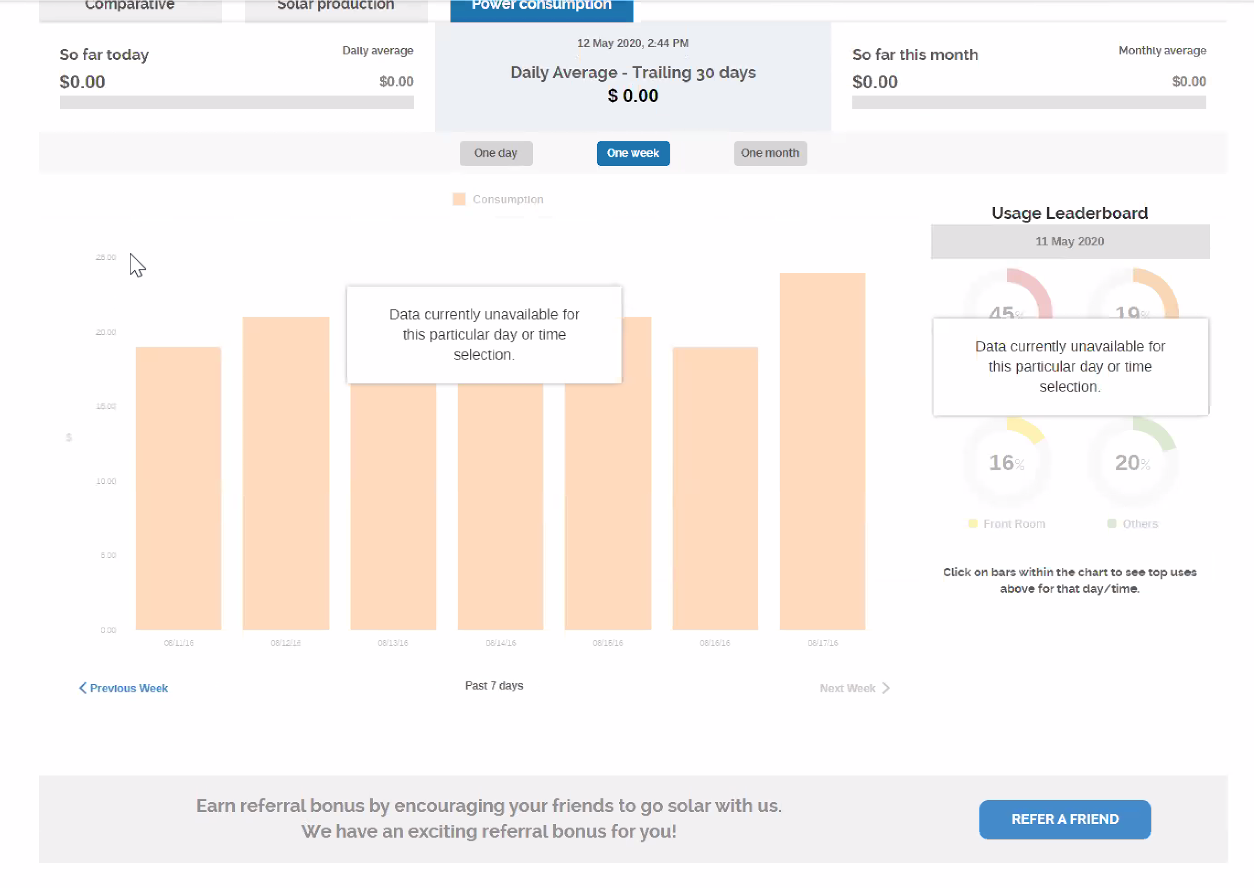
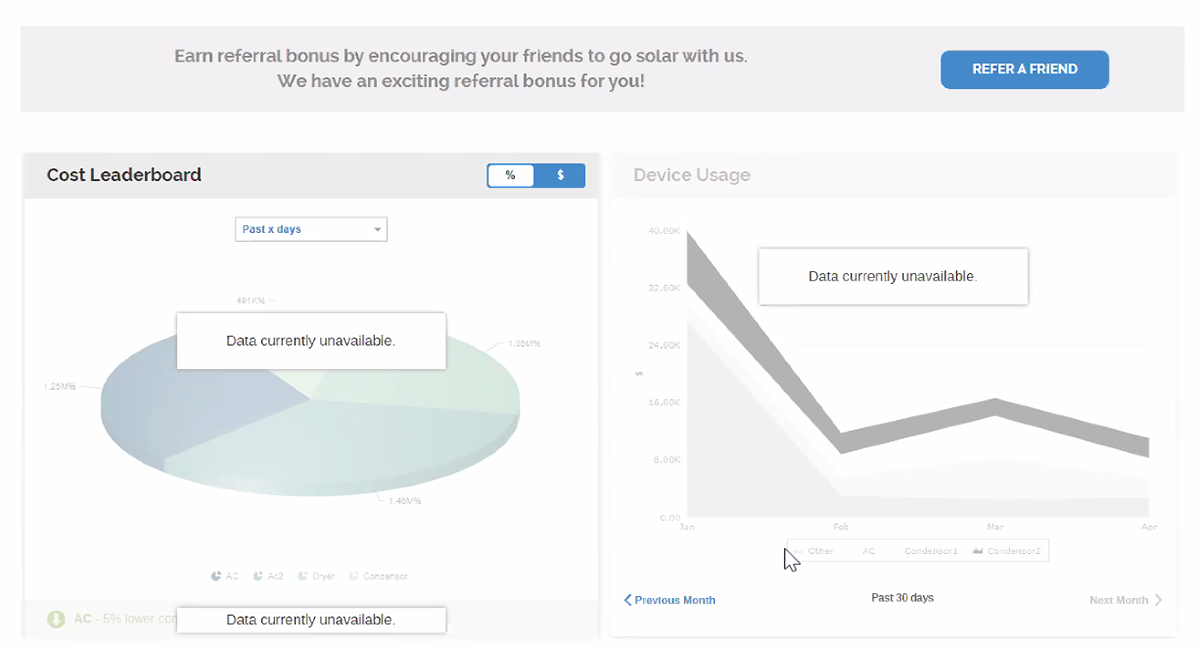
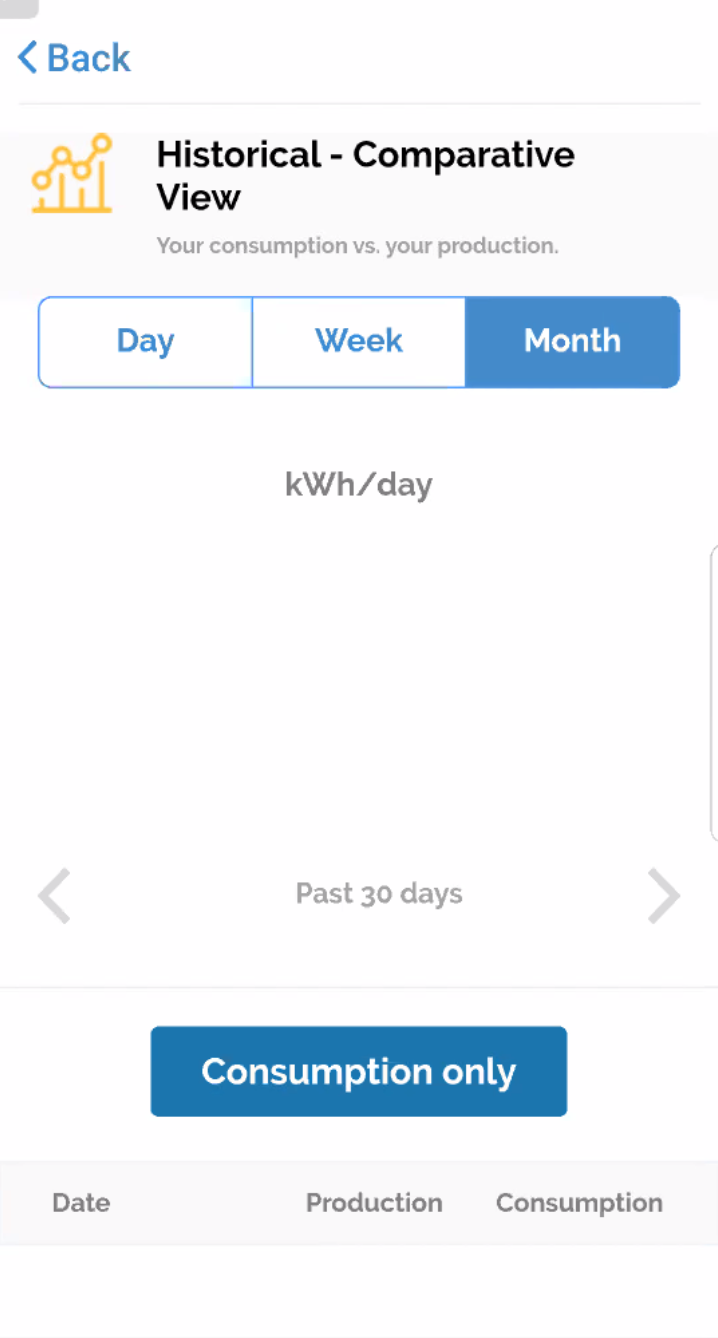
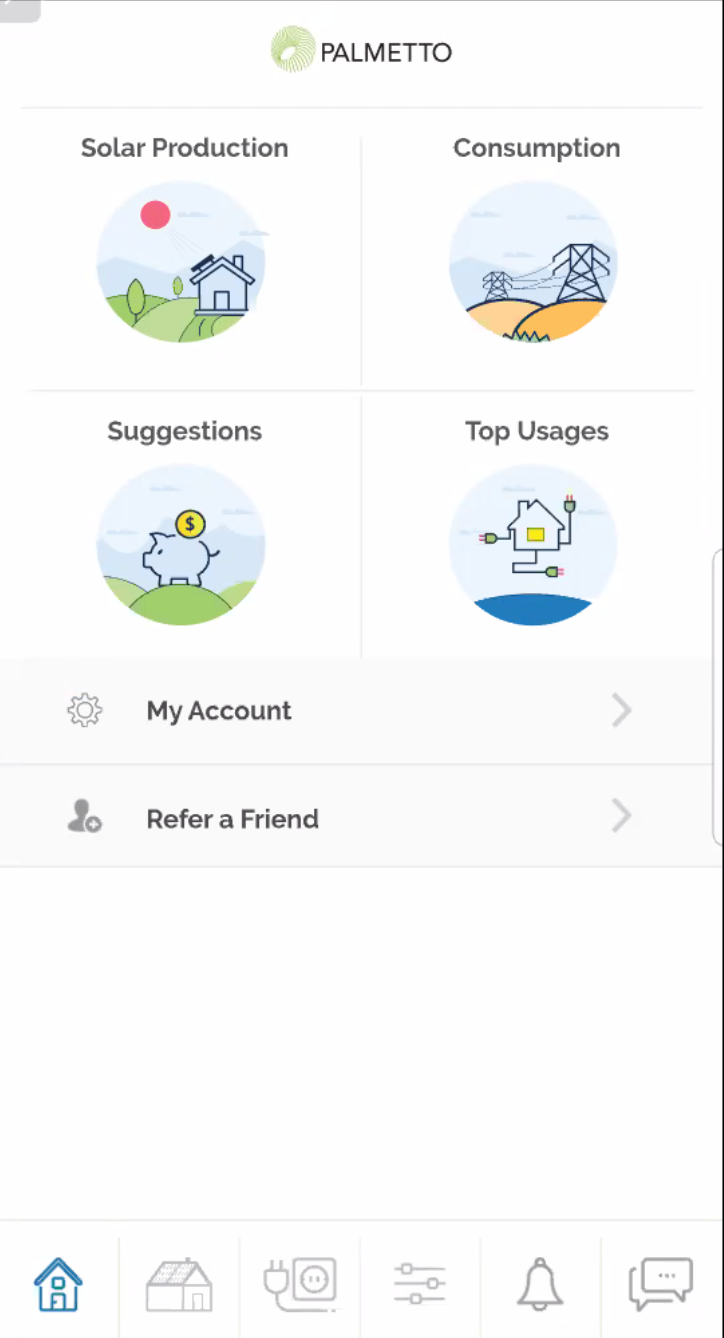
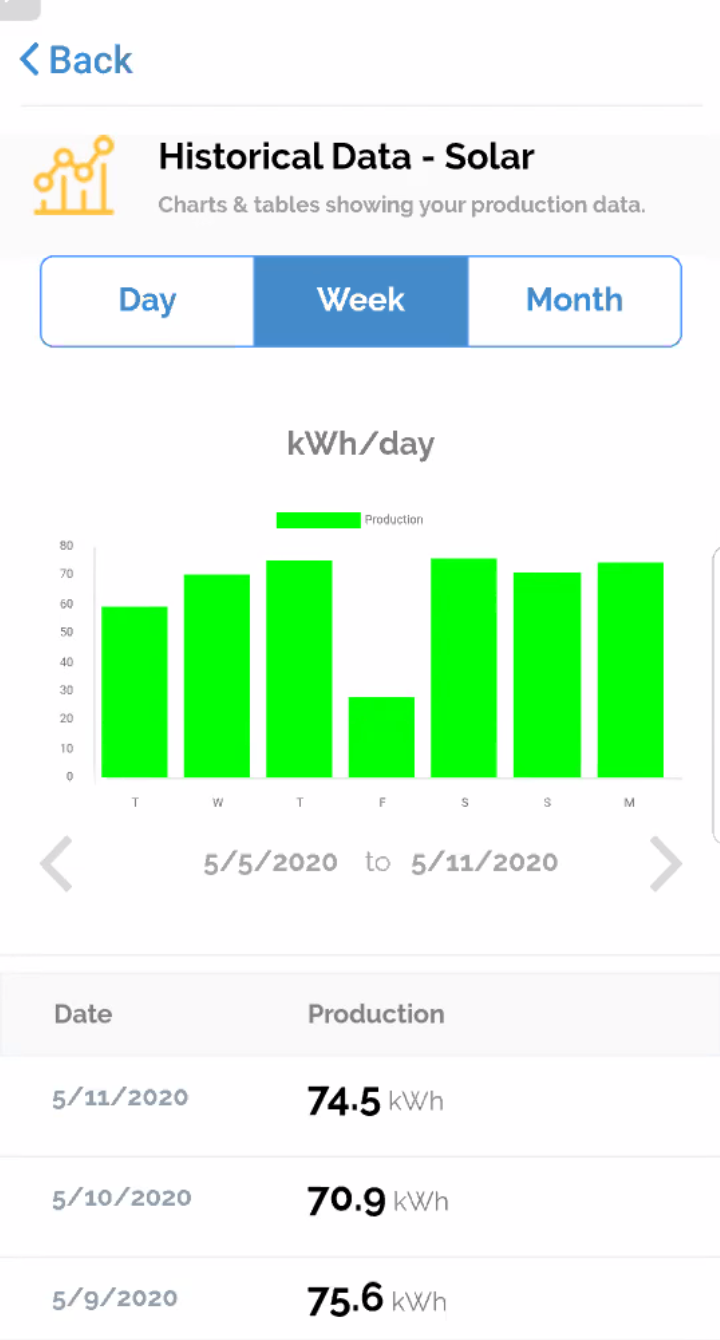
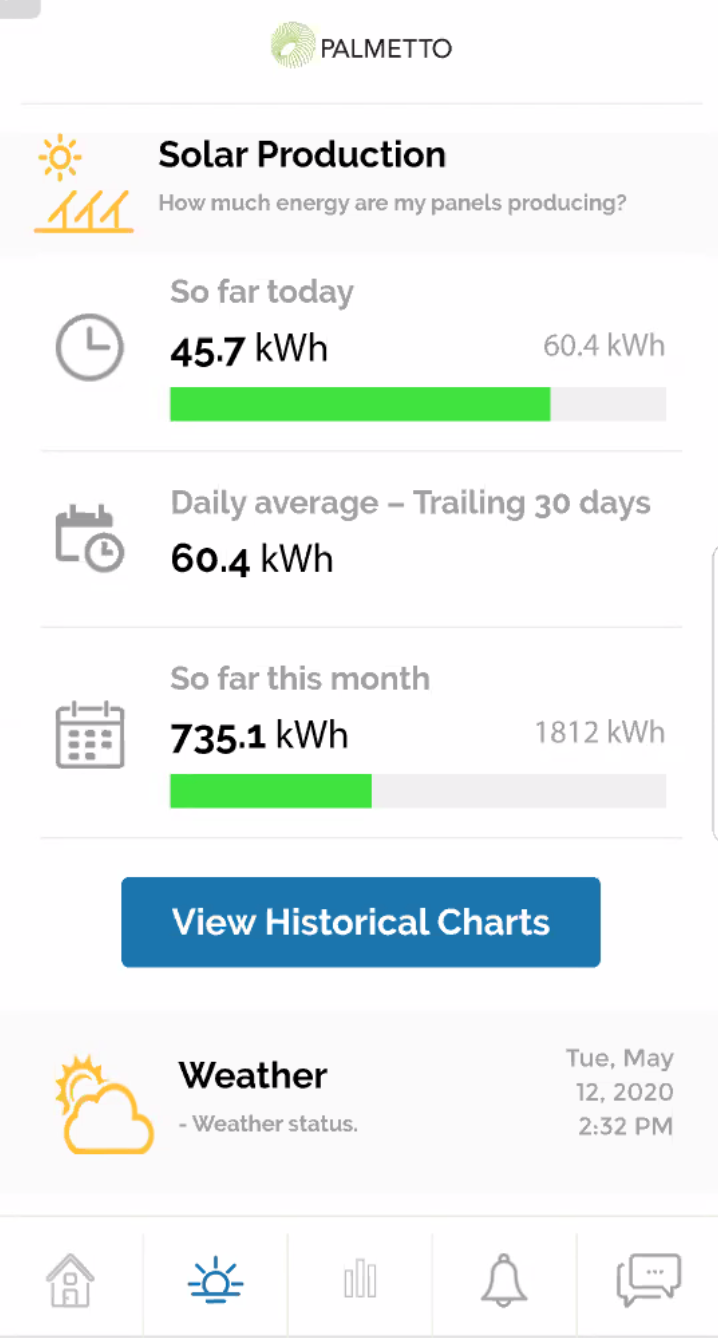
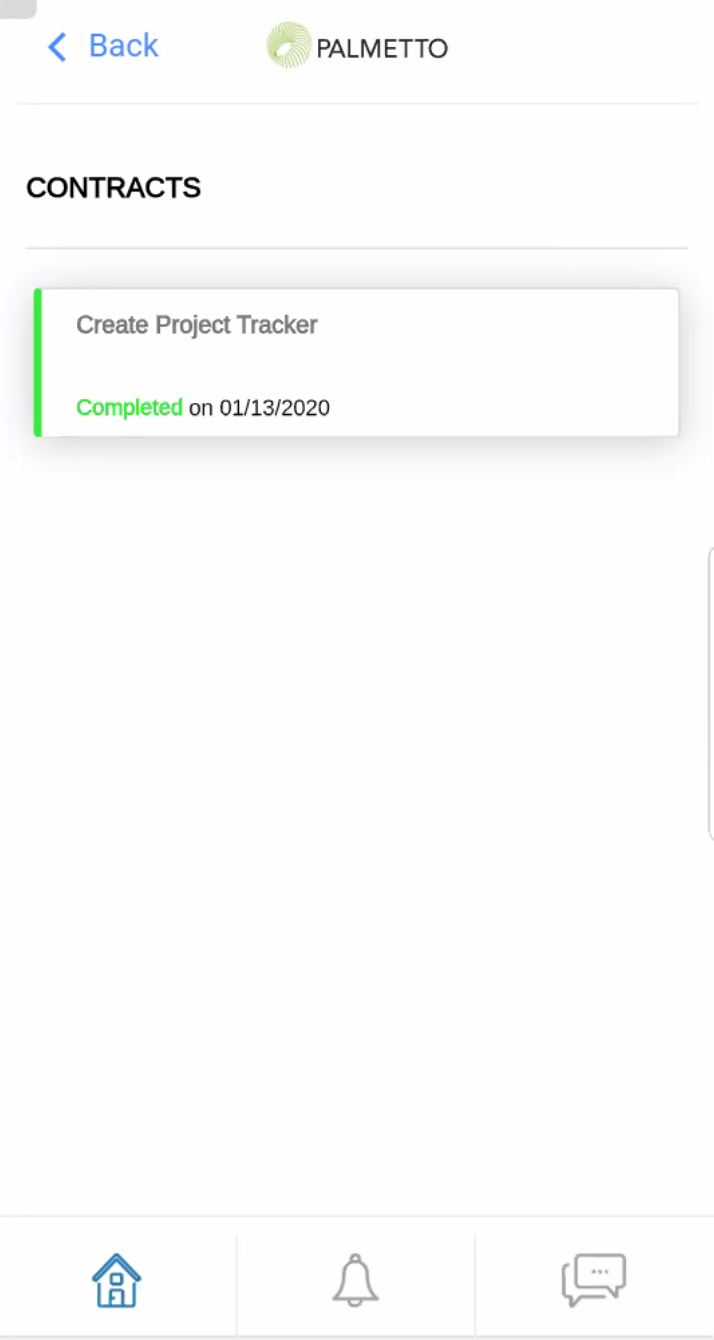
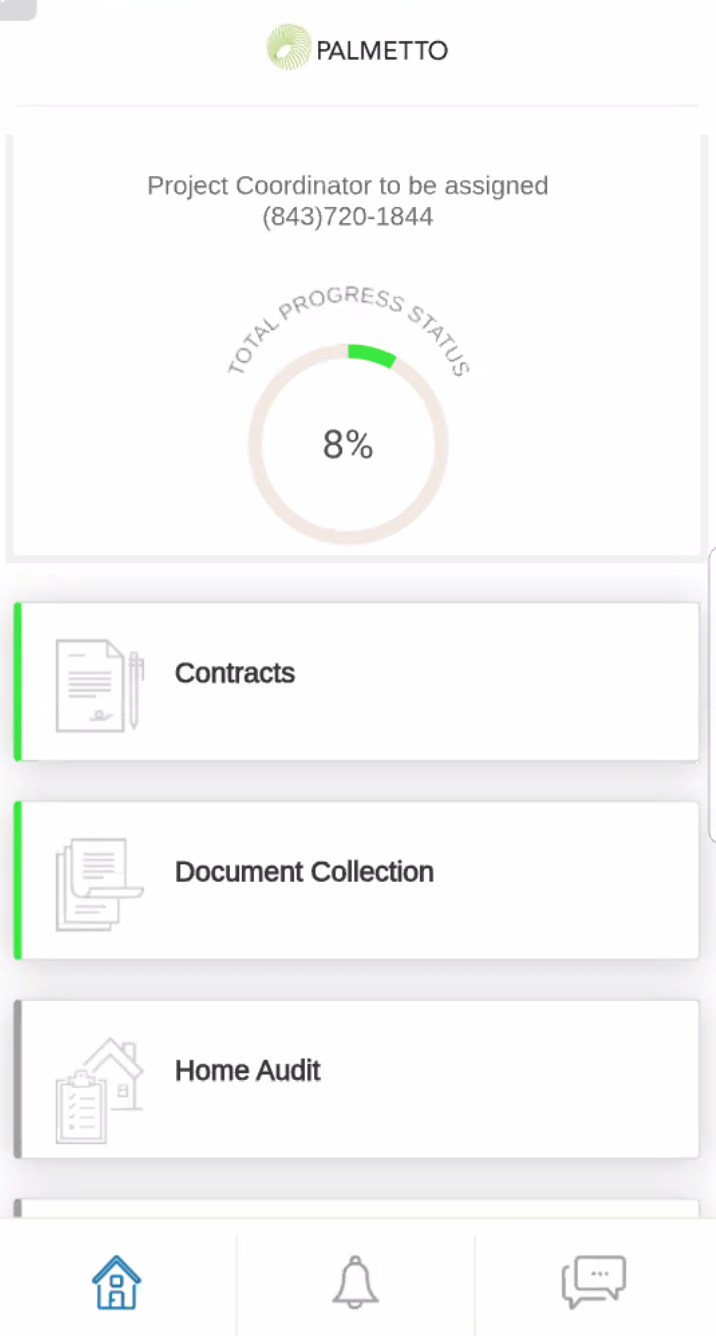
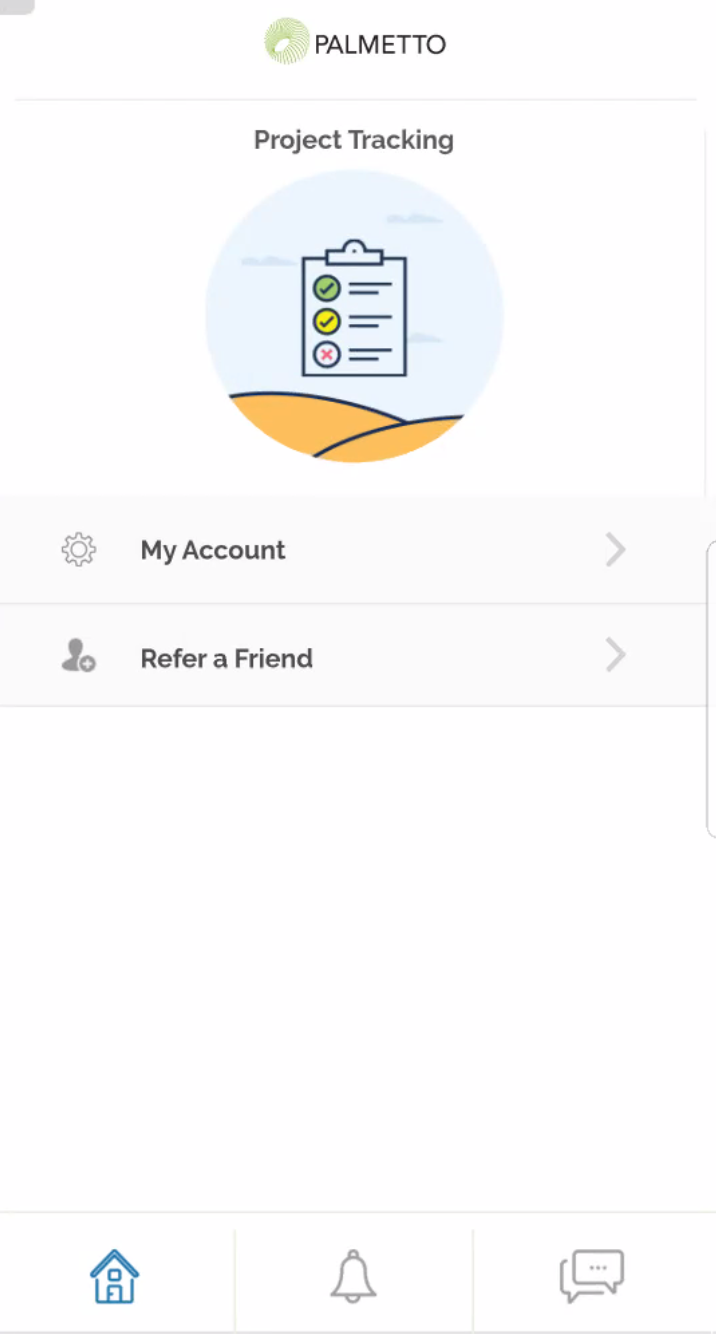
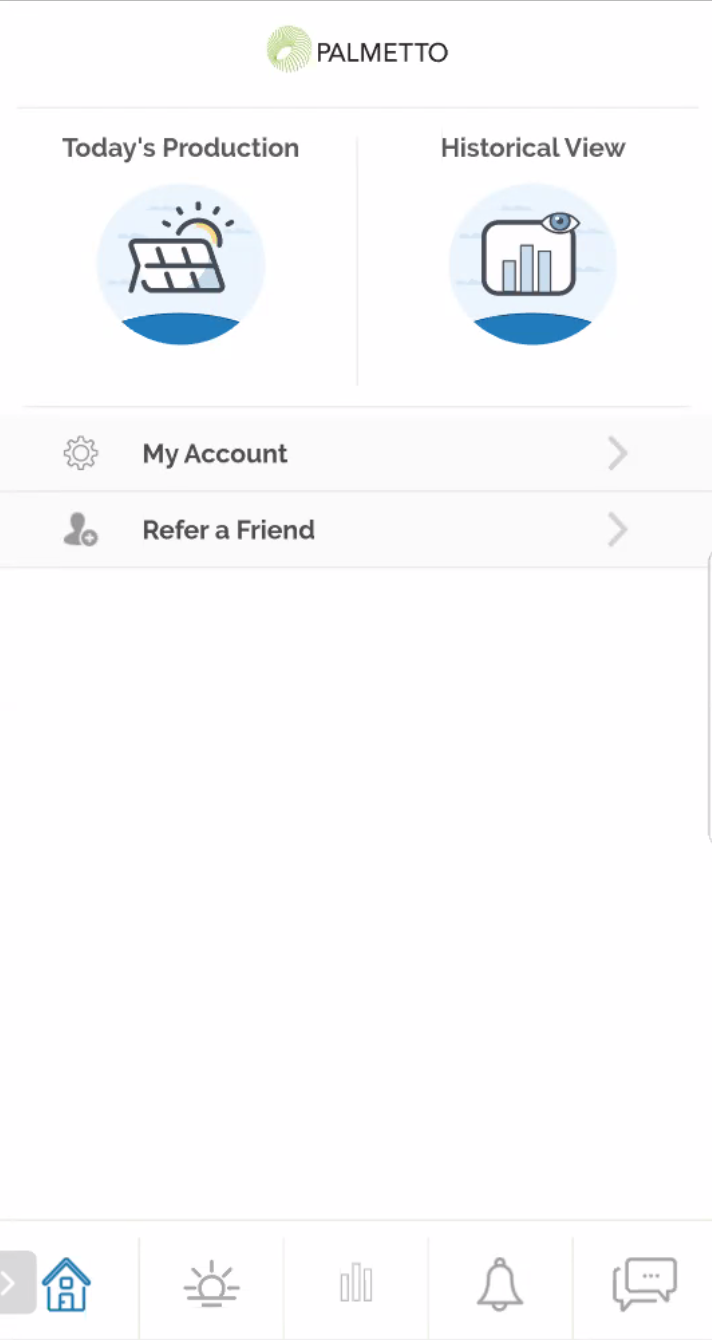
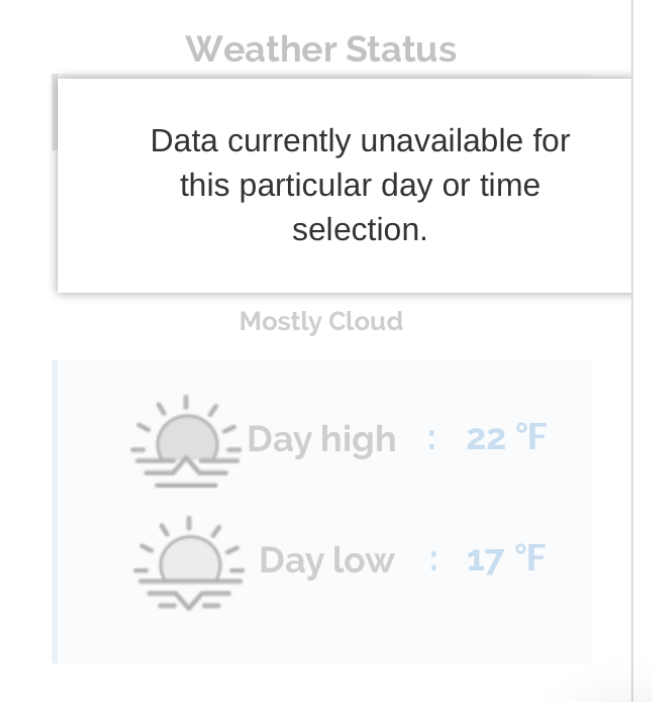
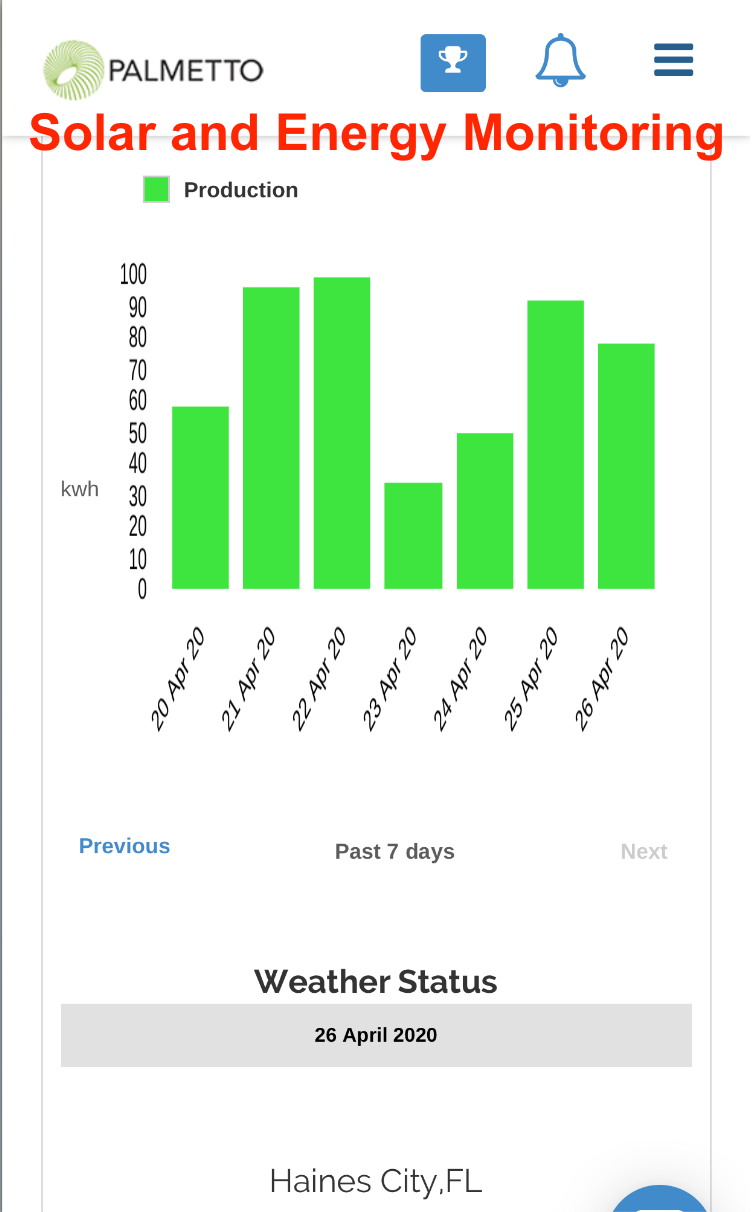
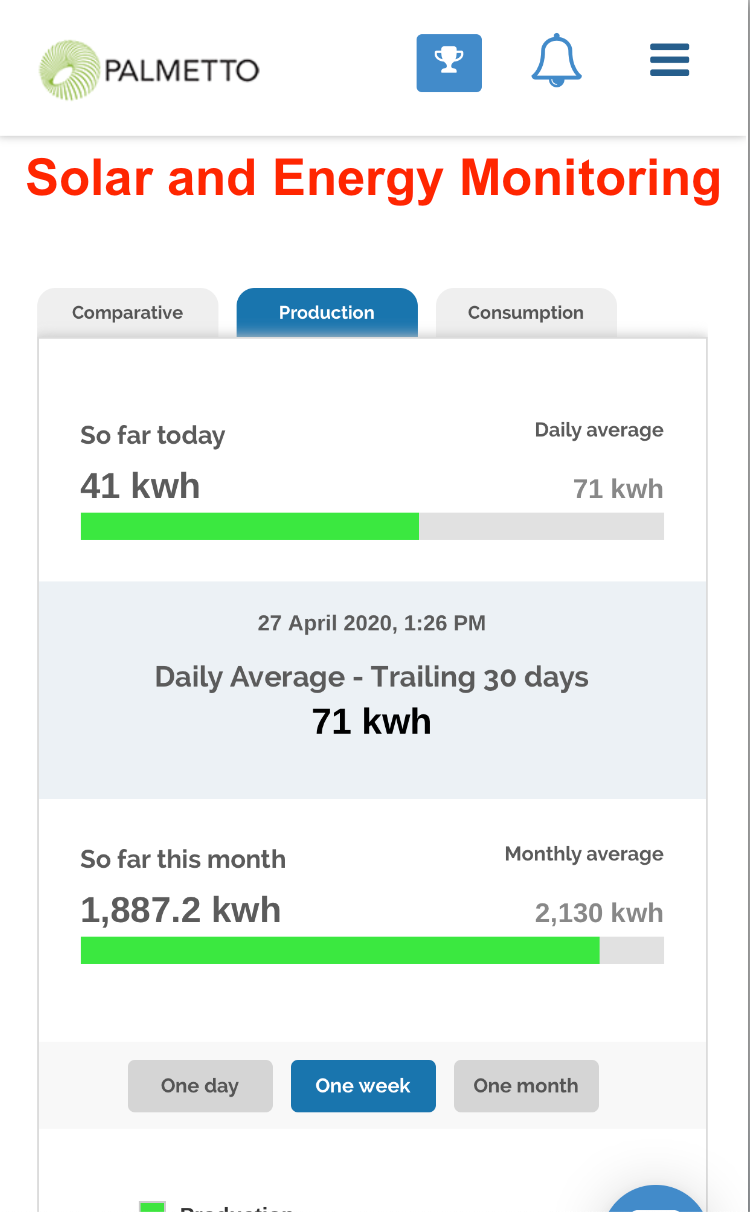
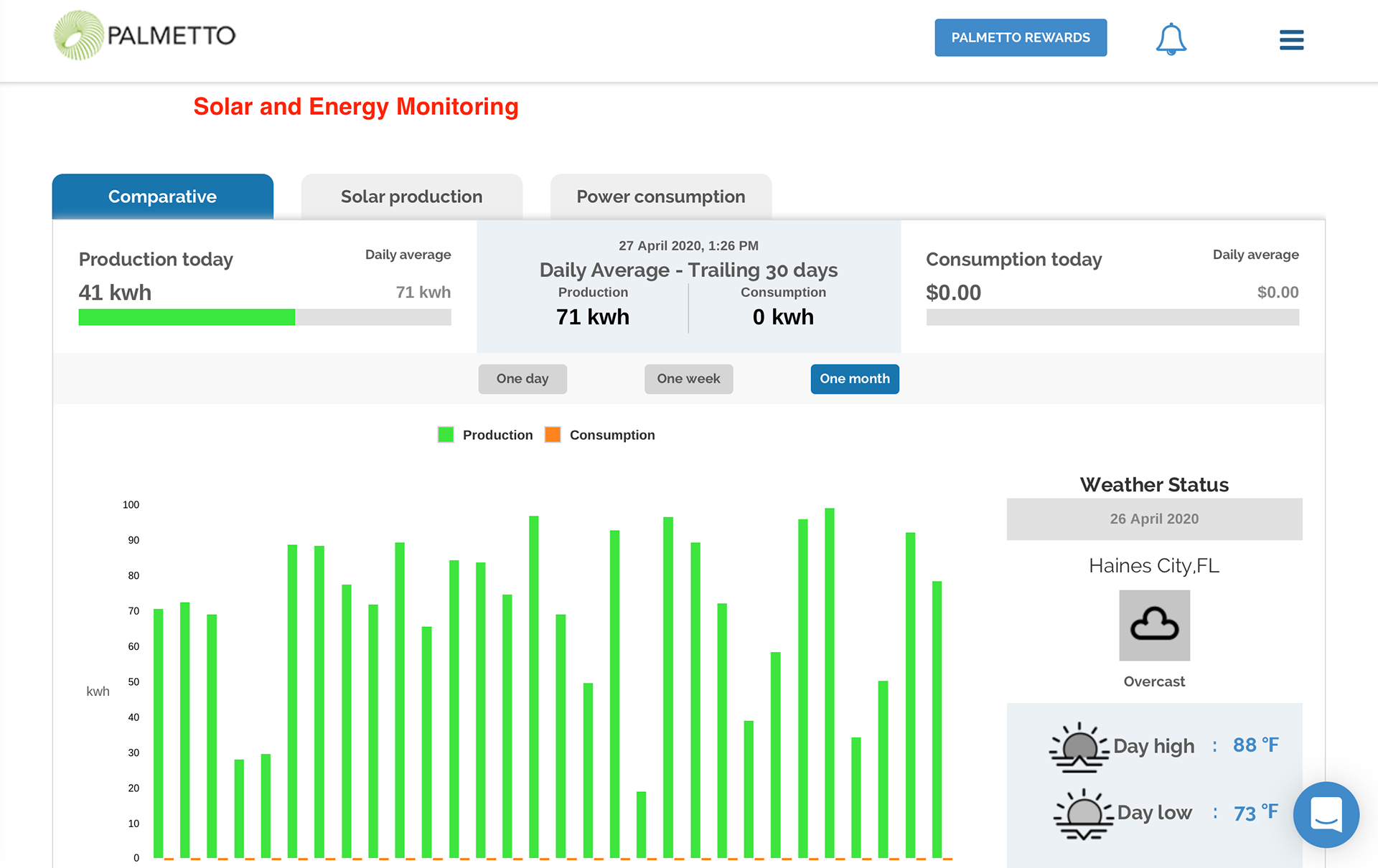
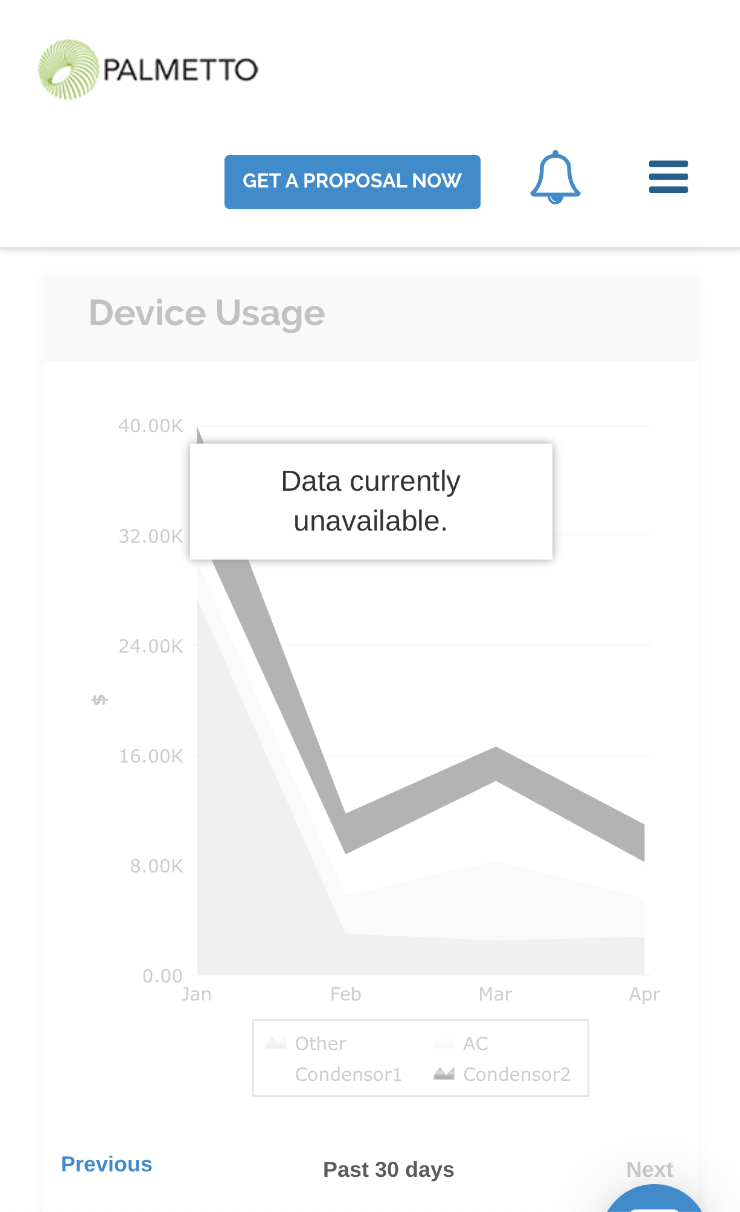
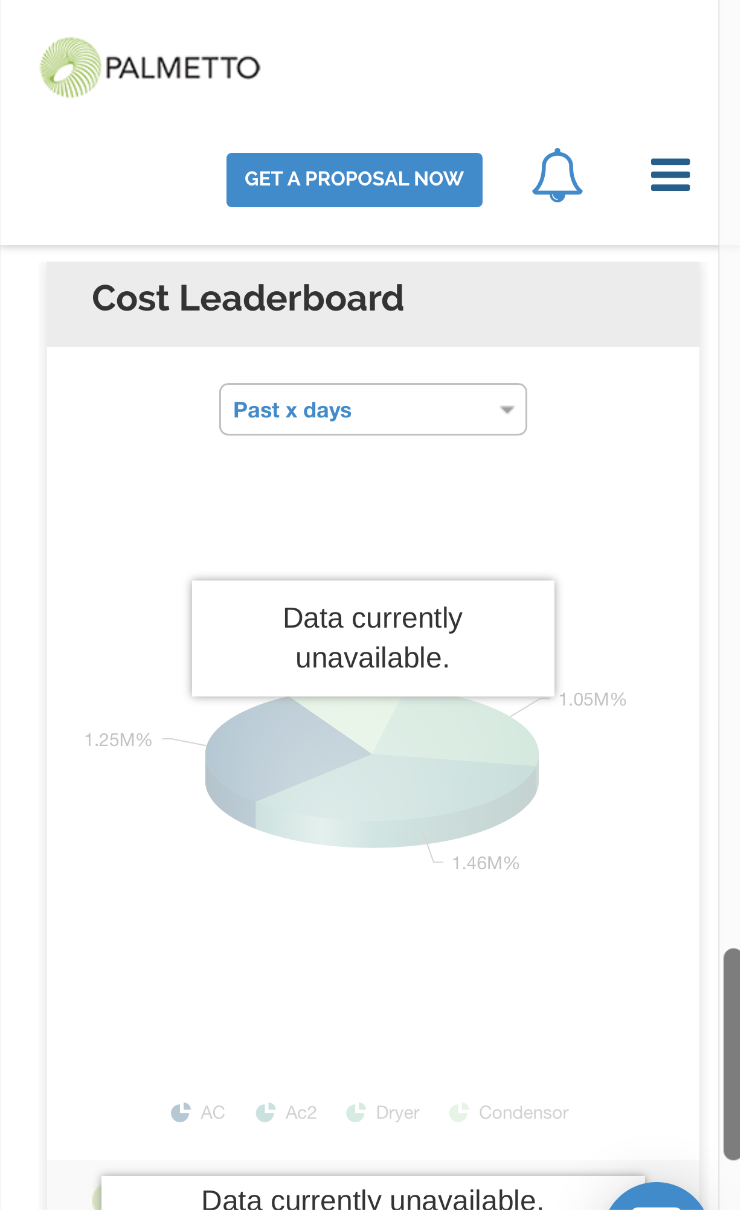
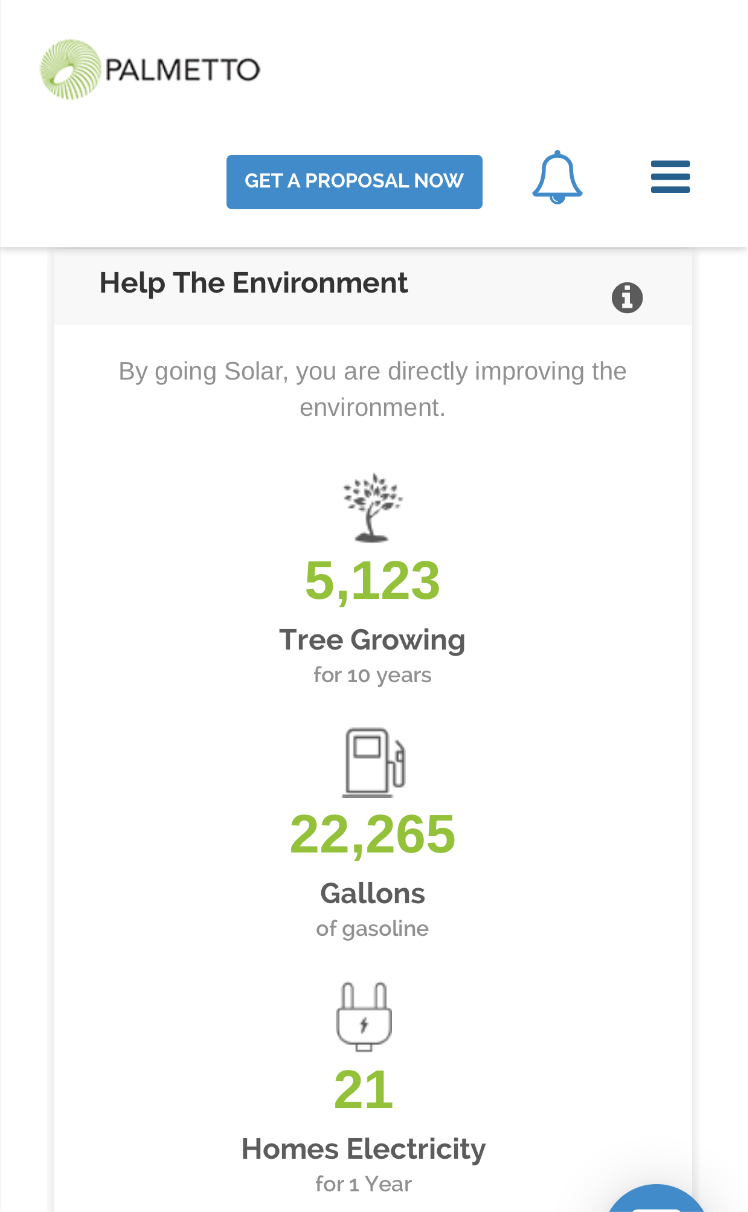
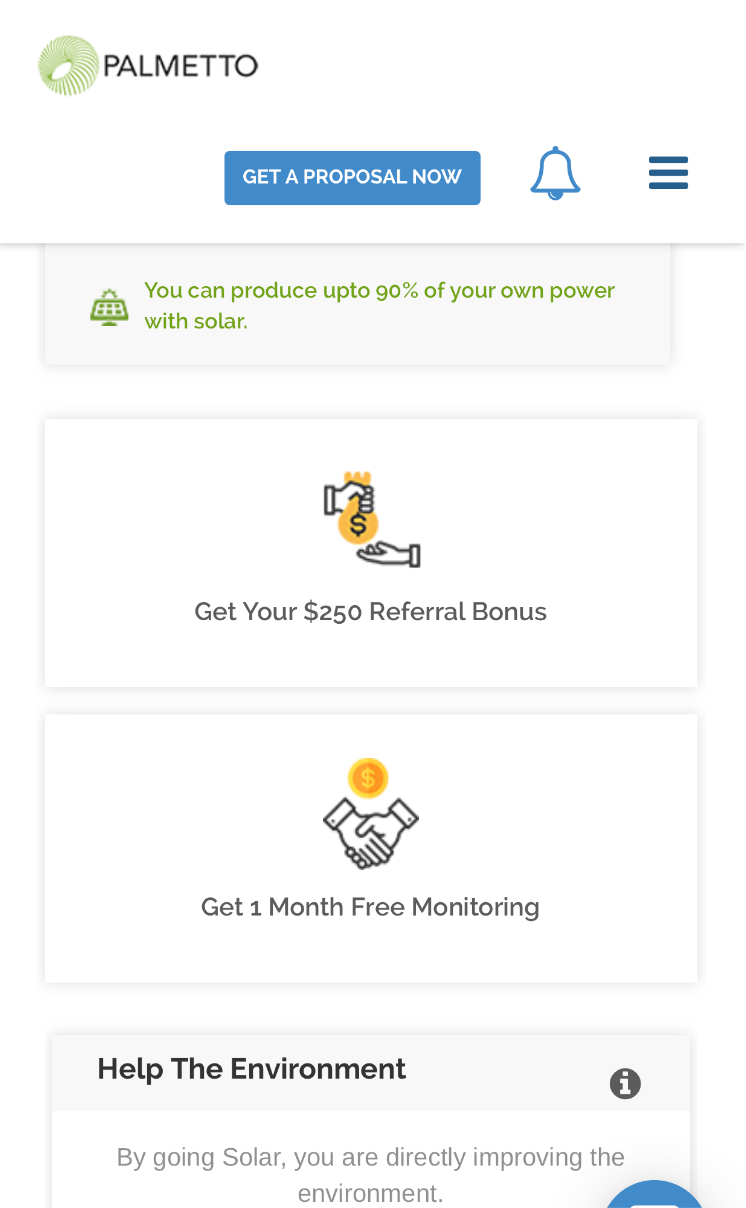
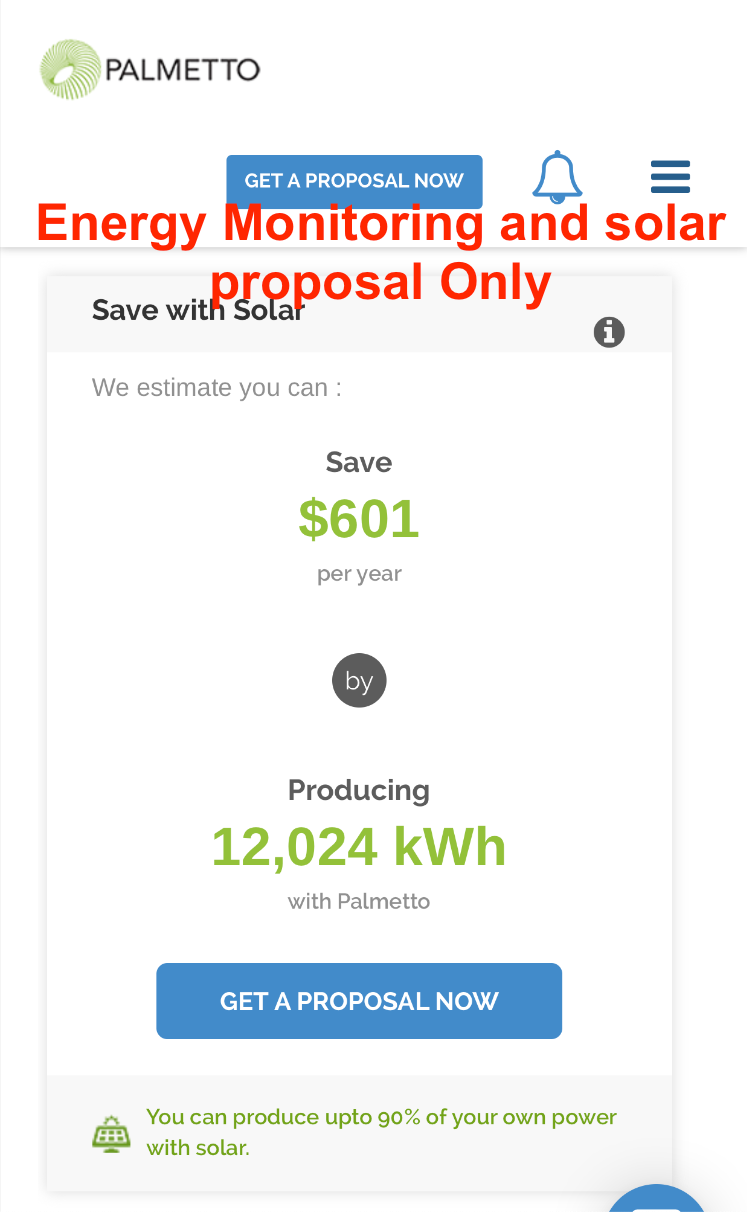
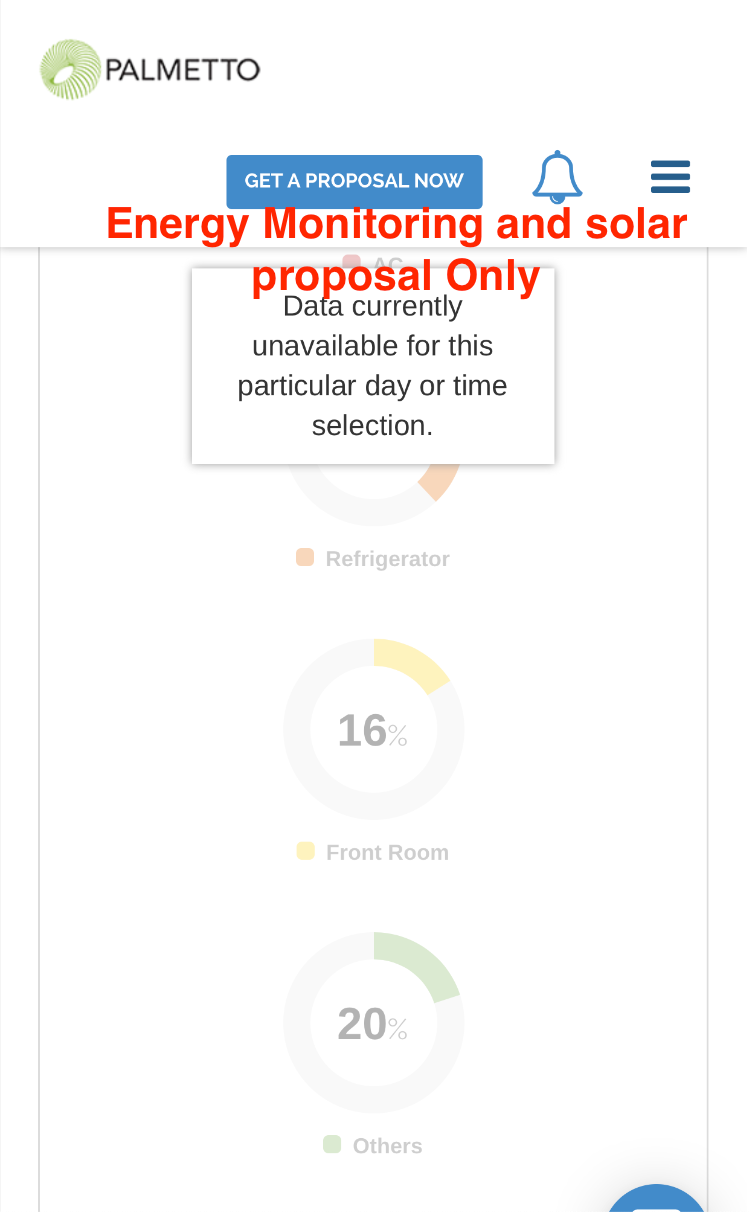
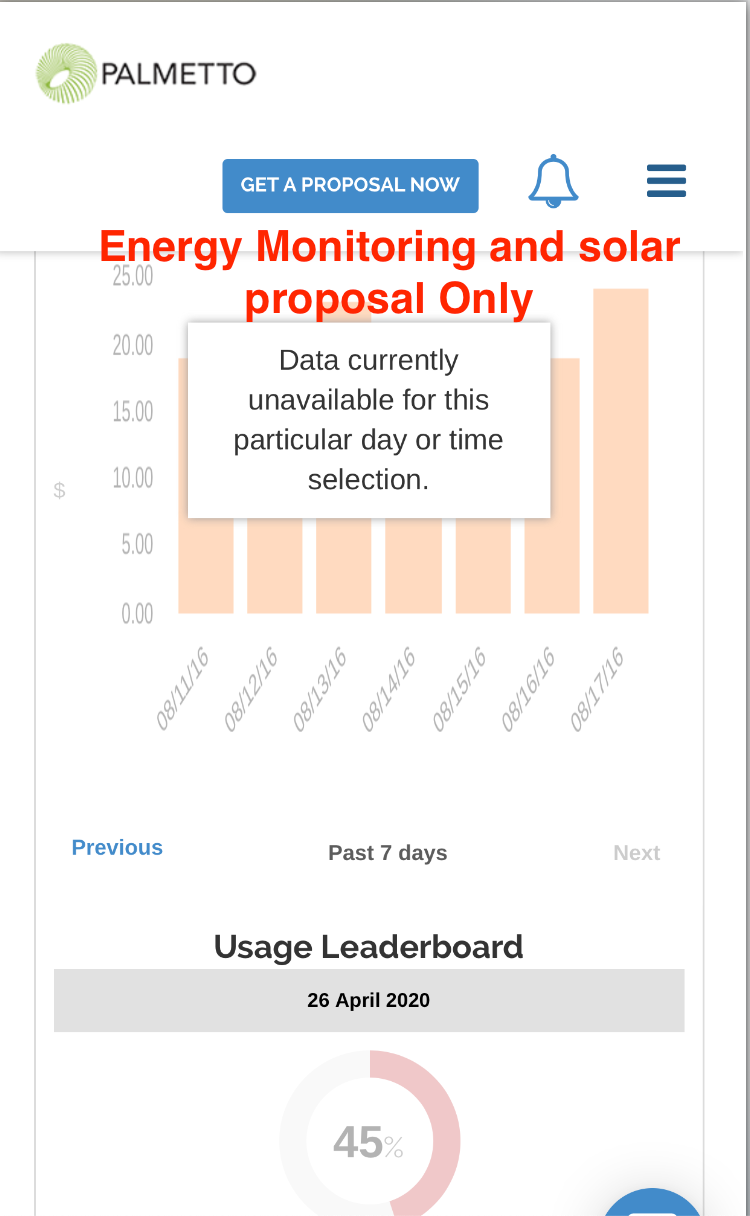
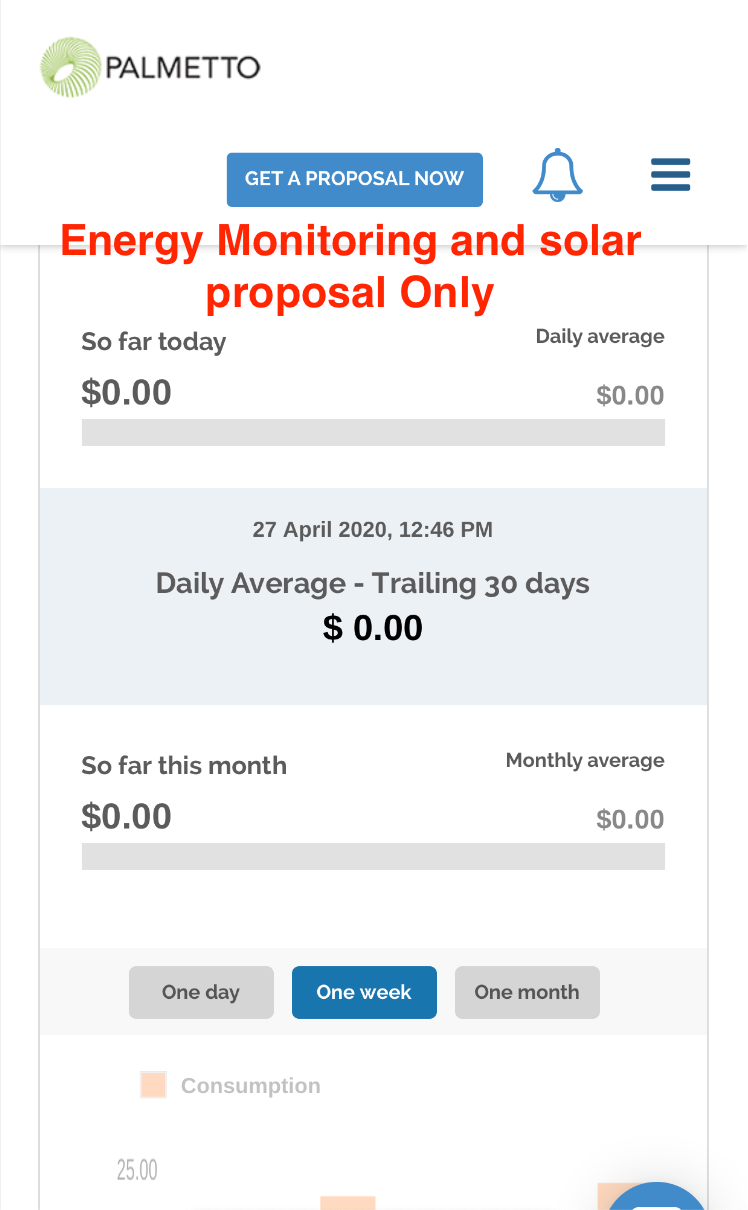
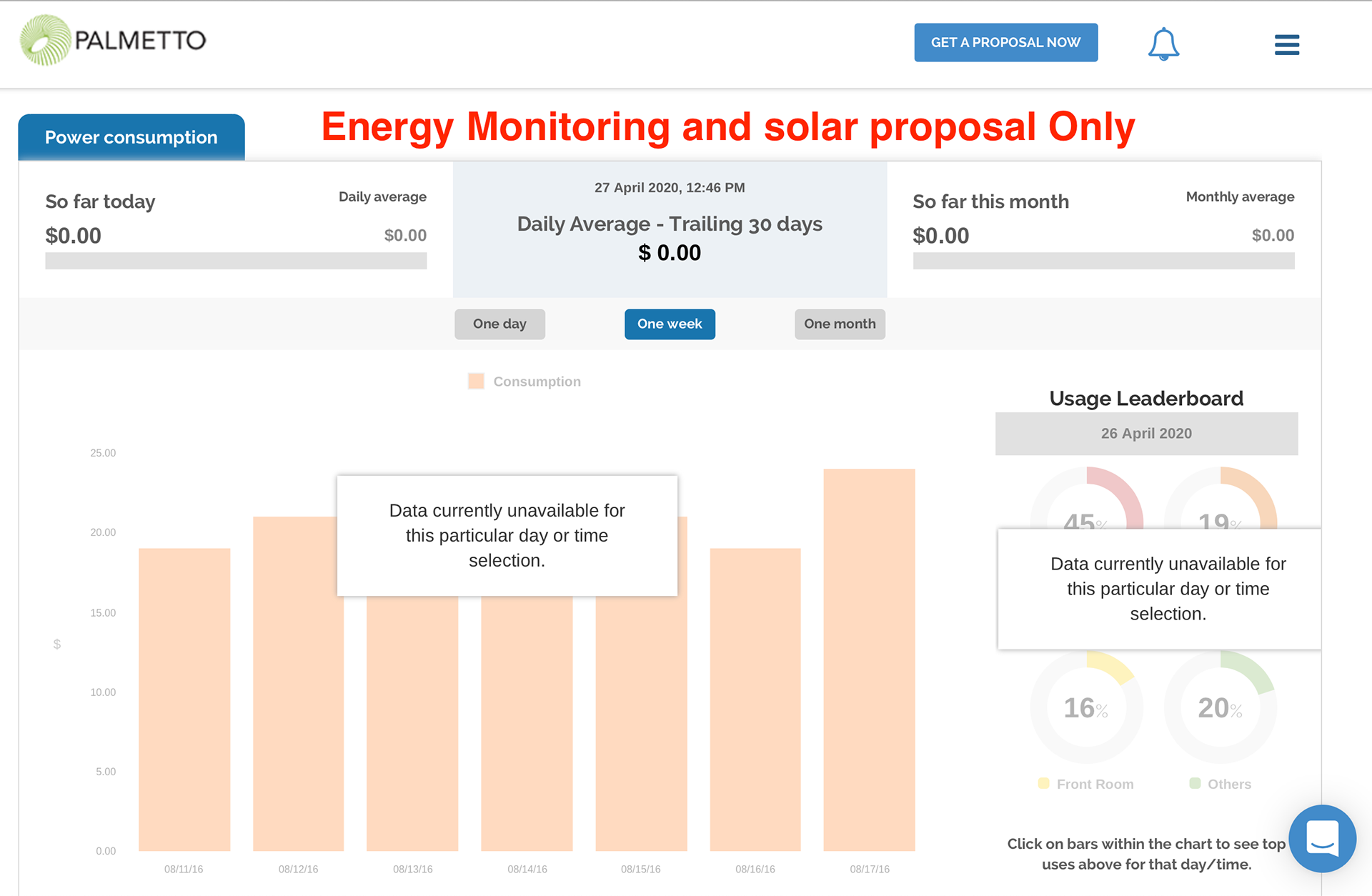
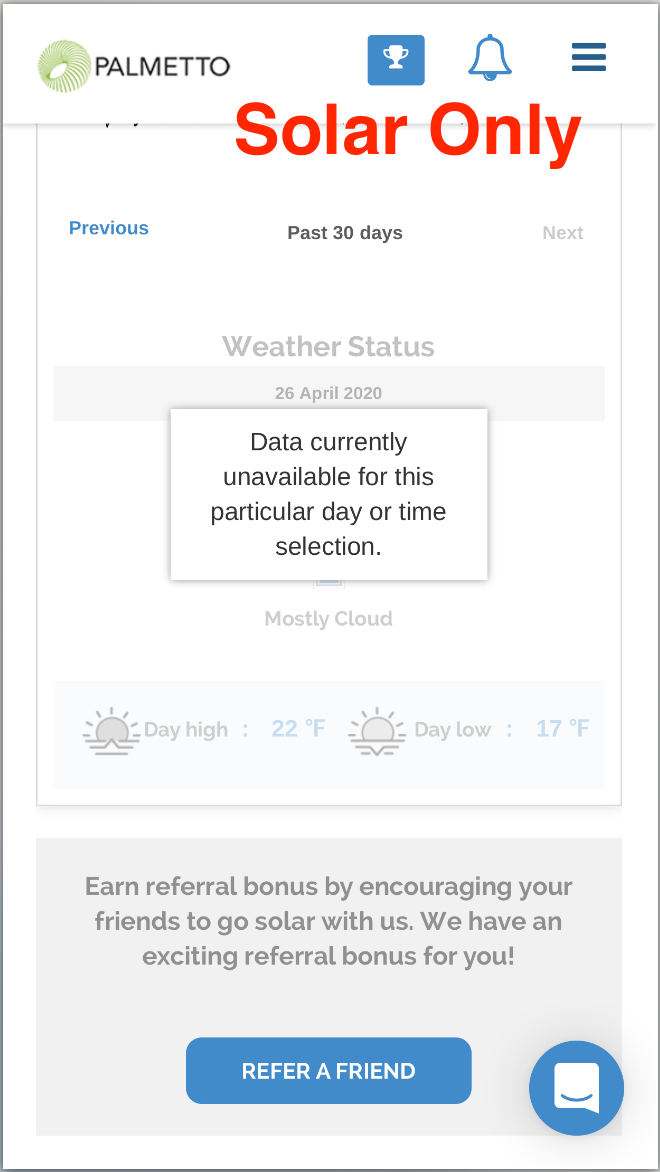
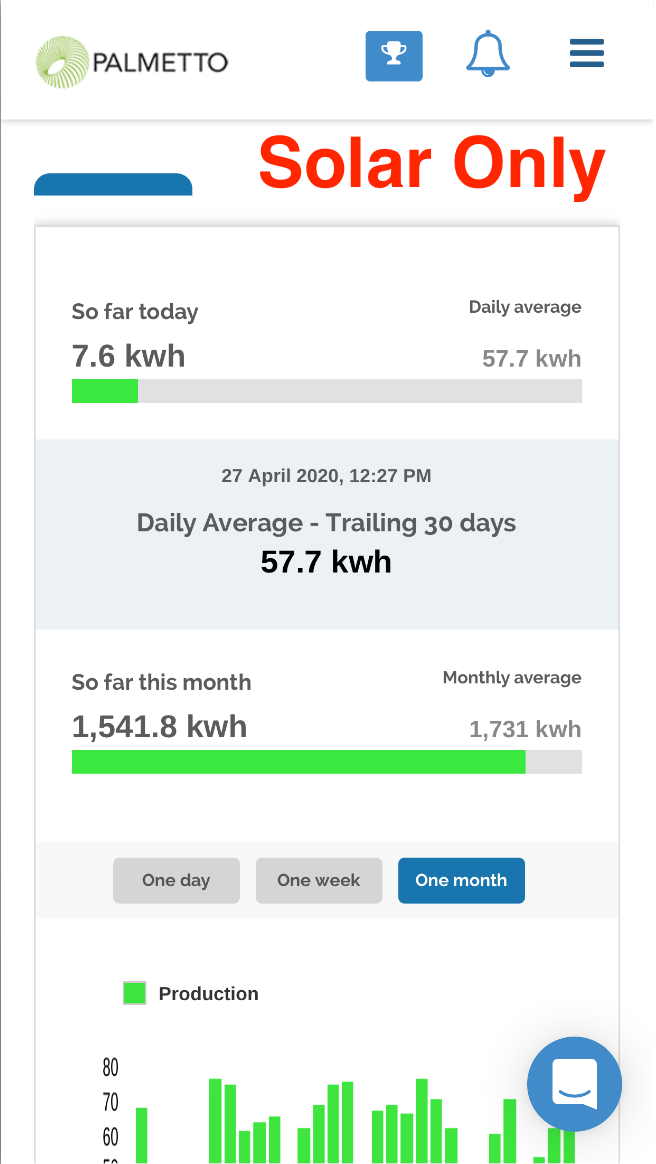
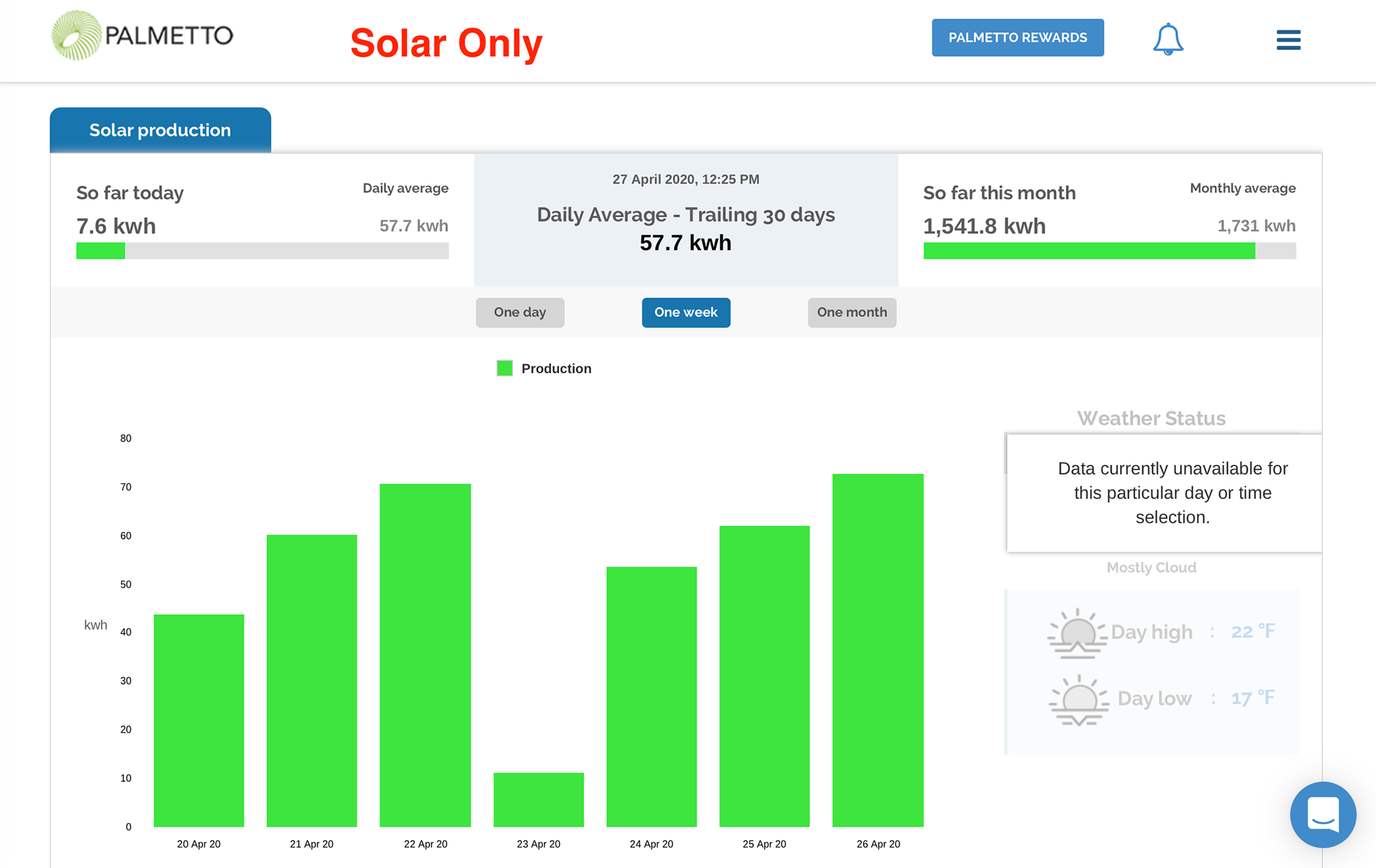
I started by auditing the existing web and mobile app, CRM flows, and operational processes around installation, monitoring, and support. This included:
I started by auditing the existing web and mobile app, CRM flows, and operational processes around installation, monitoring, and support. This included:
• Mapping the current-state customer journey from sales to post‑installation support.
• Diagramming how production and consumption data moved across internal tools and into customer‑facing surfaces.
• Identifying duplicated experiences, dead‑end flows, and failure points where customers dropped out or contacted support.
• Diagramming how production and consumption data moved across internal tools and into customer‑facing surfaces.
• Identifying duplicated experiences, dead‑end flows, and failure points where customers dropped out or contacted support.
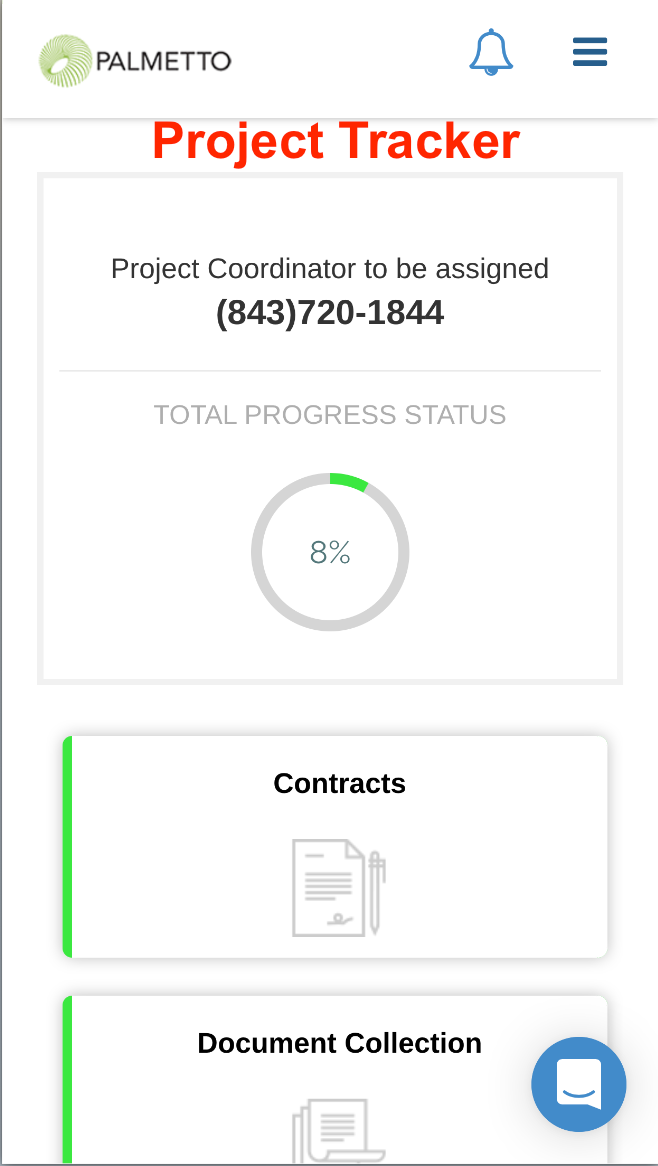
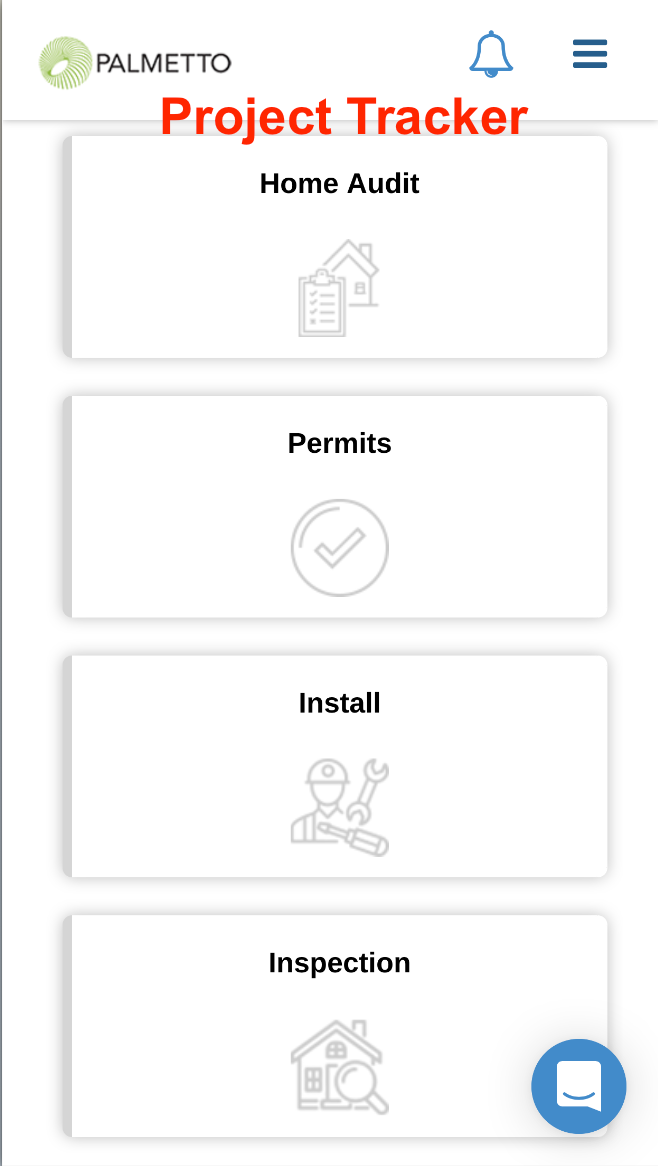
Outcome
The audit produced a single shared view of the system that aligned product, engineering, and operations on where the app needed to sit in the overall ecosystem.
The audit produced a single shared view of the system that aligned product, engineering, and operations on where the app needed to sit in the overall ecosystem.
Product vision
Within one year, the Palmetto App would evolve from a passive data viewer into the primary hub for managing home energy: real‑time solar production, household consumption, weather‑based alerts, and appliance‑level efficiency insights. This required not just new screens, but a redefinition of how data was collected, modeled, and surfaced to customers and support teams.
Within one year, the Palmetto App would evolve from a passive data viewer into the primary hub for managing home energy: real‑time solar production, household consumption, weather‑based alerts, and appliance‑level efficiency insights. This required not just new screens, but a redefinition of how data was collected, modeled, and surfaced to customers and support teams.
Directives
• Centralization: consolidate energy‑related information and actions into one coherent experience, reducing fragmentation across web, email, and phone.
• Transparency: expose data and system status in ways that reduce support calls and increase customer confidence in their investment.
• Expandability: design an architecture and design system that could absorb new services (storage, EV charging, efficiency programs) without rework.
• Centralization: consolidate energy‑related information and actions into one coherent experience, reducing fragmentation across web, email, and phone.
• Transparency: expose data and system status in ways that reduce support calls and increase customer confidence in their investment.
• Expandability: design an architecture and design system that could absorb new services (storage, EV charging, efficiency programs) without rework.
PRD Development
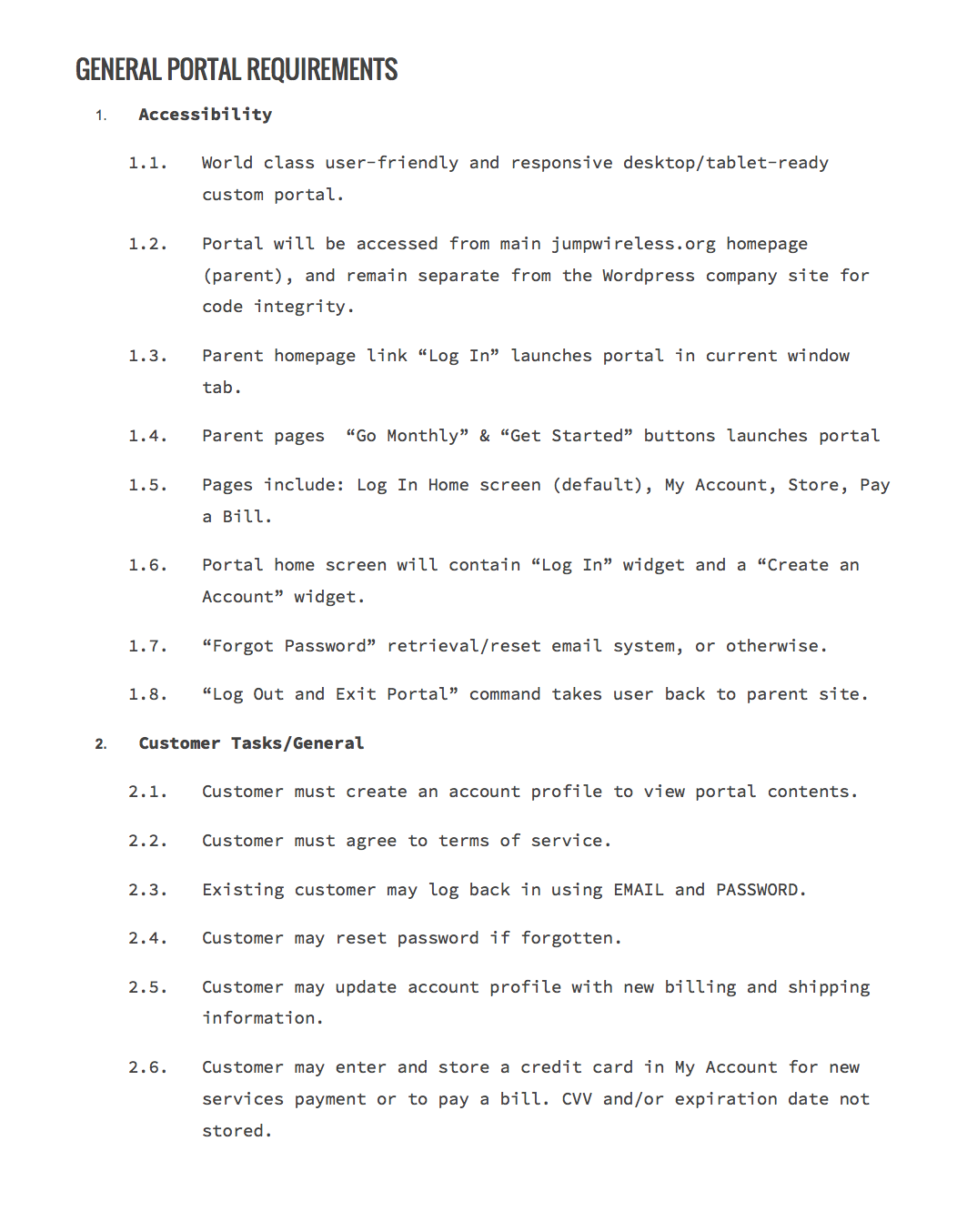
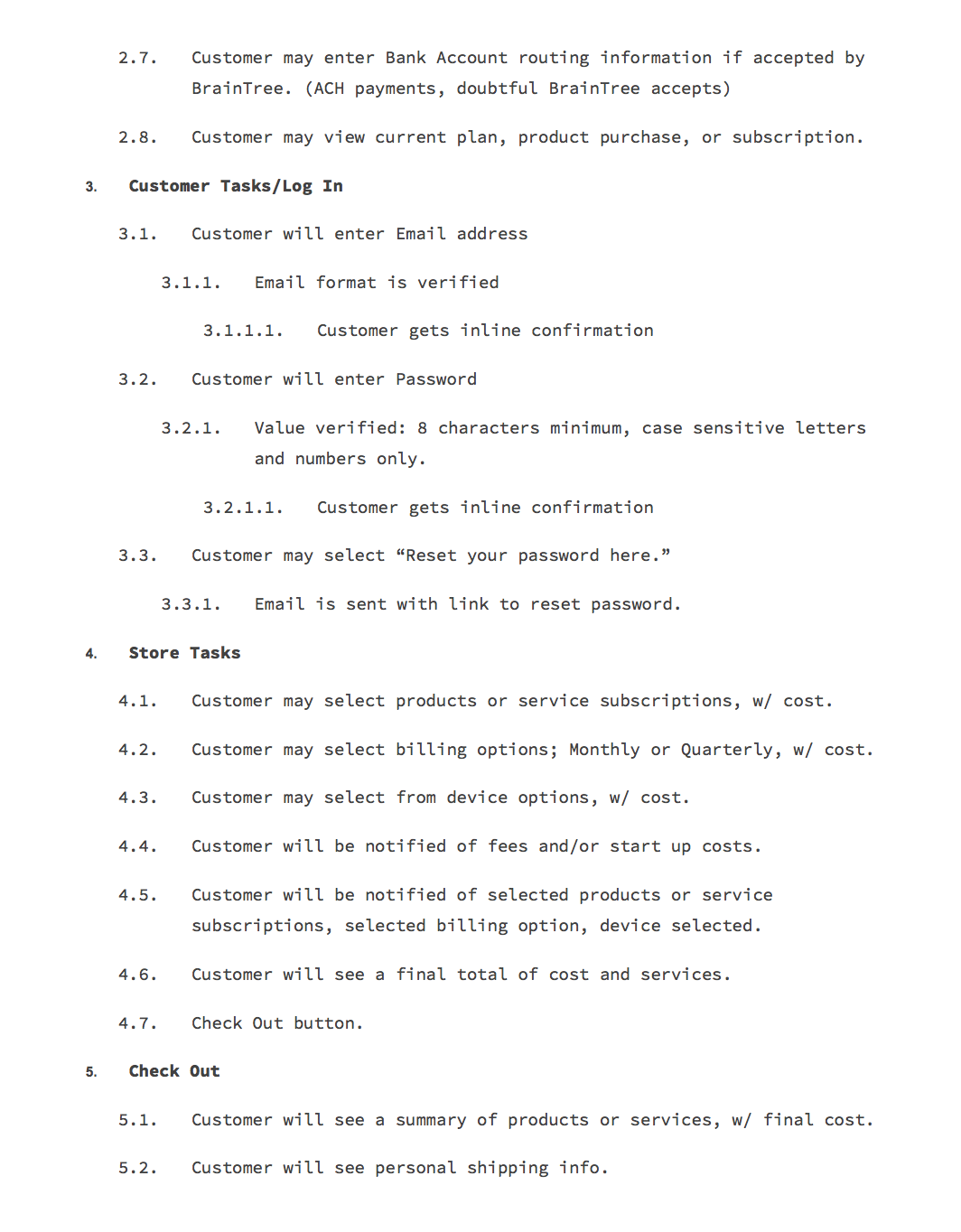
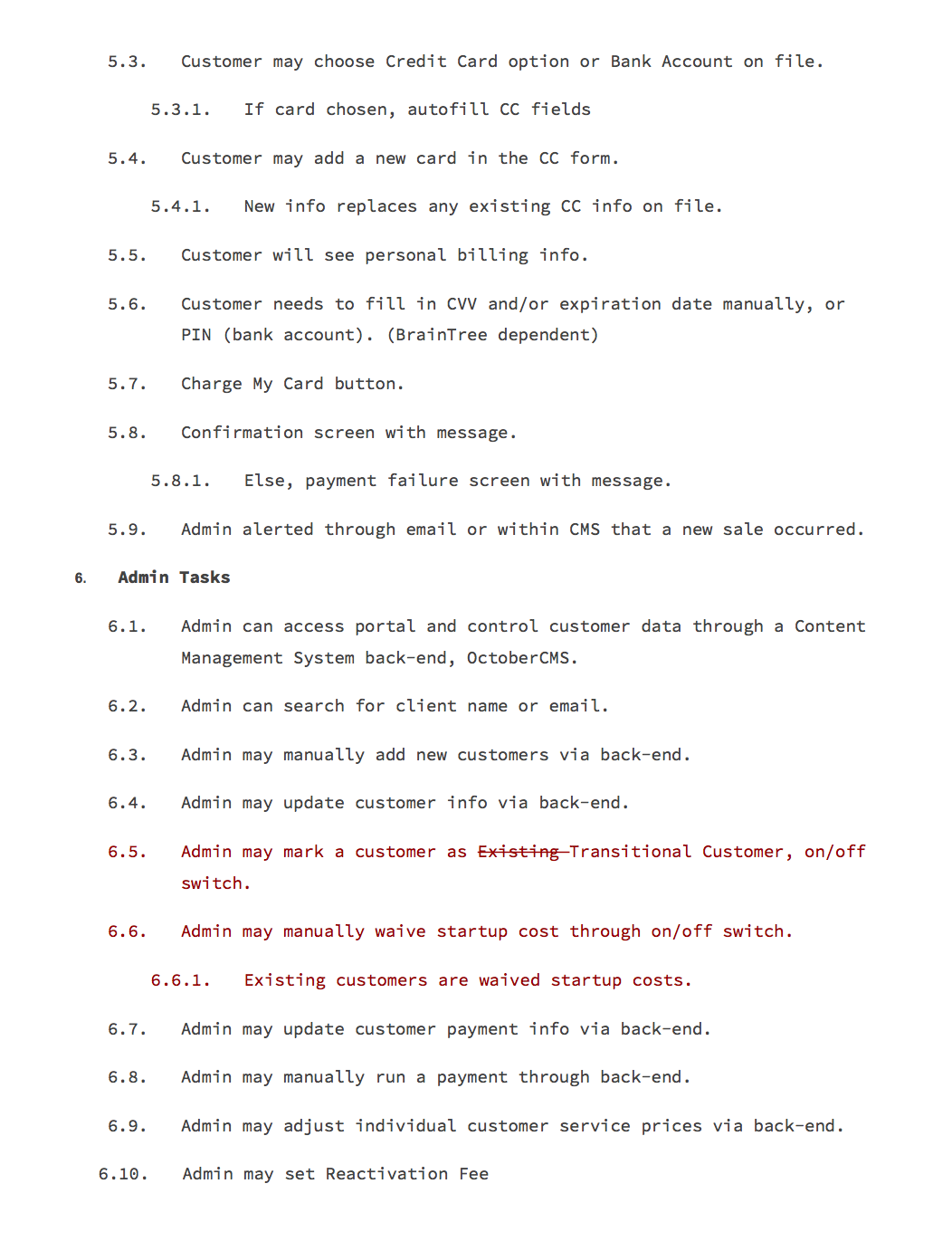
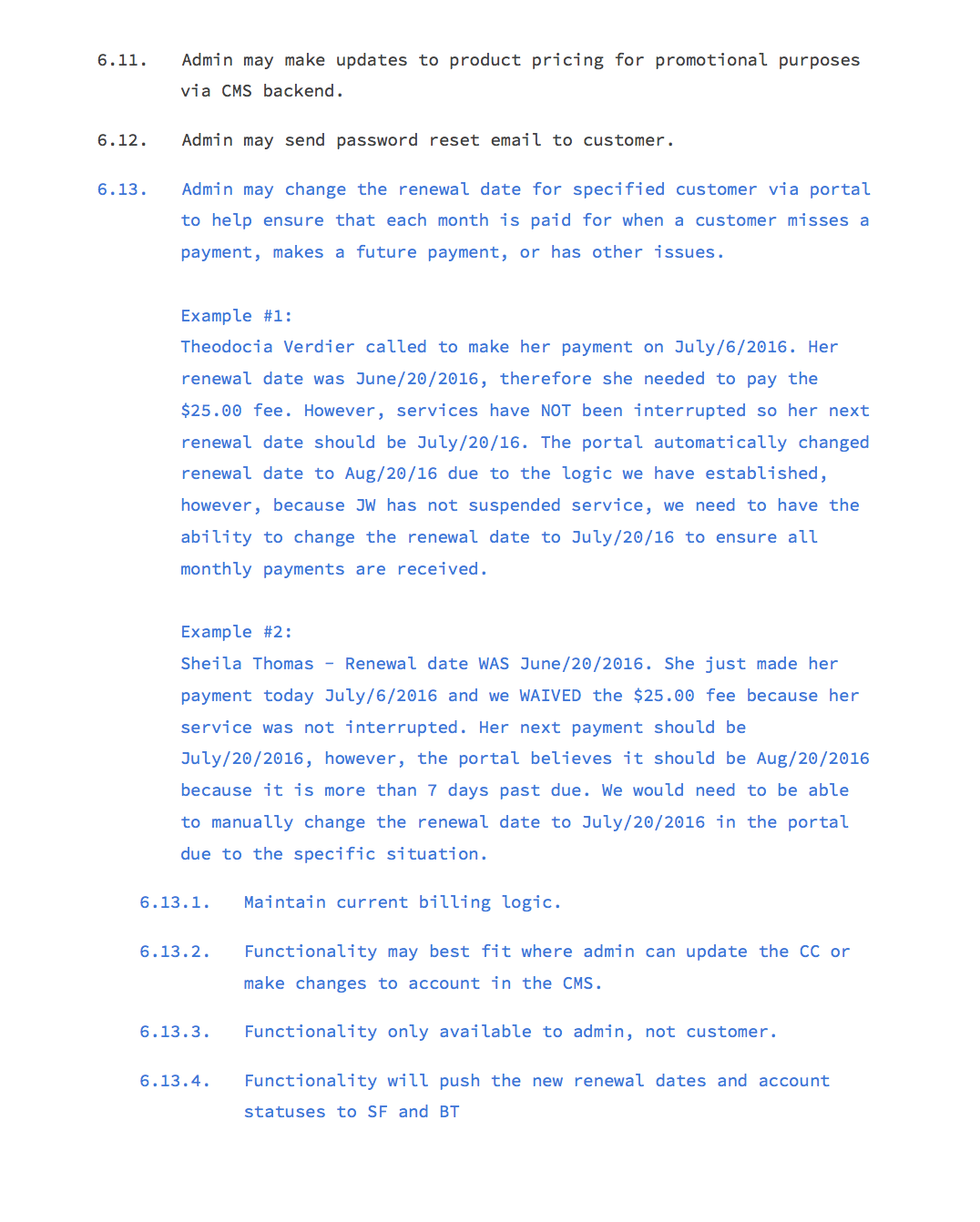
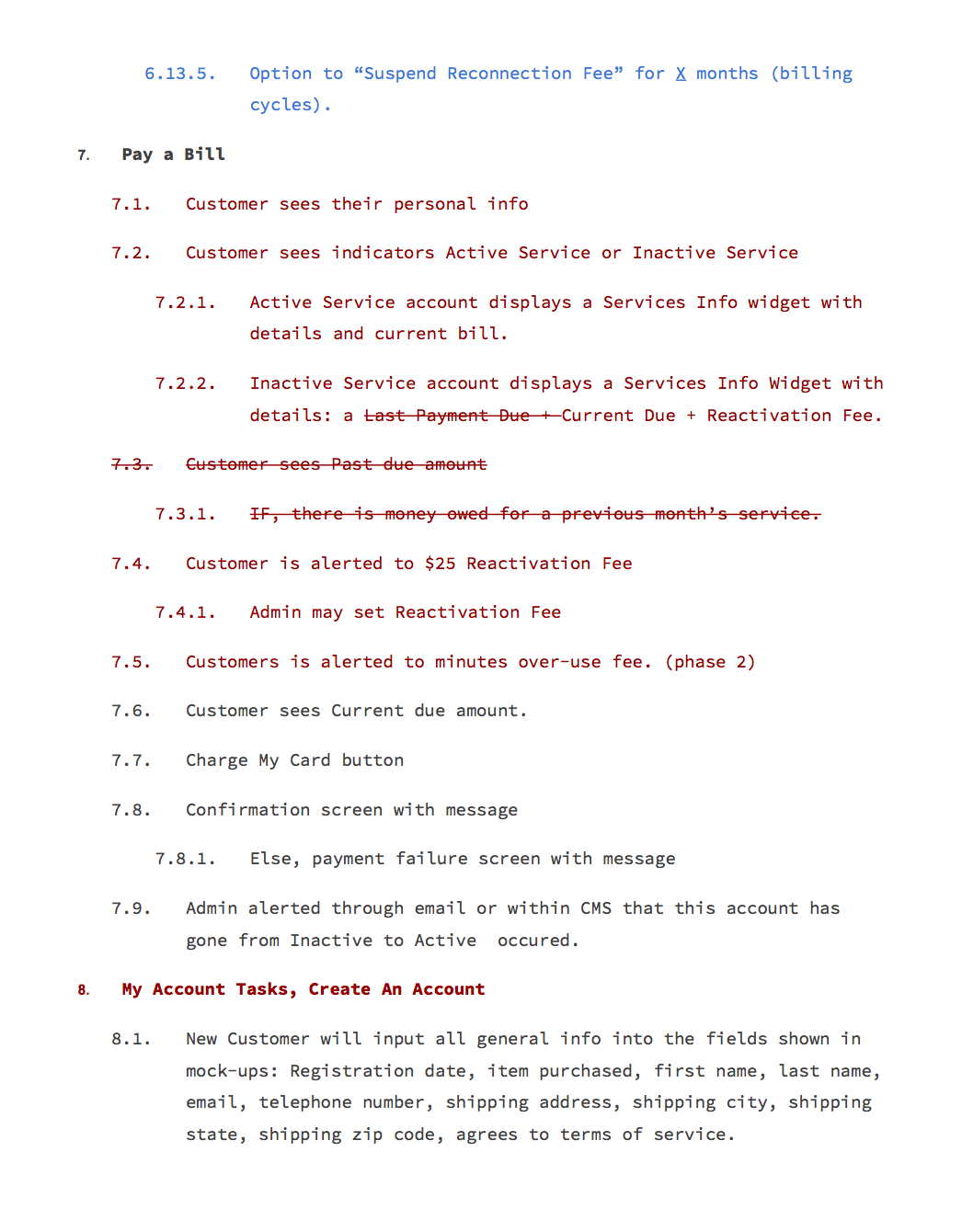
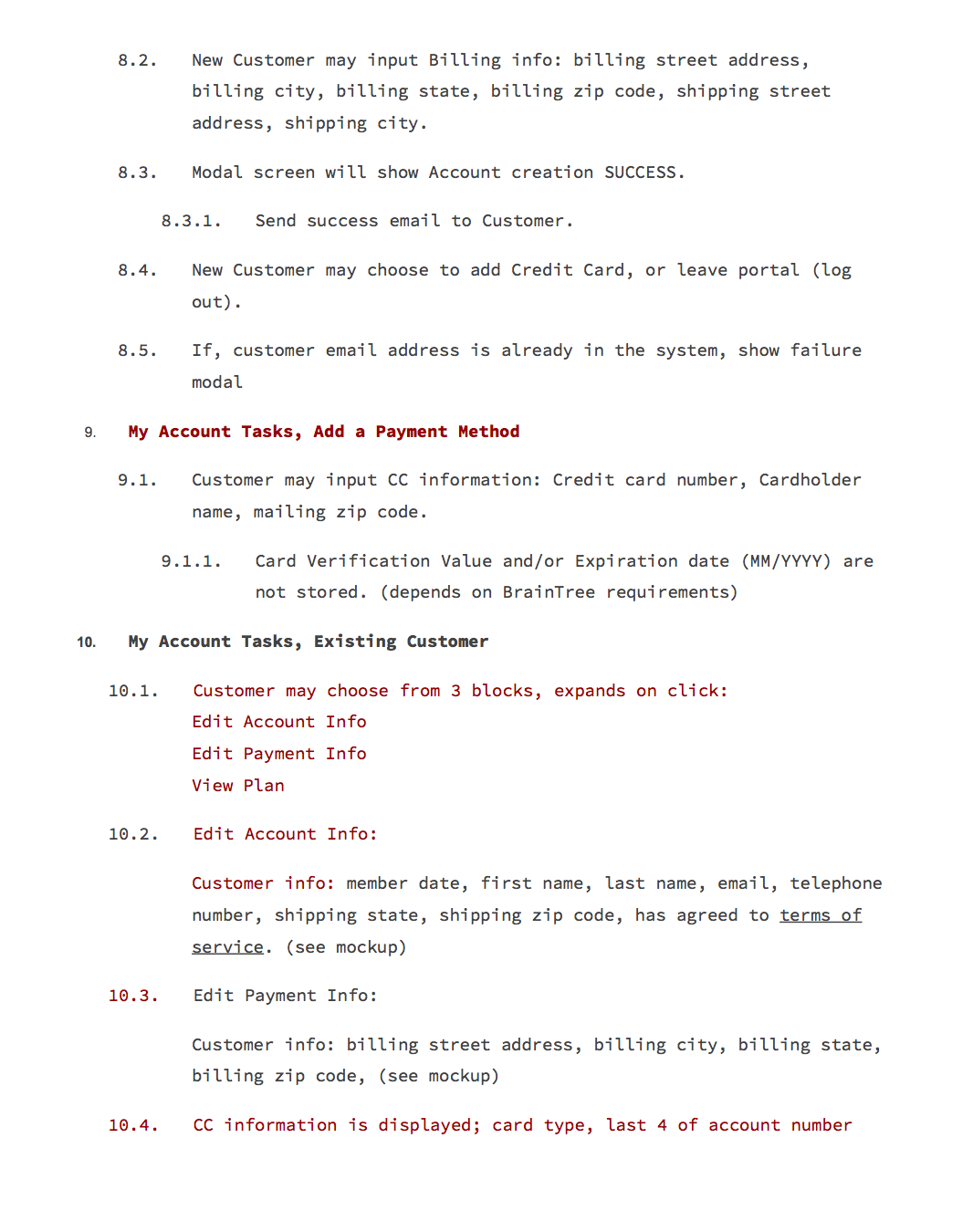
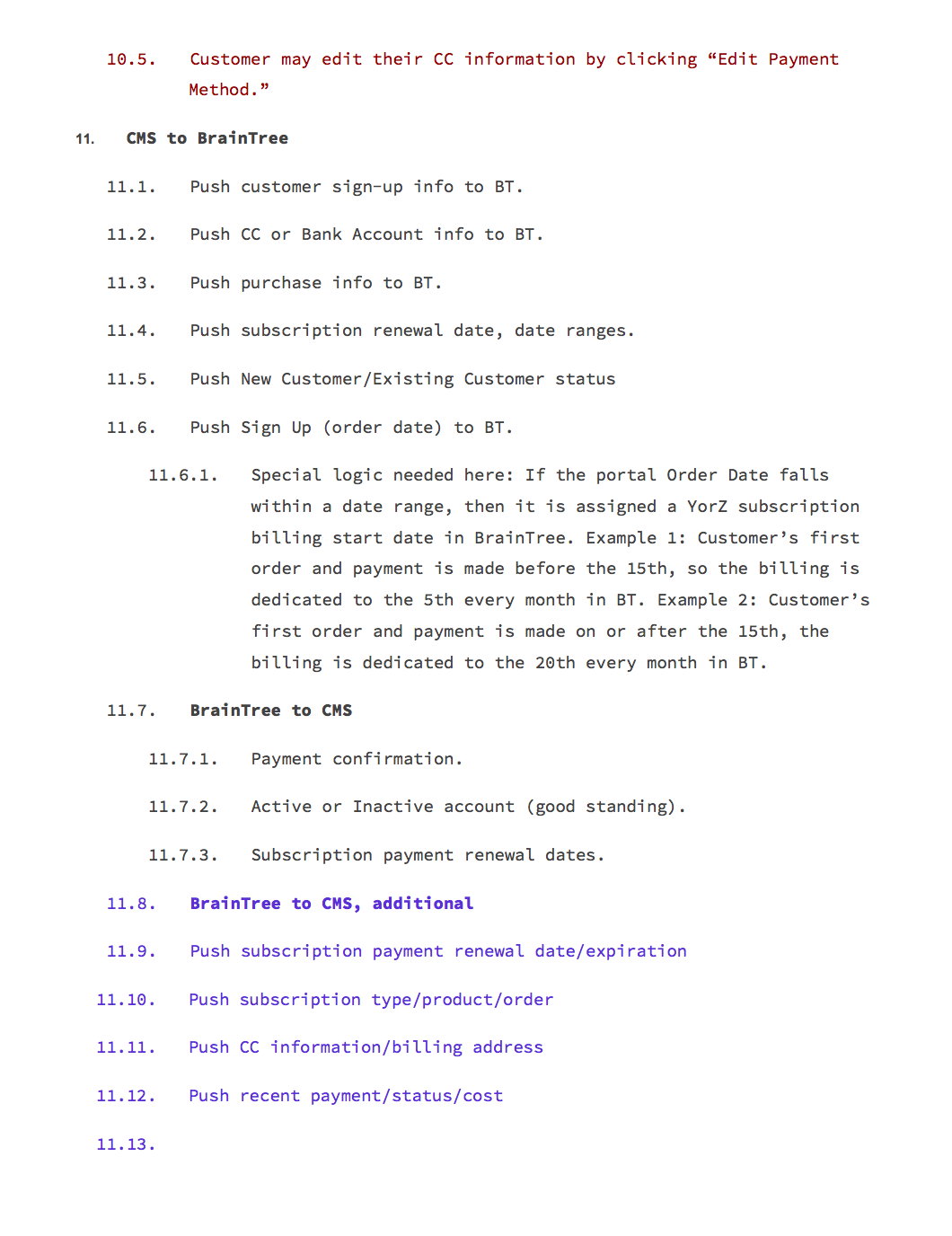
Translated ambiguous "redesign" directions into a Product Design Document
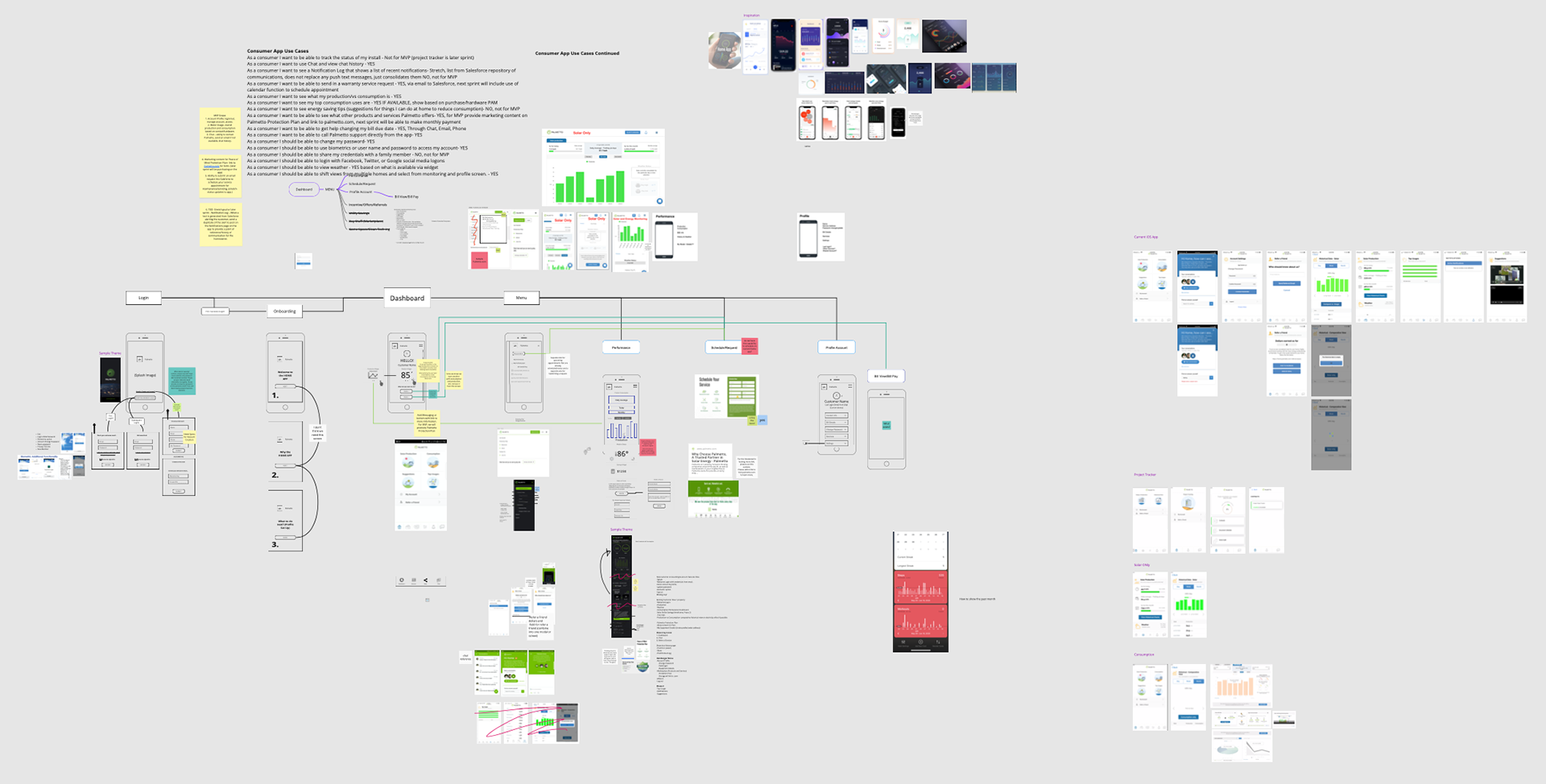
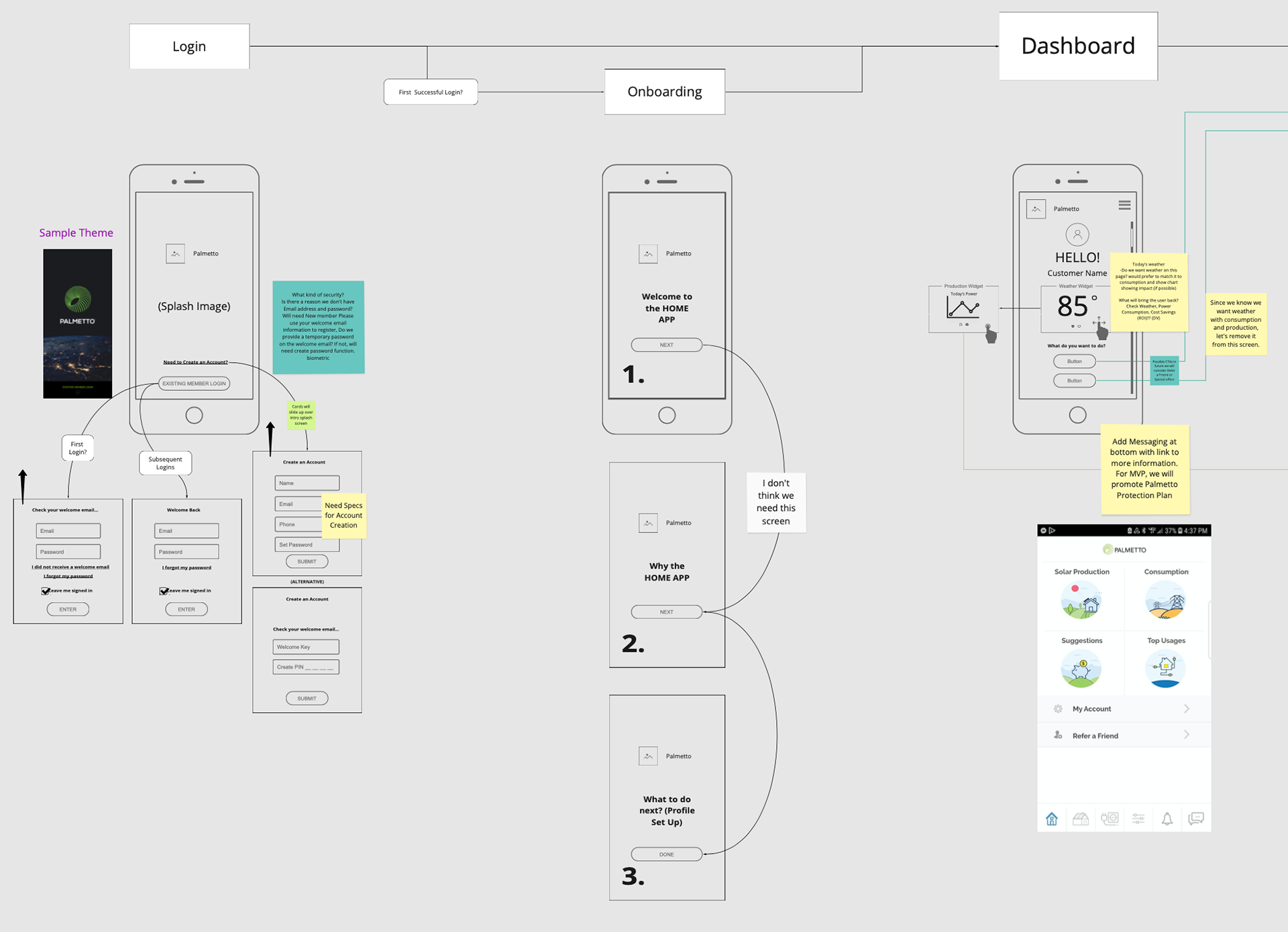
Lead a design sprint mapping out site architecture, use cases, competition, etc.
Service Design
A key issue was that the app was treated as an optional add‑on rather than an integral part of the service. I designed new service touchpoints that routed customers into the app at critical moments, including activation, first‑bill education, and issue resolution.
• Activation programs that guided new solar customers from installation into account setup and first‑use of the app, reducing time‑to‑value.
• Proactive notification flows that used weather and performance data to prompt customers to open the app rather than call support.
• In‑app pathways that connected self‑service troubleshooting with live support, closing the loop between digital and human channels.
A key issue was that the app was treated as an optional add‑on rather than an integral part of the service. I designed new service touchpoints that routed customers into the app at critical moments, including activation, first‑bill education, and issue resolution.
• Activation programs that guided new solar customers from installation into account setup and first‑use of the app, reducing time‑to‑value.
• Proactive notification flows that used weather and performance data to prompt customers to open the app rather than call support.
• In‑app pathways that connected self‑service troubleshooting with live support, closing the loop between digital and human channels.
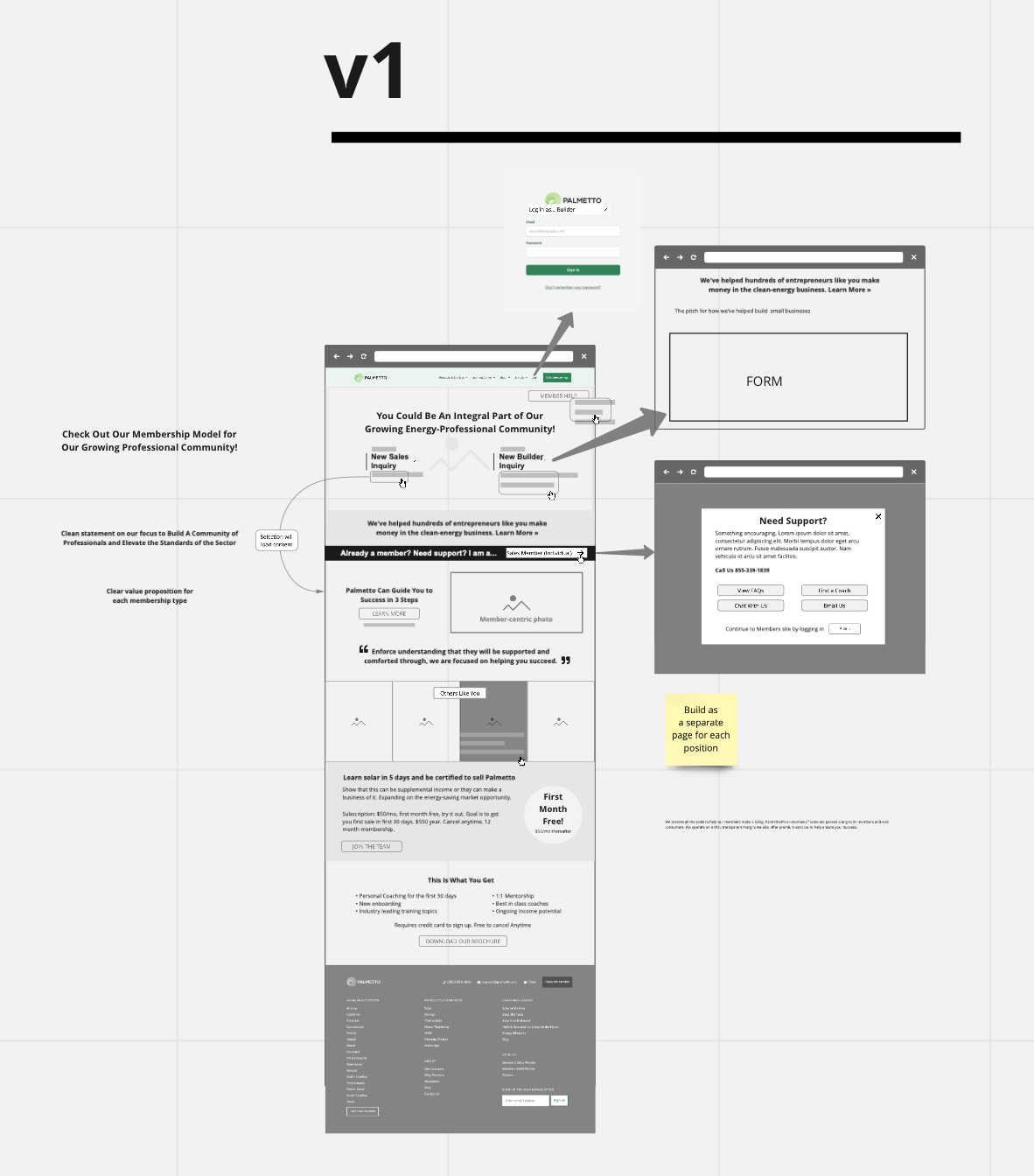
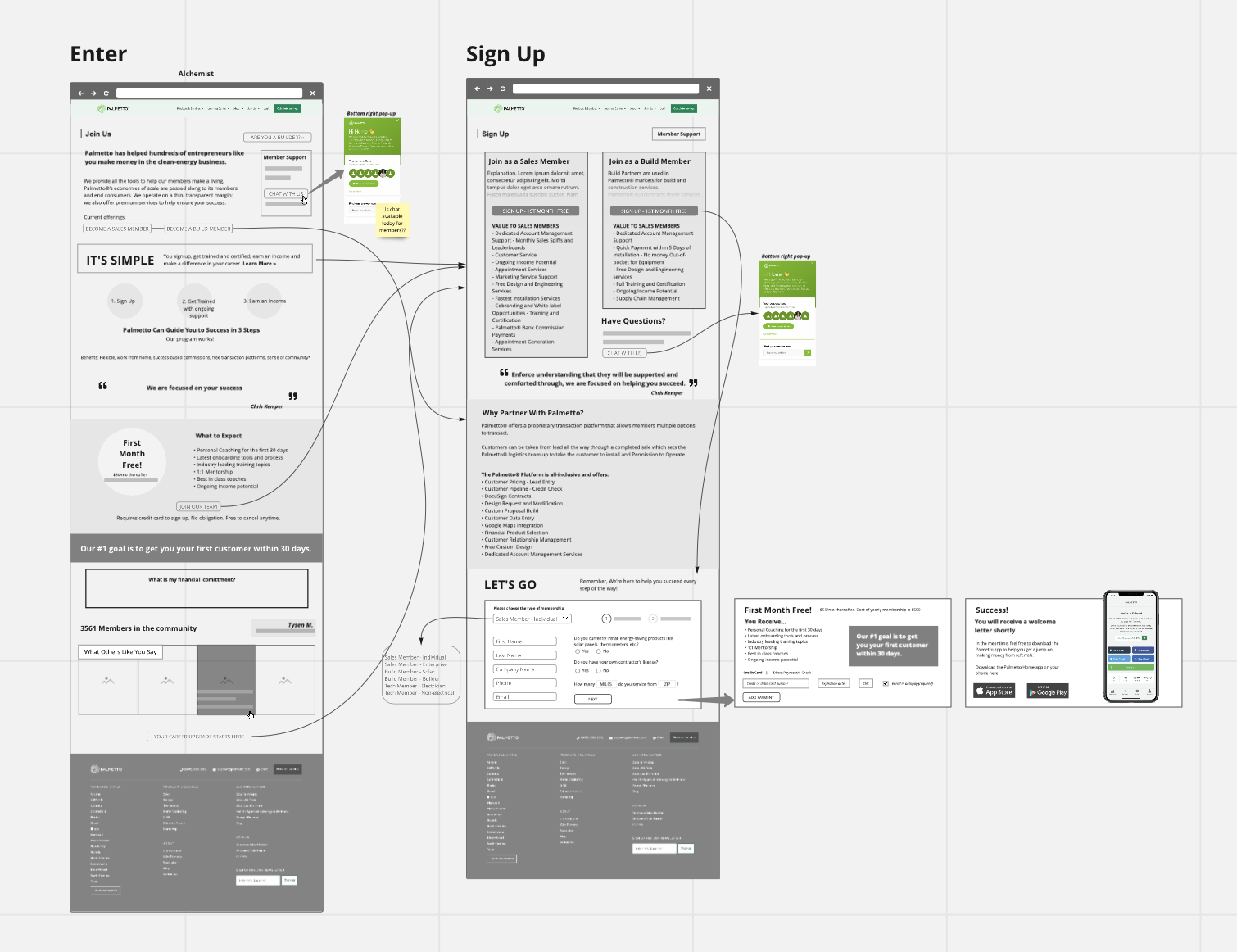
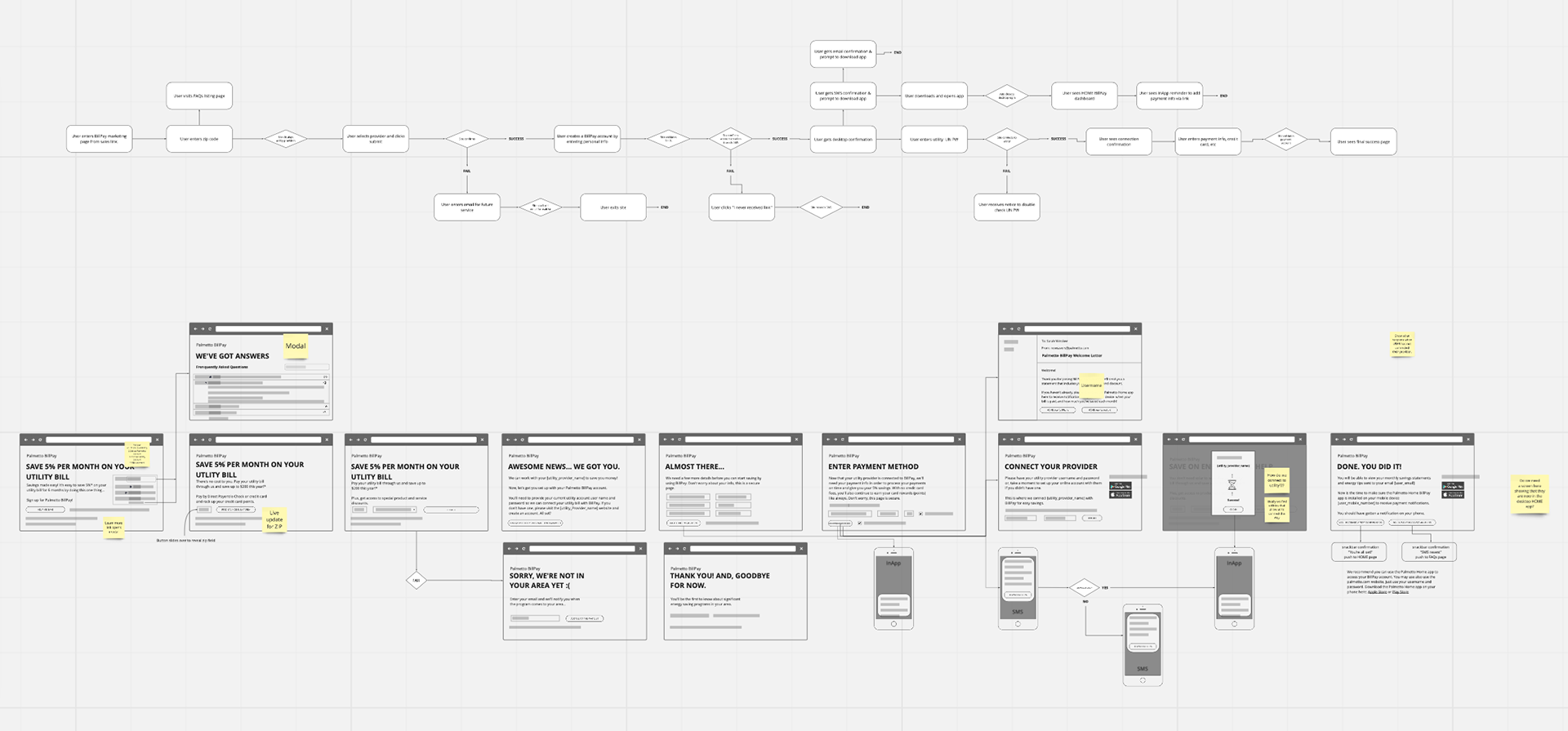
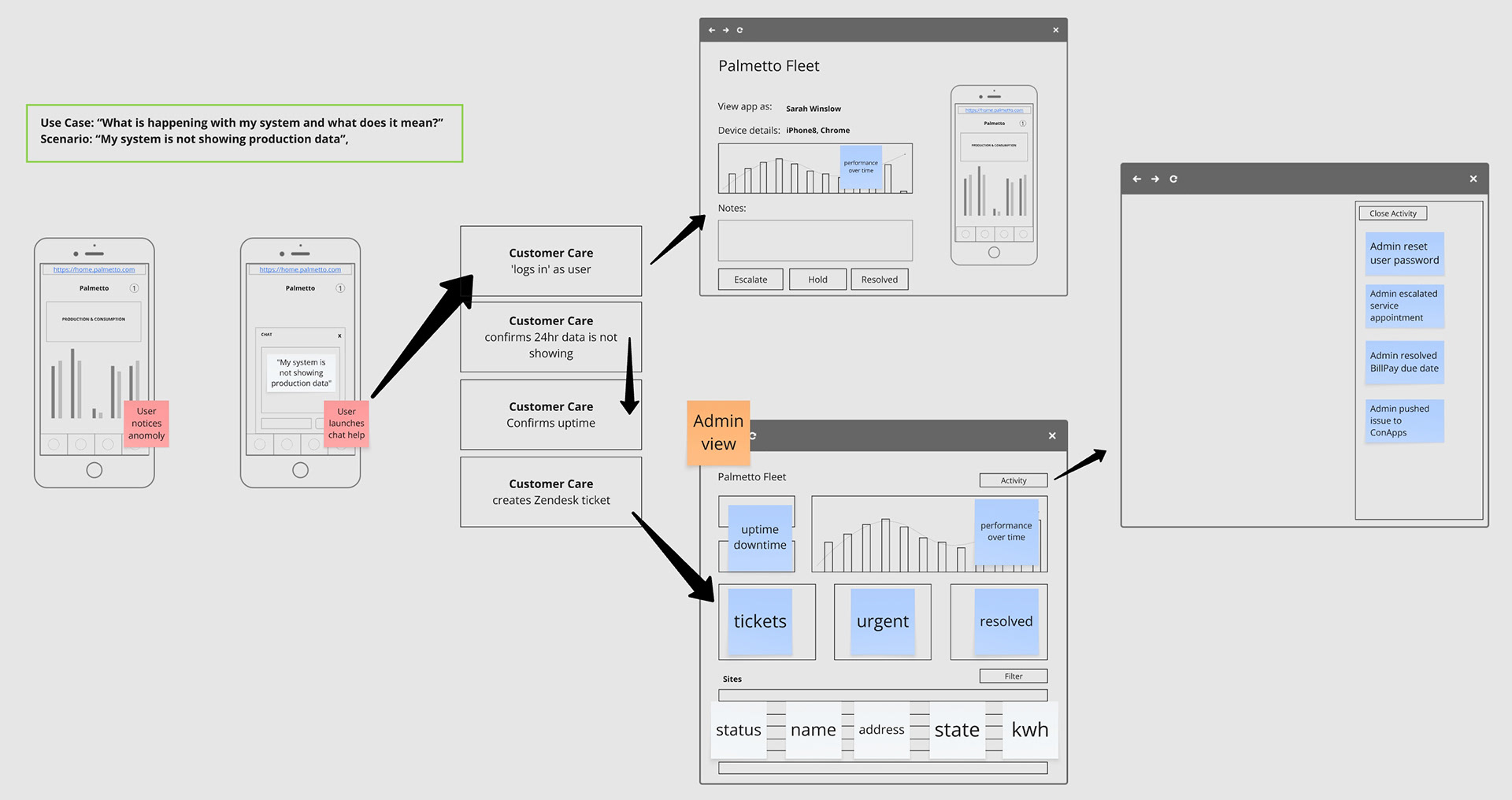
Wireframed additional service design programs to guide the customer to the app.
Experience Architecture
Using the systems map, I defined a north‑star customer journey that spanned pre‑sale education, installation, ongoing monitoring, and long‑term efficiency optimization. From this, I derived key user stories and flows that clarified what the MVP must support versus what could phase later.
Using the systems map, I defined a north‑star customer journey that spanned pre‑sale education, installation, ongoing monitoring, and long‑term efficiency optimization. From this, I derived key user stories and flows that clarified what the MVP must support versus what could phase later.
This allowed product and engineering leaders to evaluate tradeoffs at the system level rather than feature by feature.
Workflow Modeling
I created workflow prototypes that stitched together:
• Real‑time energy telemetry and edge conditions (e.g., low production, severe weather).
• Customer actions (acknowledging alerts, scheduling service, adjusting usage).
• Internal responses (support tickets, maintenance workflows, automated messaging).
I created workflow prototypes that stitched together:
• Real‑time energy telemetry and edge conditions (e.g., low production, severe weather).
• Customer actions (acknowledging alerts, scheduling service, adjusting usage).
• Internal responses (support tickets, maintenance workflows, automated messaging).
Refining the MVP
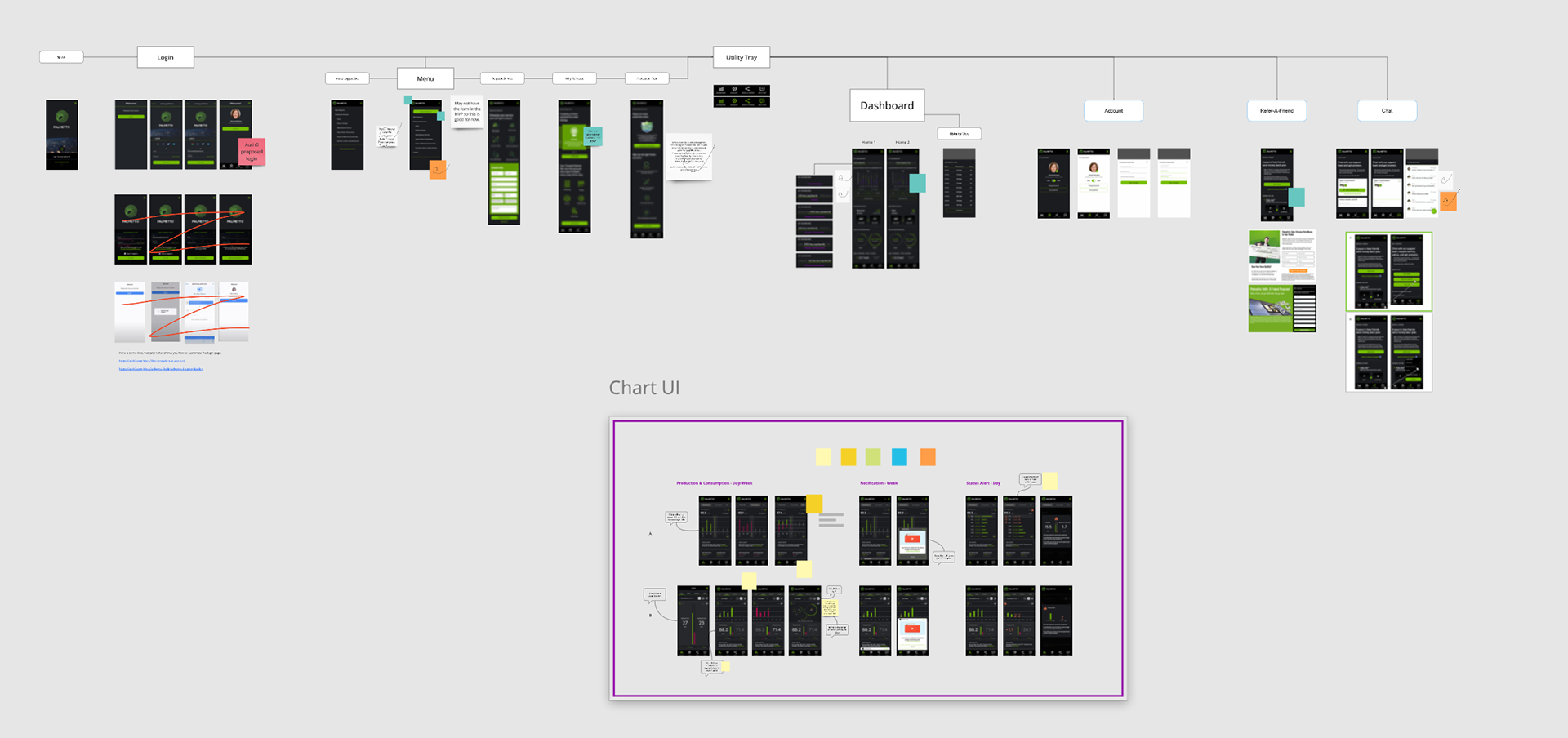
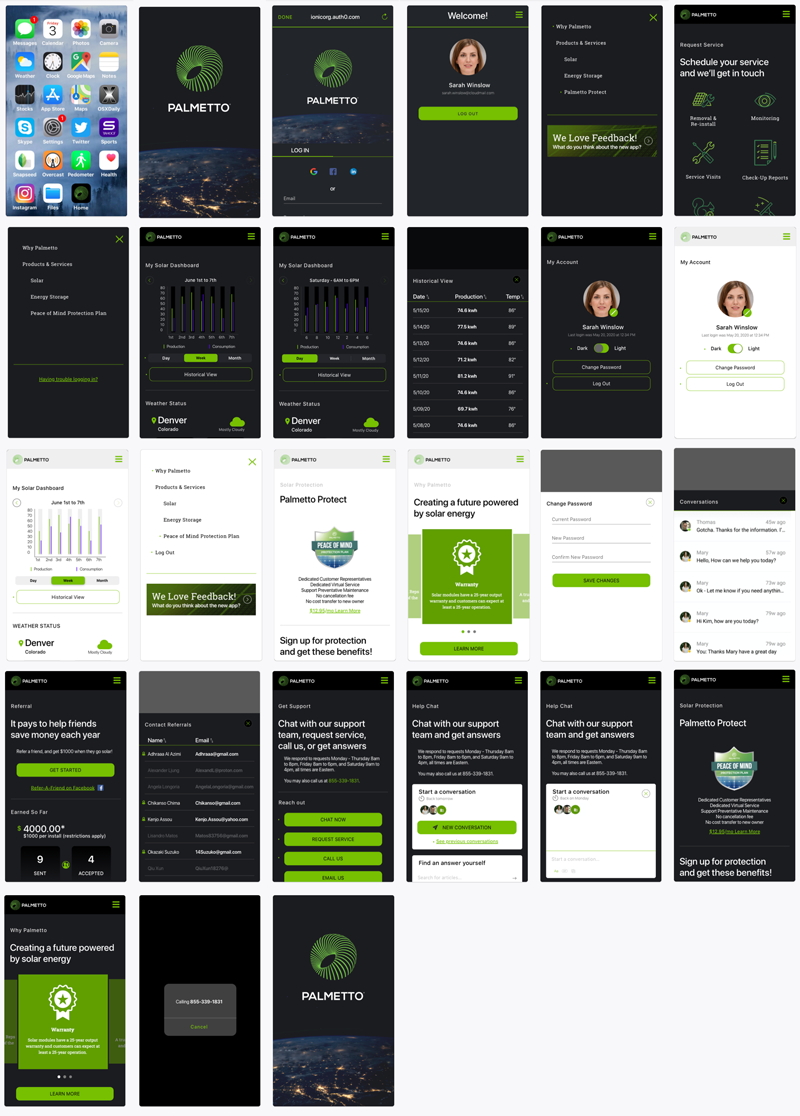
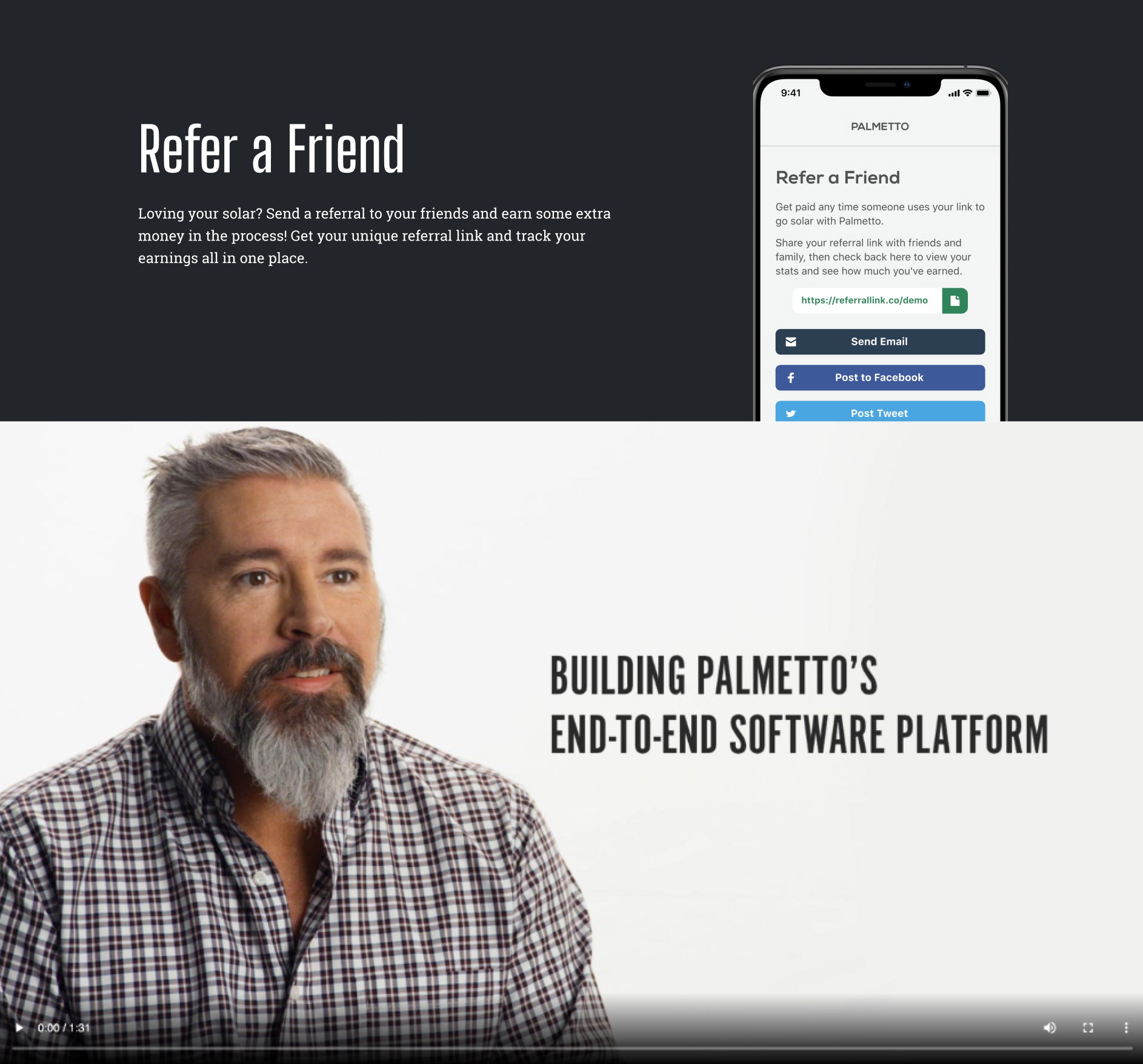
Translated early flows and architecture into the first tangible UI—establishing a dark, high-contrast aesthetic, charting patterns, and stress-testing core journeys like dashboard, account, support, and referrals. These concept screens became the shared reference point that aligned stakeholders, engineering, and leadership around what Palmetto's mobile experience could be.
Translated early flows and architecture into the first tangible UI—establishing a dark, high-contrast aesthetic, charting patterns, and stress-testing core journeys like dashboard, account, support, and referrals. These concept screens became the shared reference point that aligned stakeholders, engineering, and leadership around what Palmetto's mobile experience could be.
Information and Interaction Model
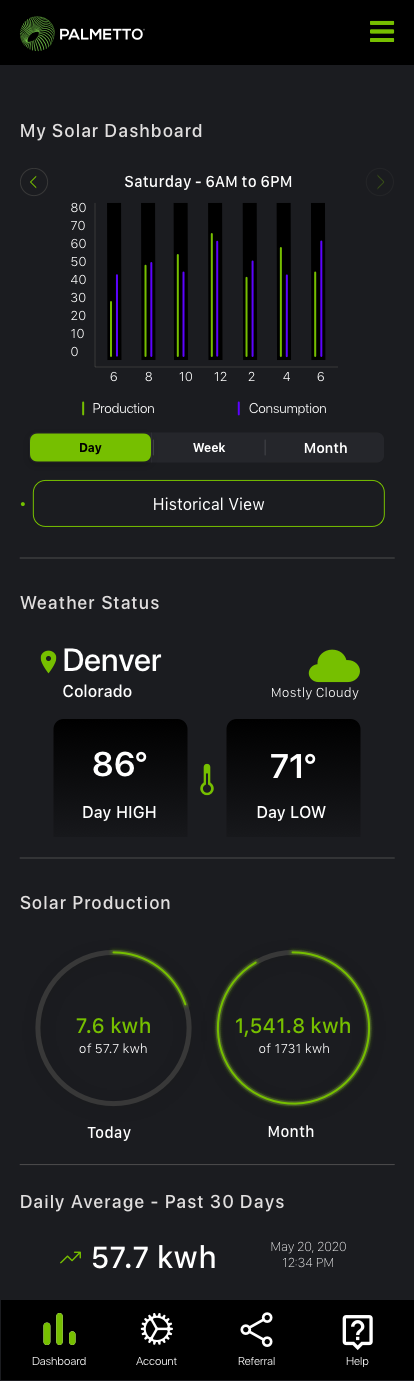
Home energy is abstract; most customers do not have an intuitive sense of kilowatts or net metering. I defined a data visualization model that translated raw telemetry into understandable patterns: production vs. consumption, daily baselines, anomaly detection, and seasonal trends.
Home energy is abstract; most customers do not have an intuitive sense of kilowatts or net metering. I defined a data visualization model that translated raw telemetry into understandable patterns: production vs. consumption, daily baselines, anomaly detection, and seasonal trends.
Key Decisions
• Established a canonical set of energy metrics and visual patterns used across mobile, web, and marketing materials.
• Designed light/dark modes not just as themes, but as contexts: daytime solar production vs. nighttime consumption and storage.
• Prototyped micro‑interactions that explained state changes (e.g., transitions when clouds pass, when the grid takes over, or when savings milestones are reached).
• Established a canonical set of energy metrics and visual patterns used across mobile, web, and marketing materials.
• Designed light/dark modes not just as themes, but as contexts: daytime solar production vs. nighttime consumption and storage.
• Prototyped micro‑interactions that explained state changes (e.g., transitions when clouds pass, when the grid takes over, or when savings milestones are reached).
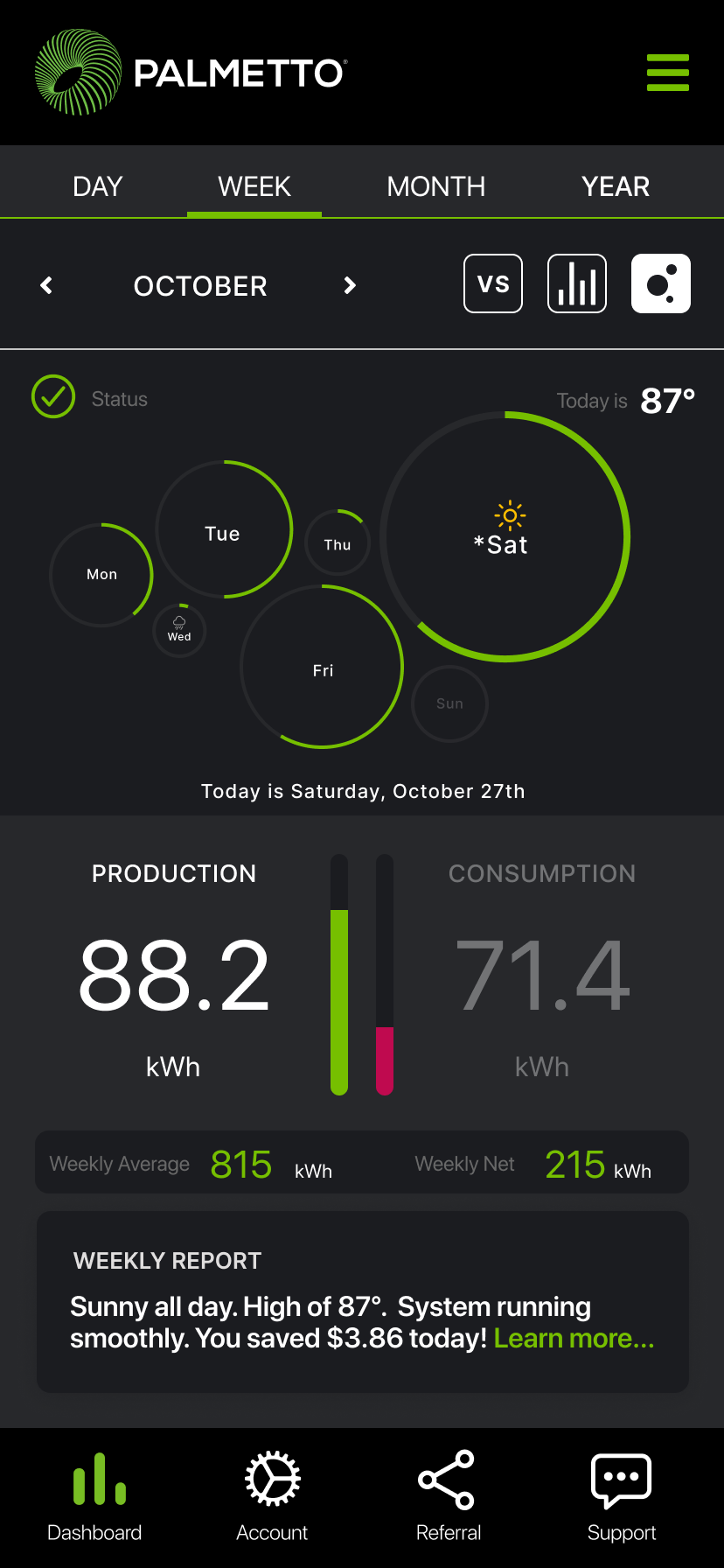
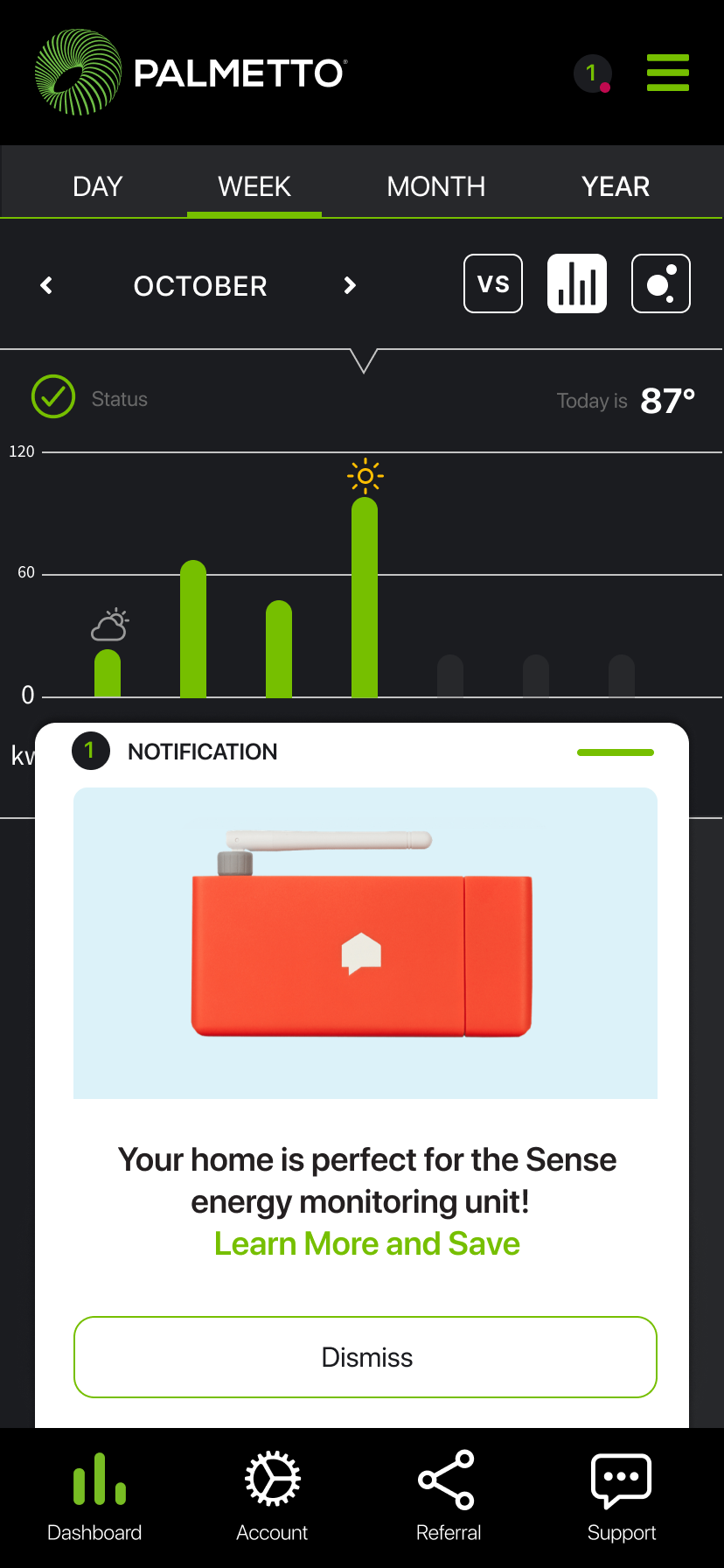
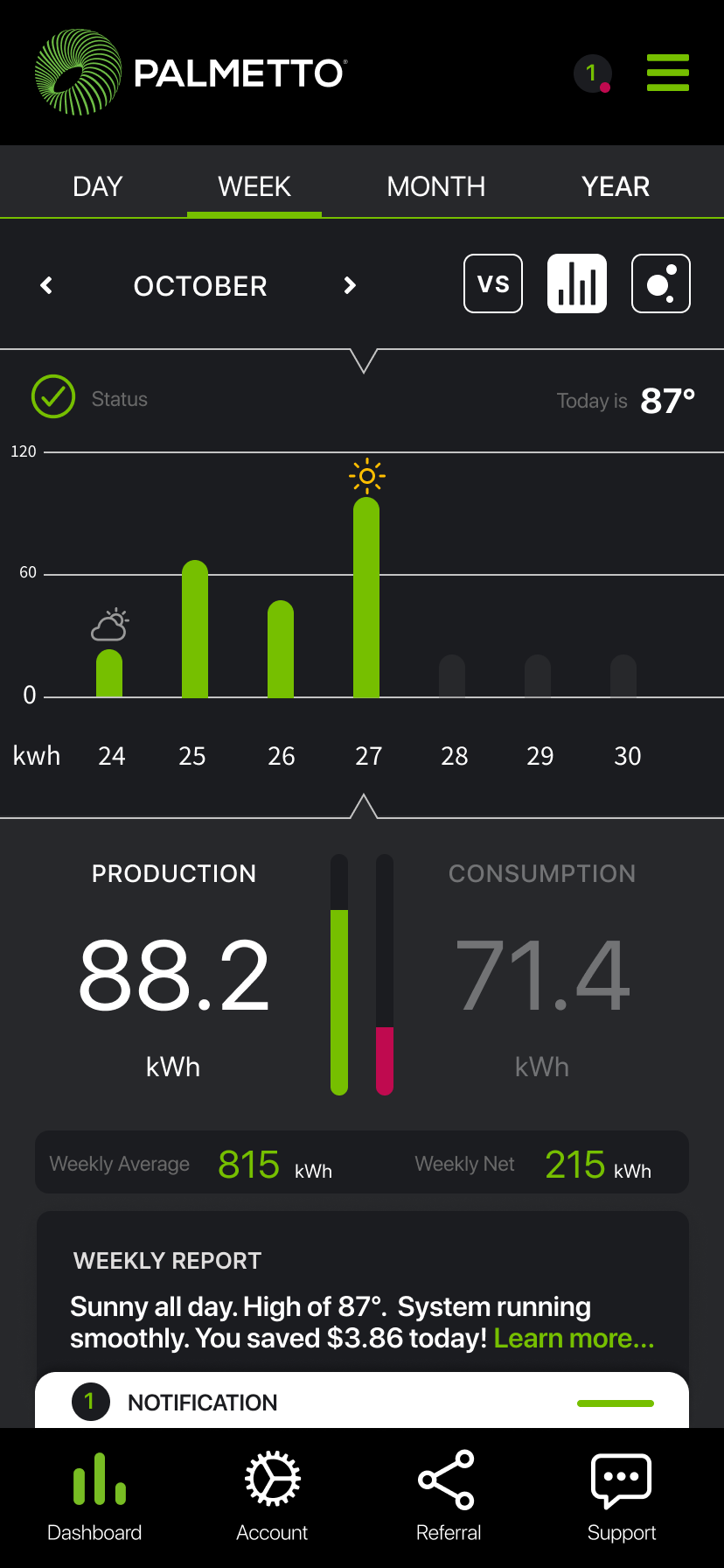
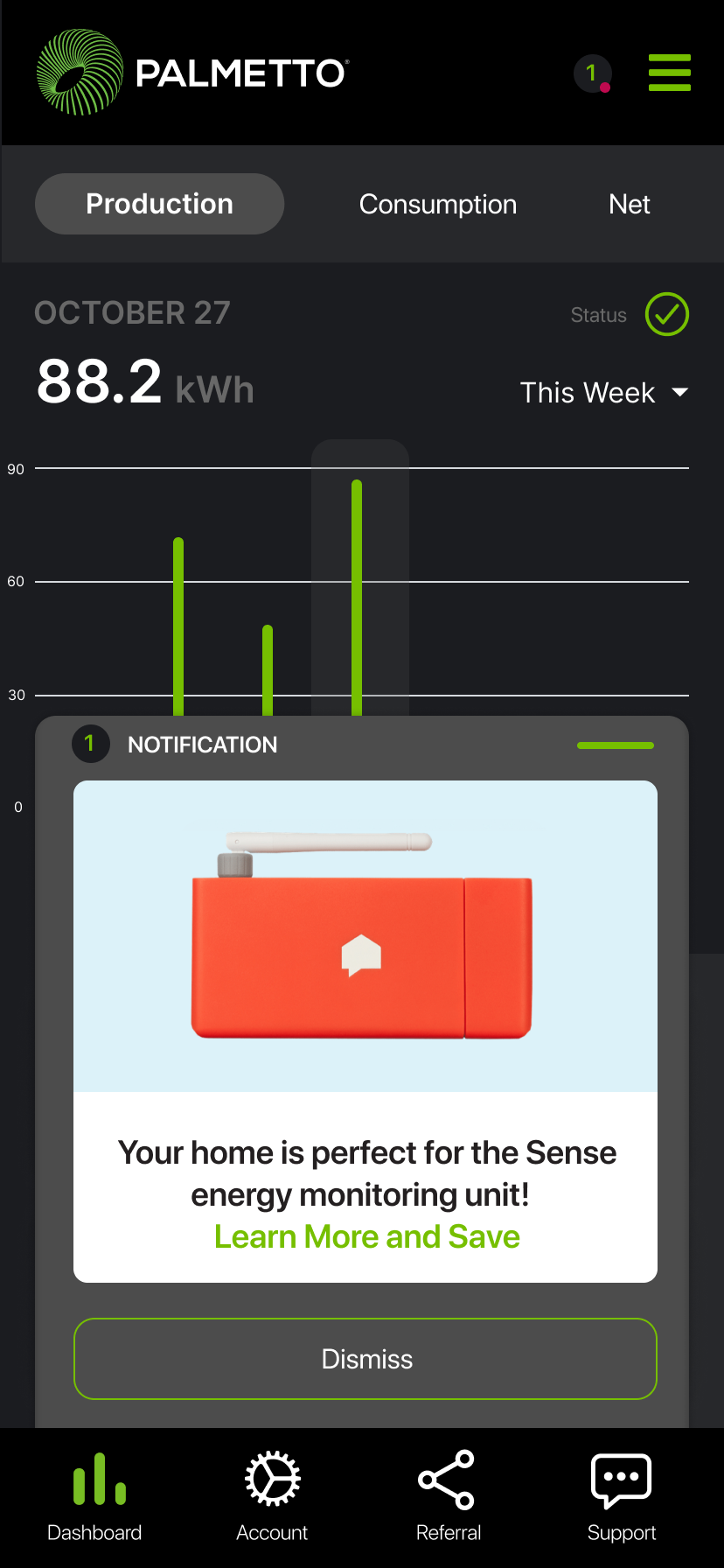
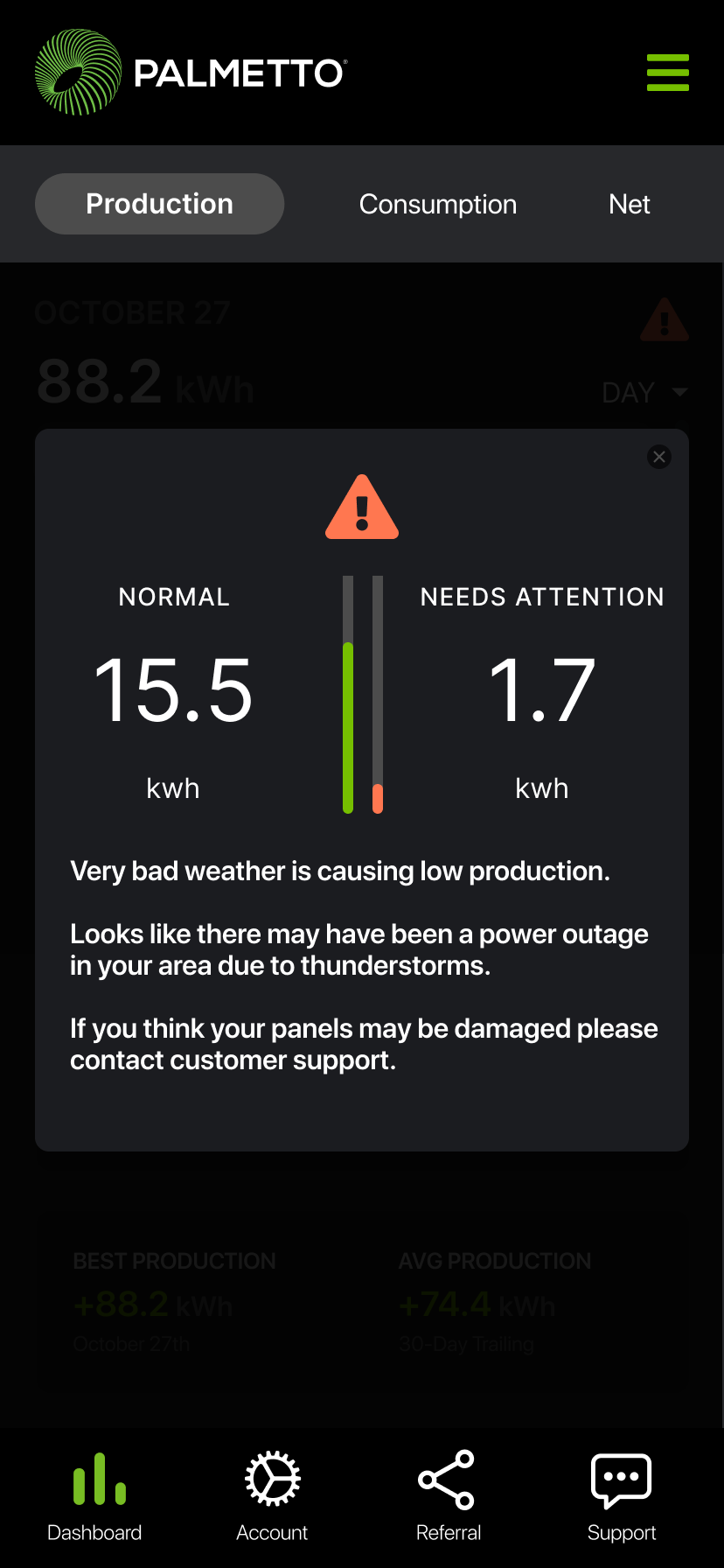
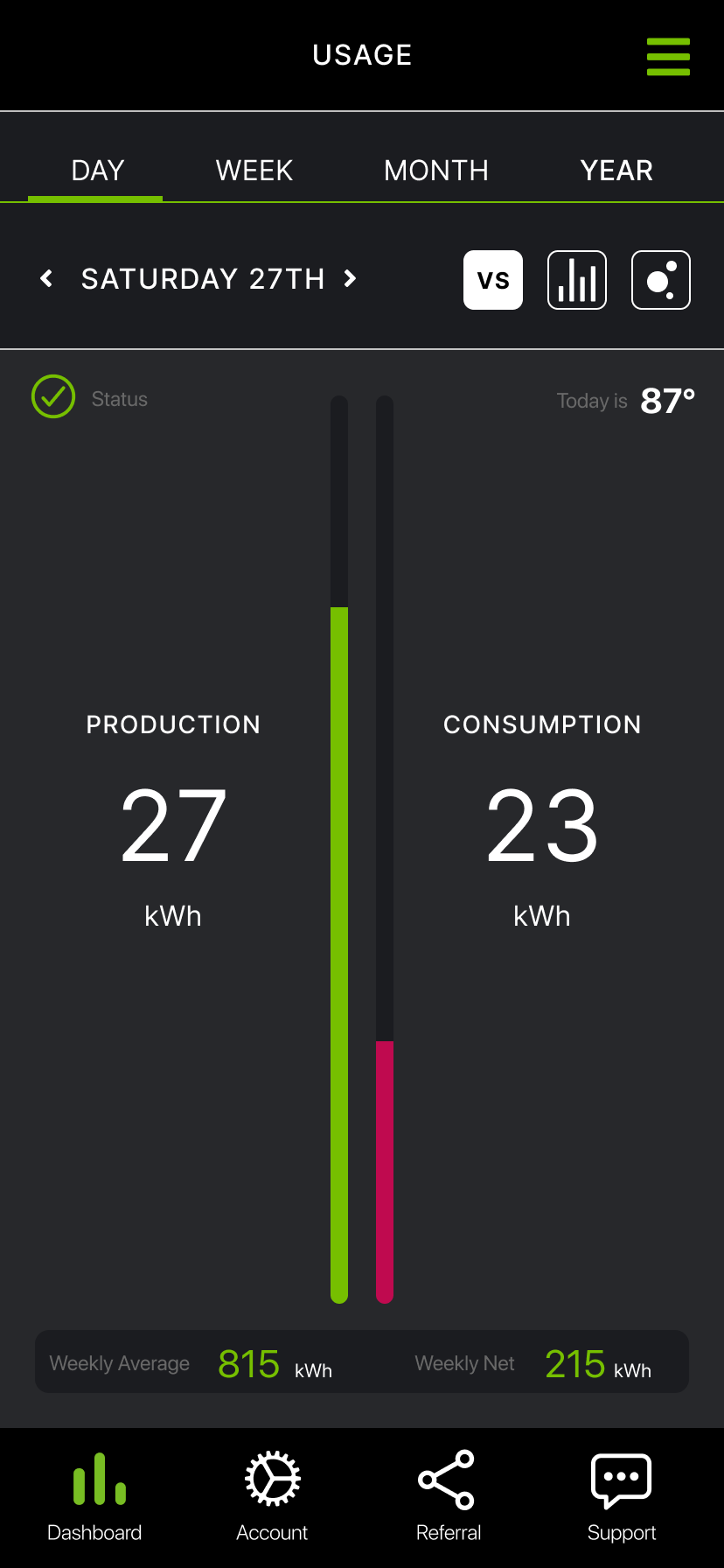
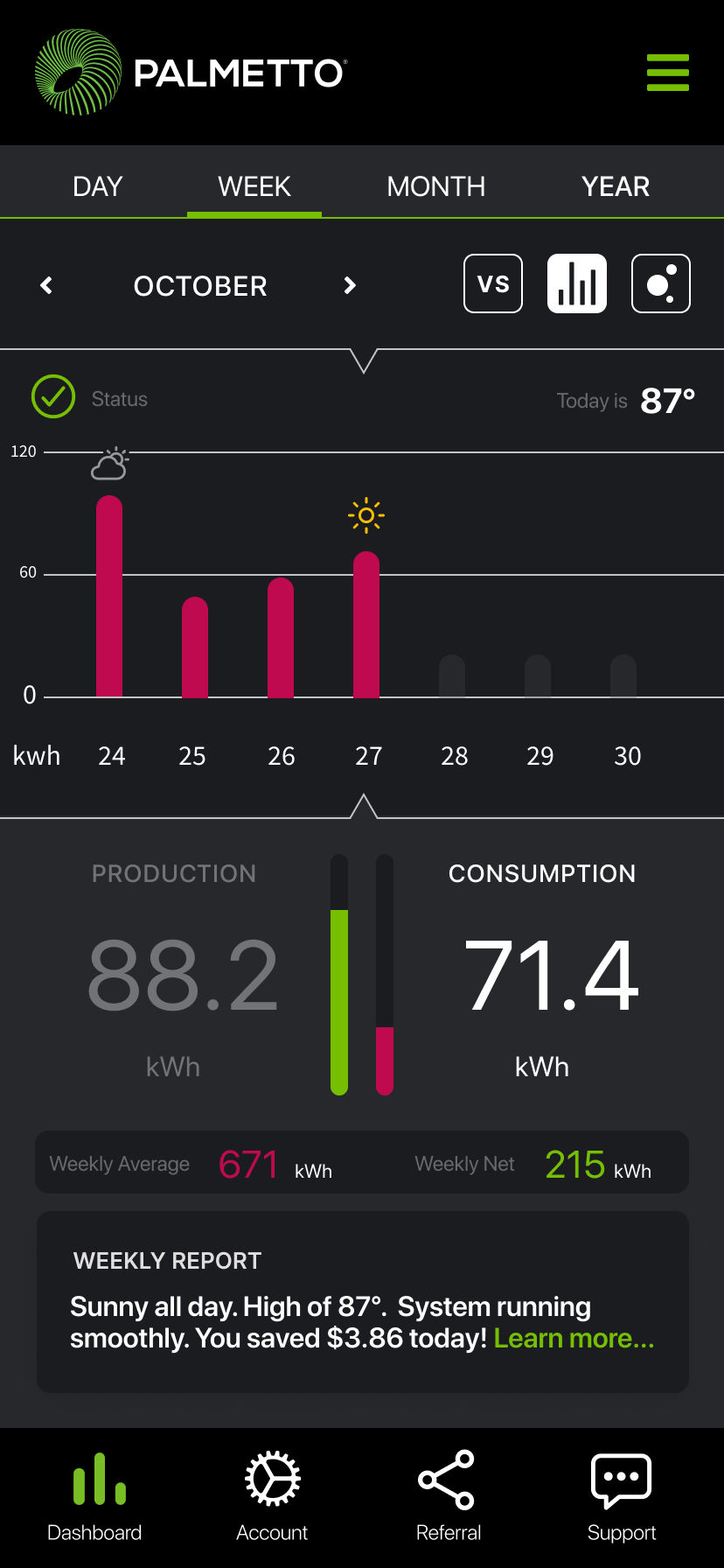
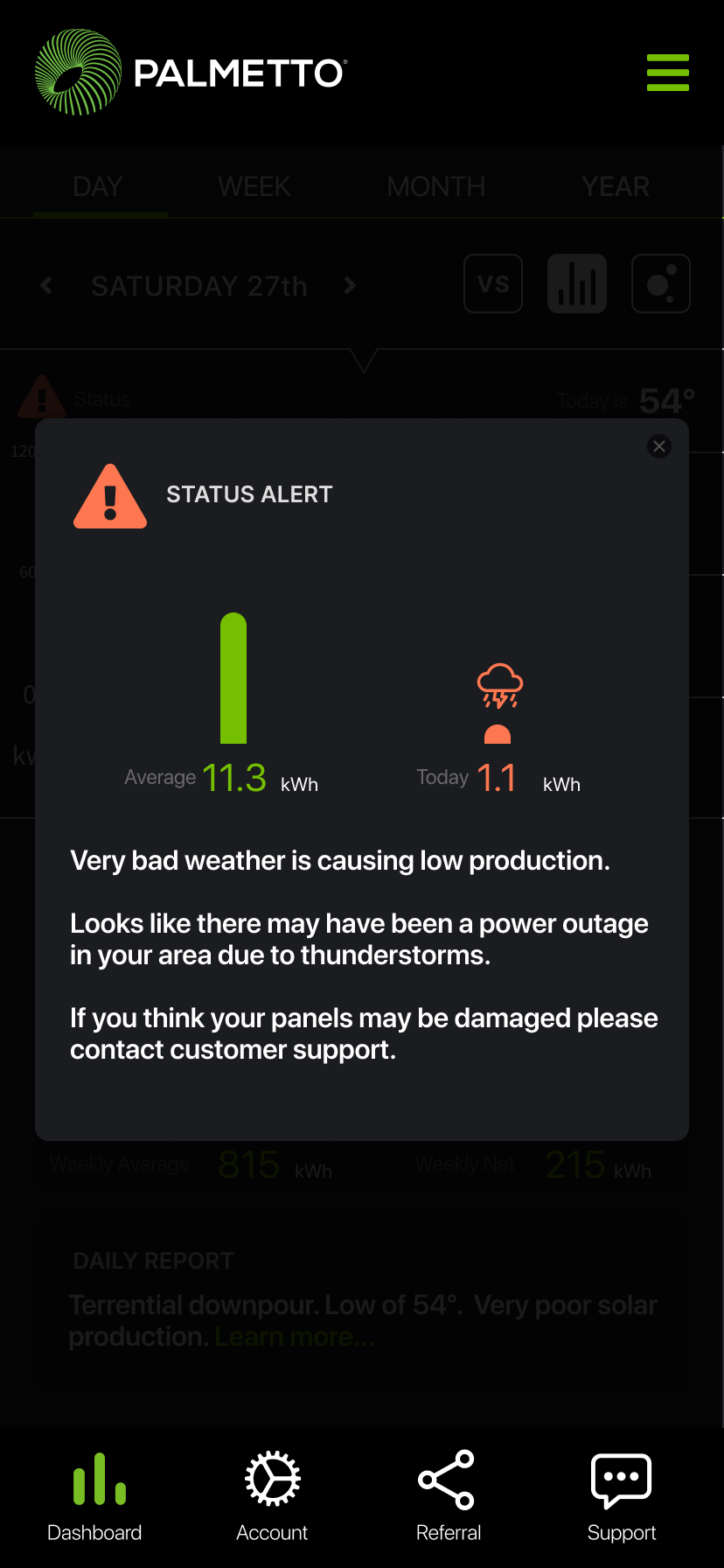
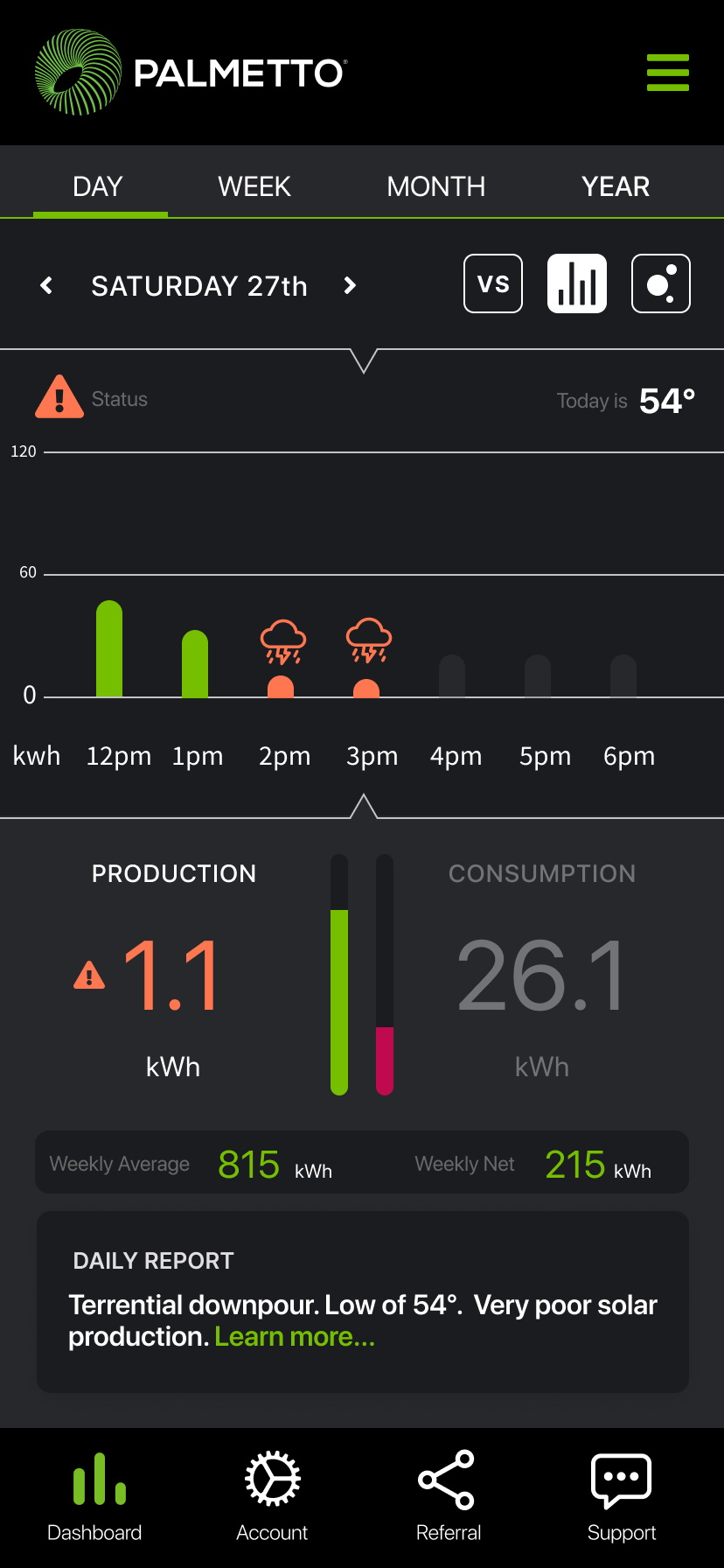
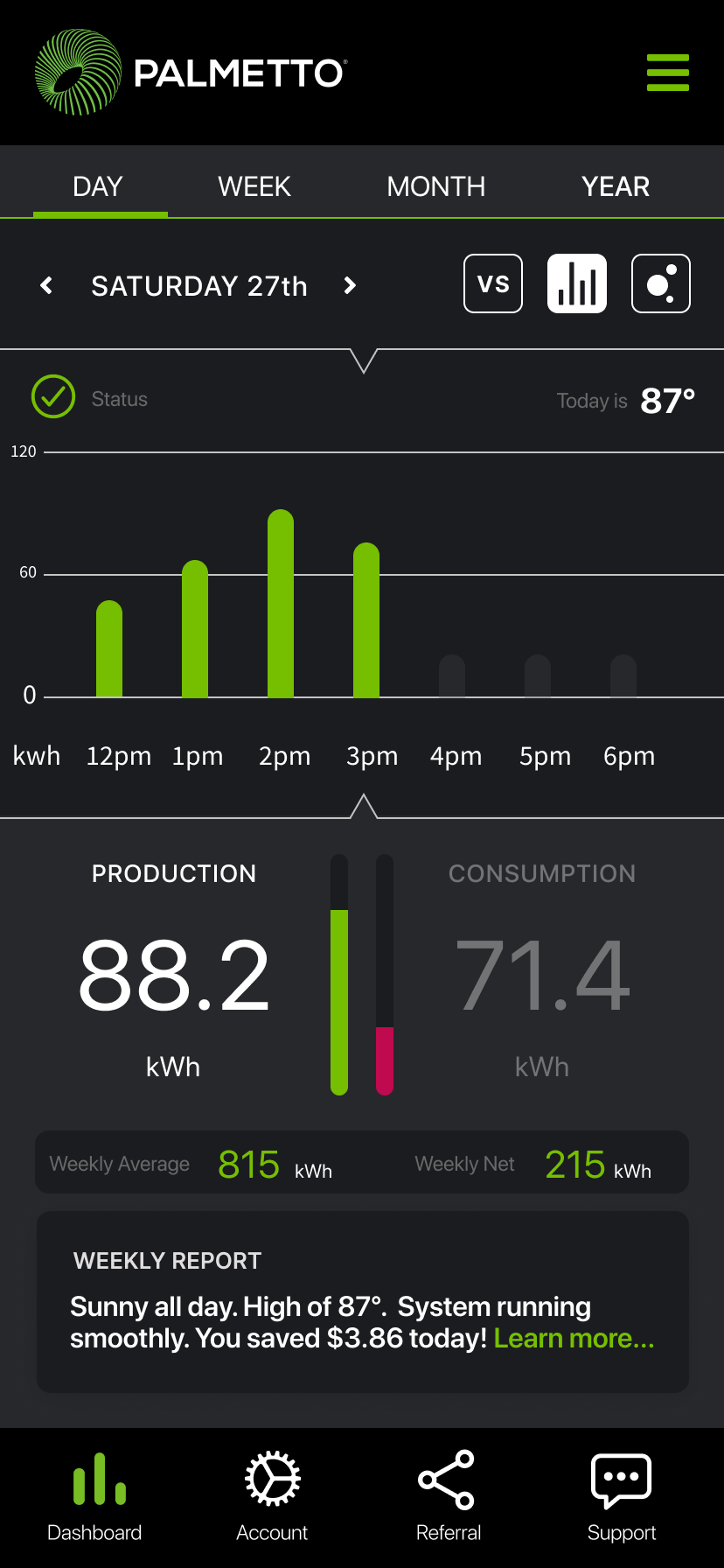
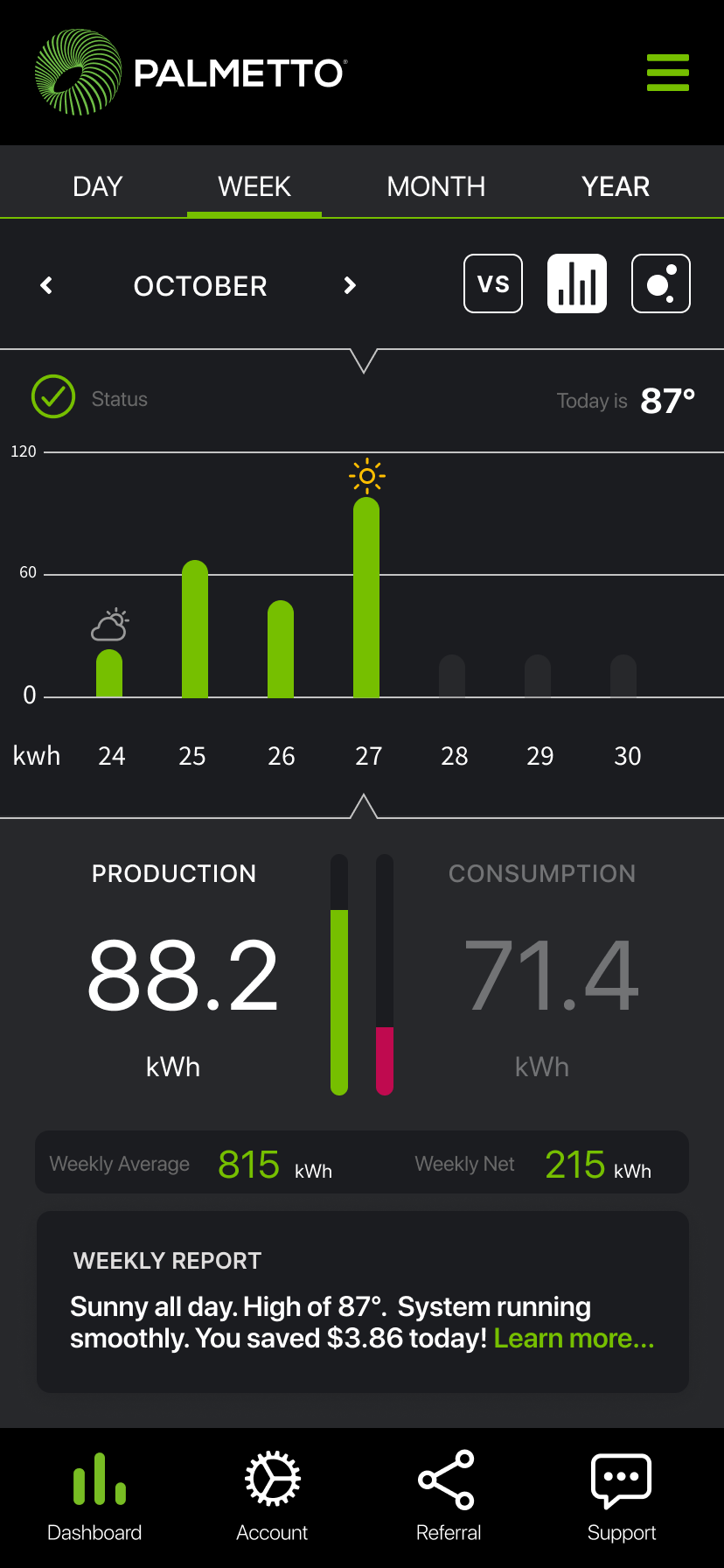
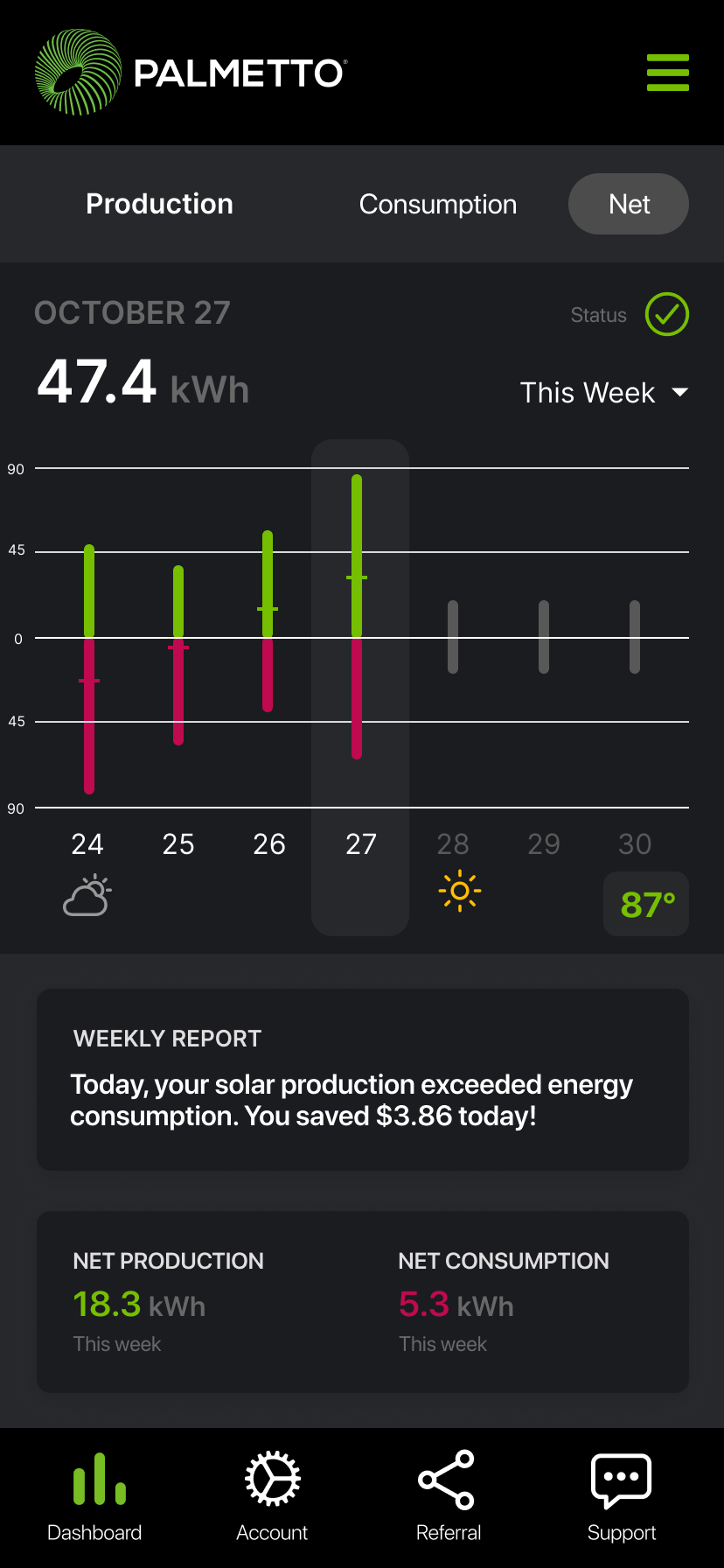
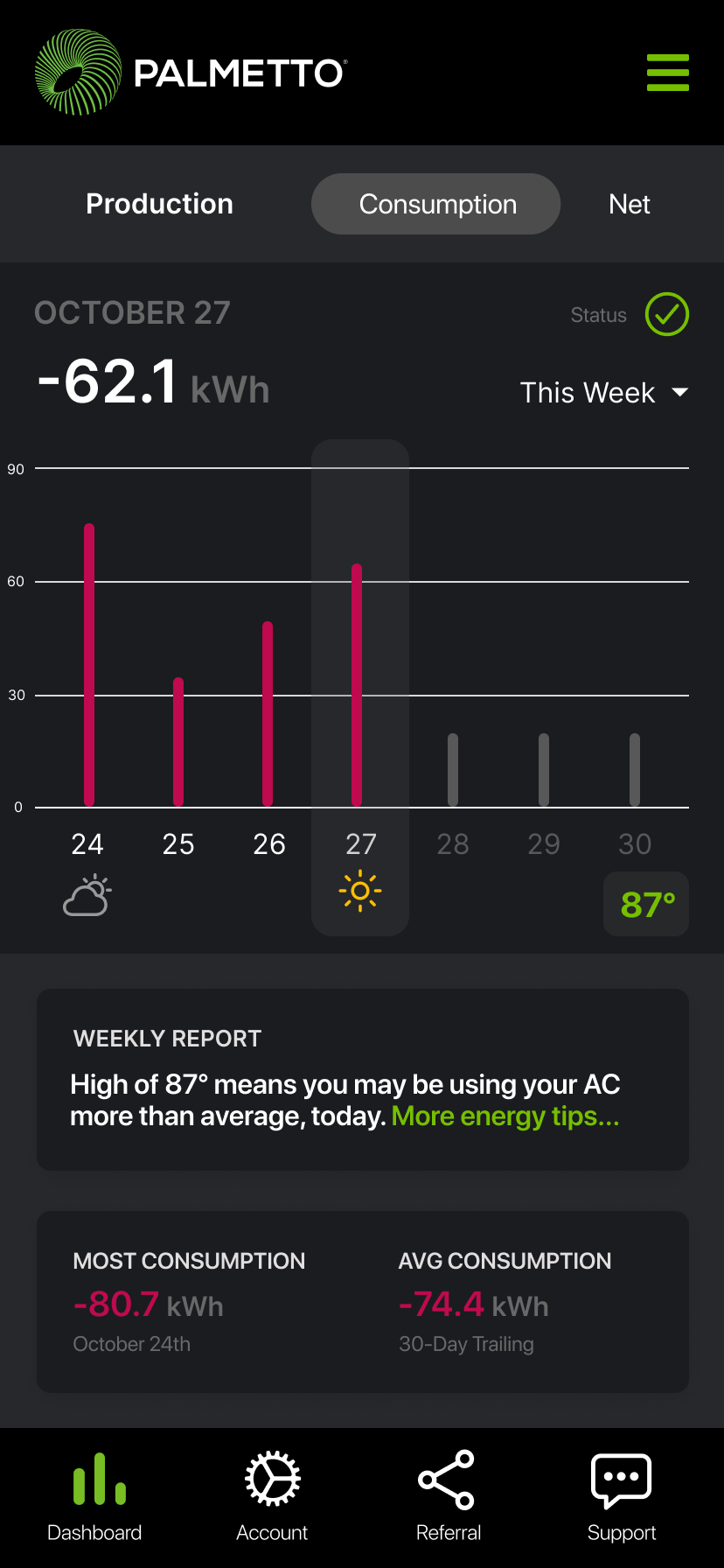
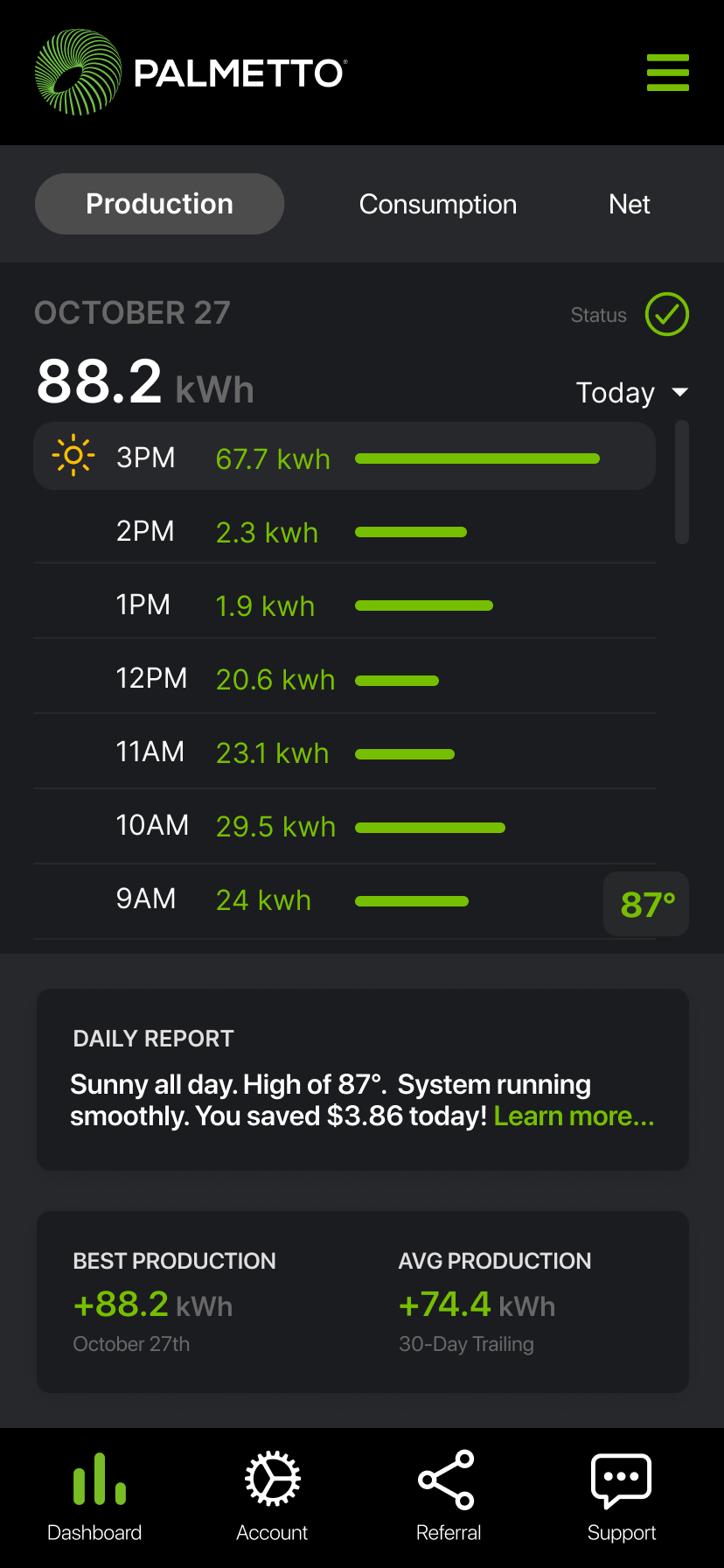
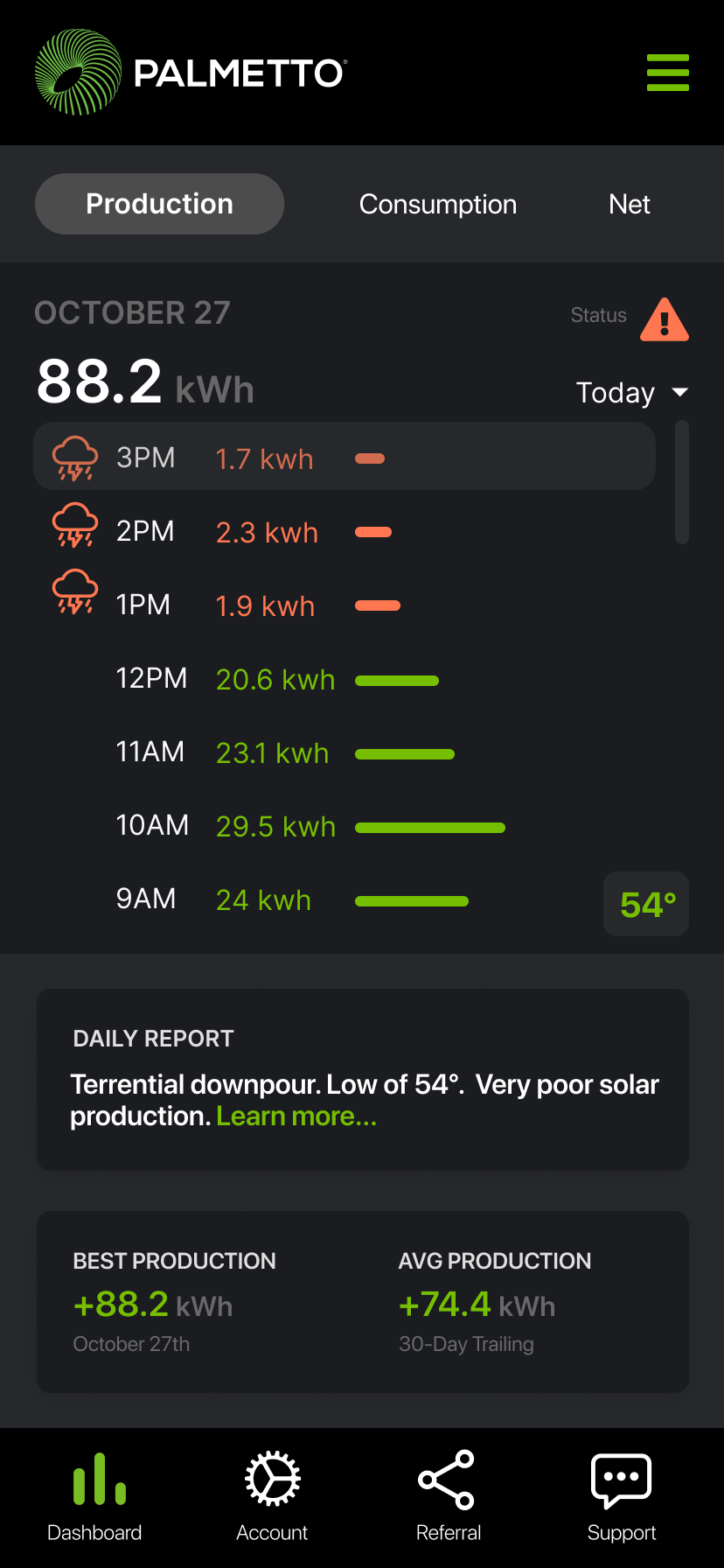
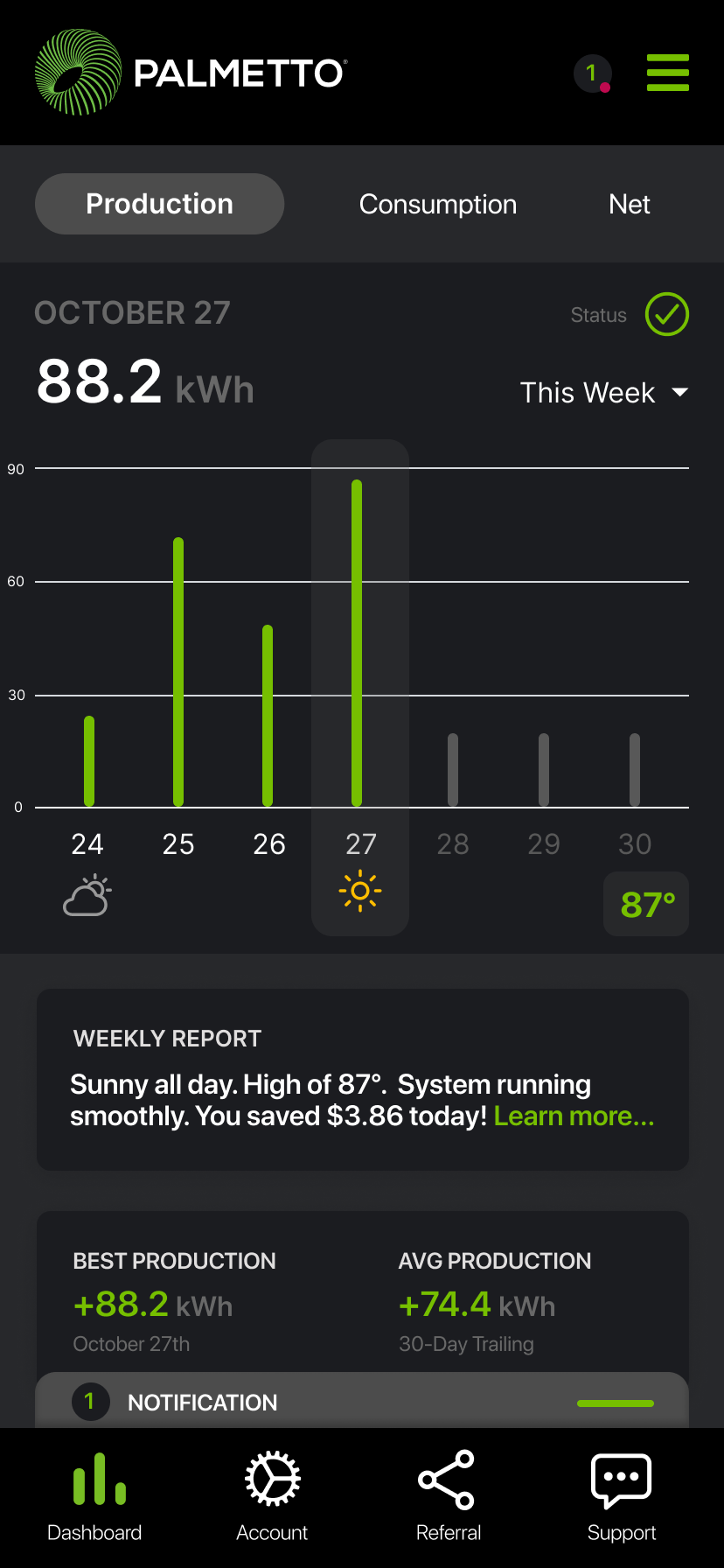
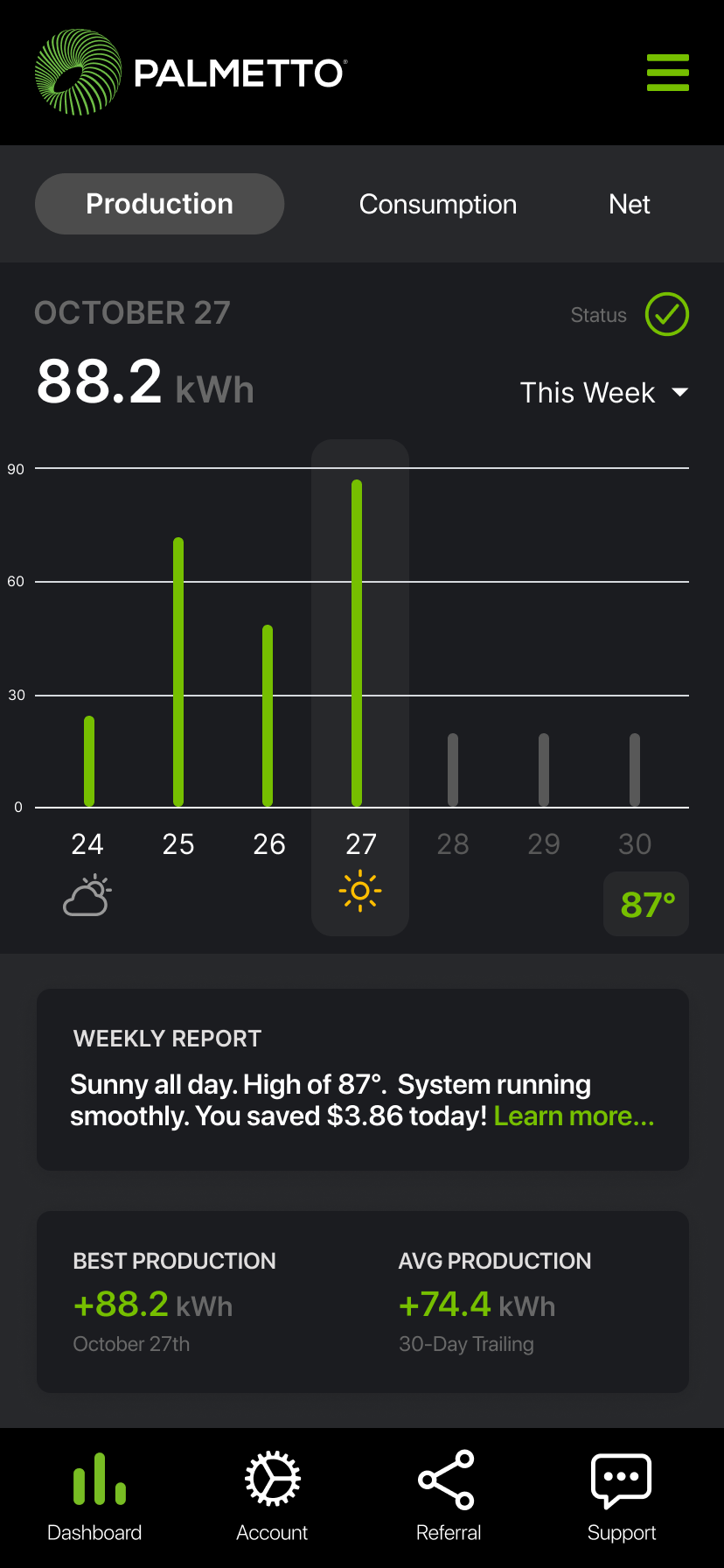
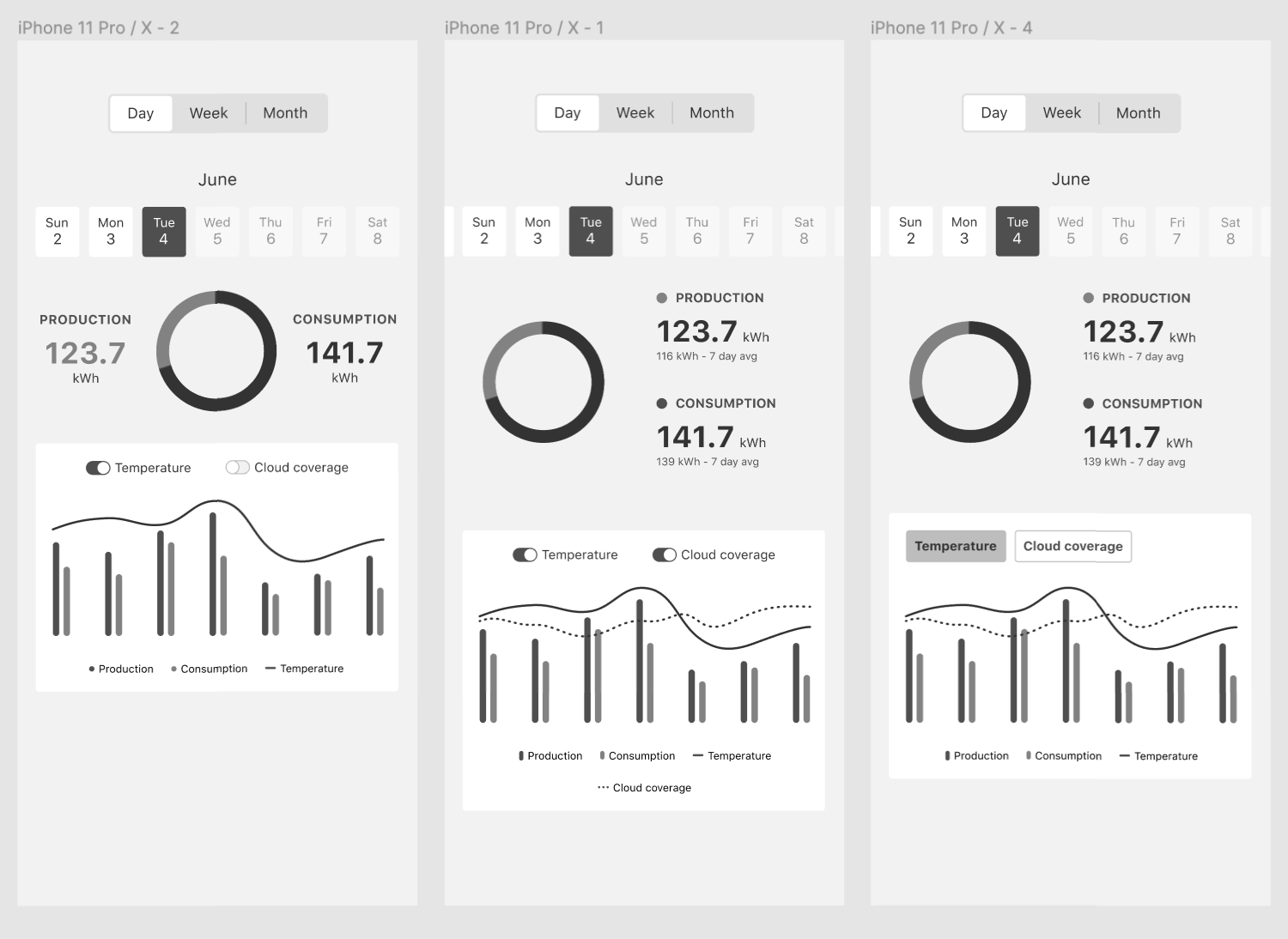
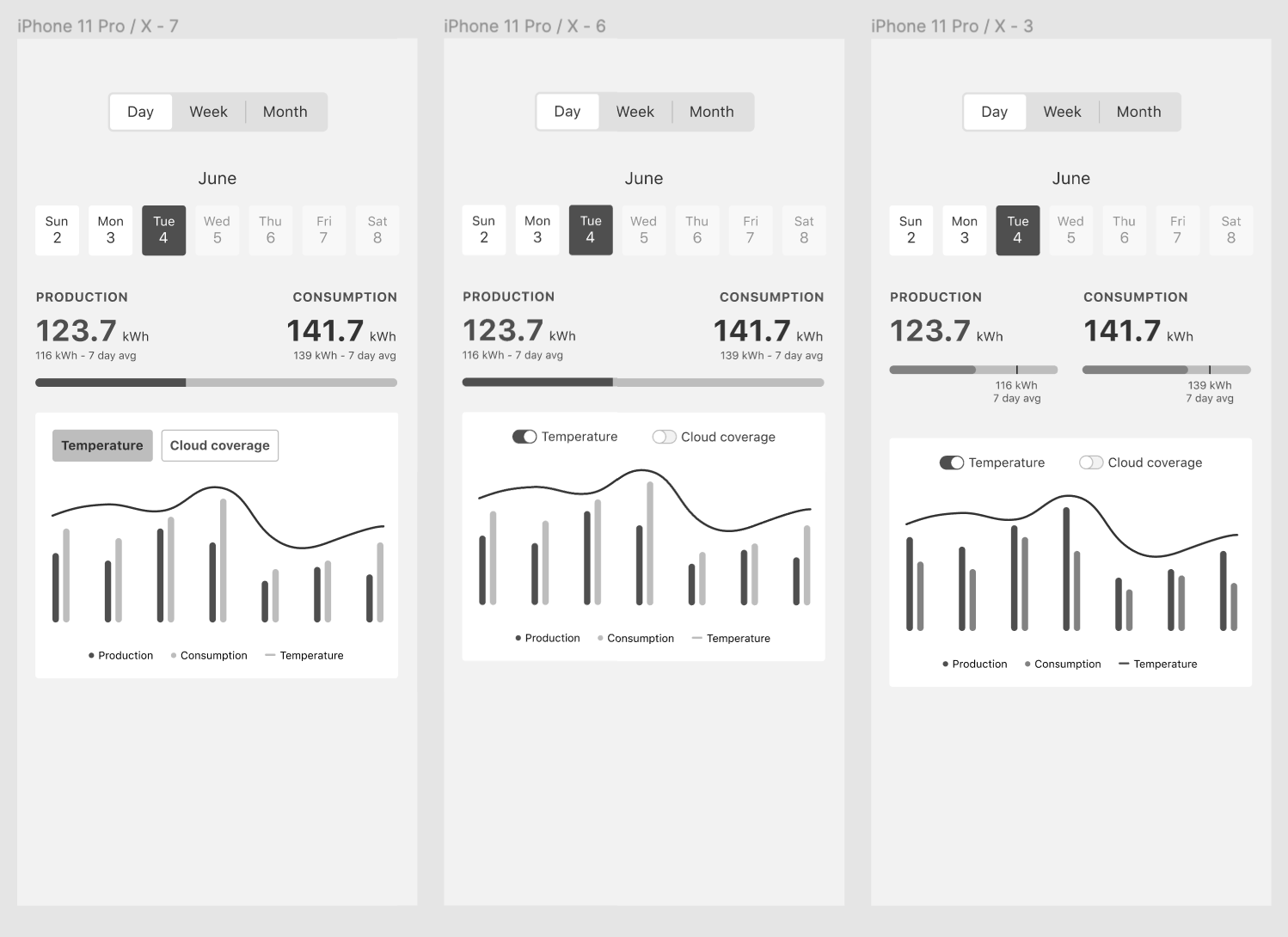
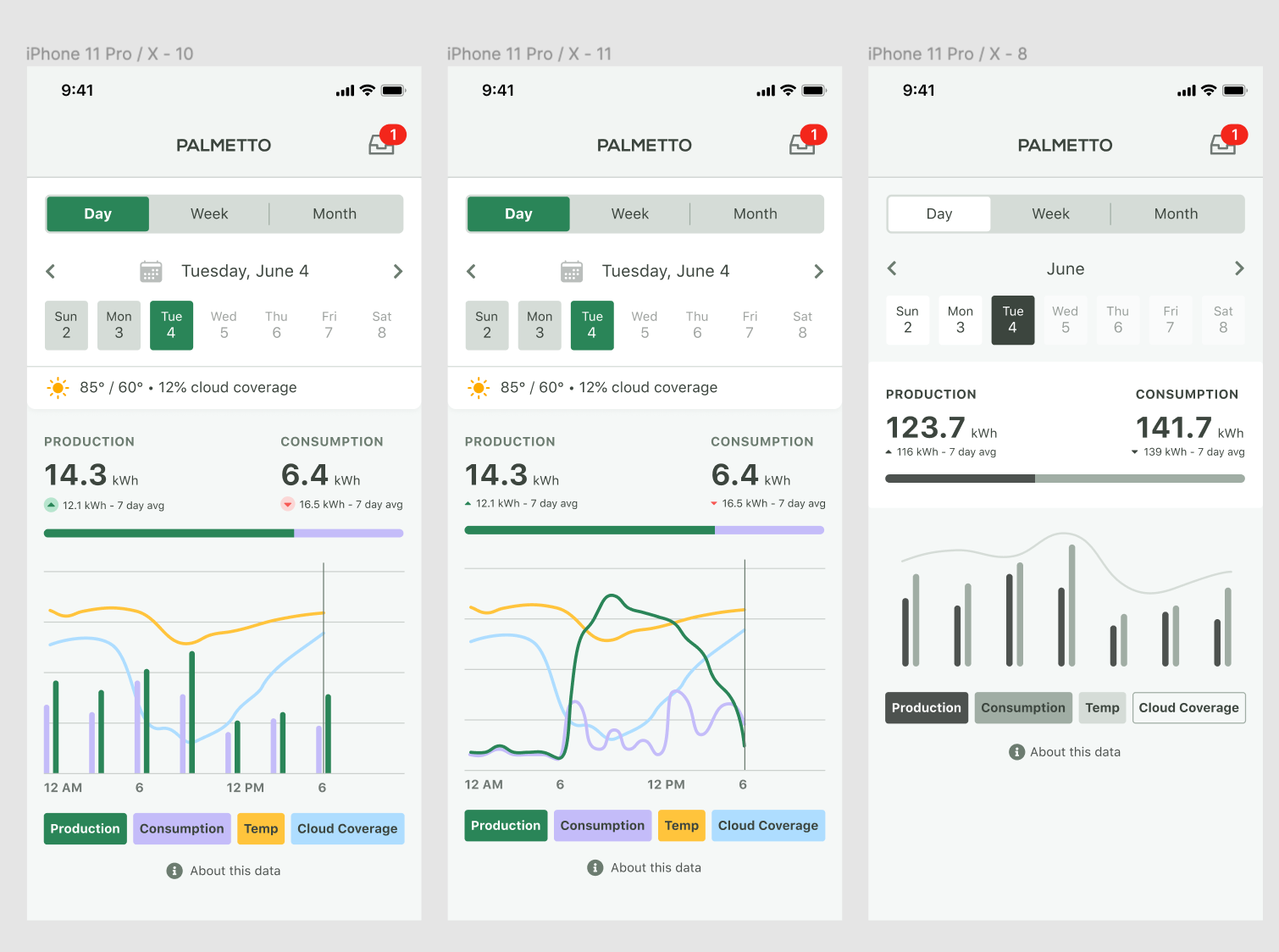
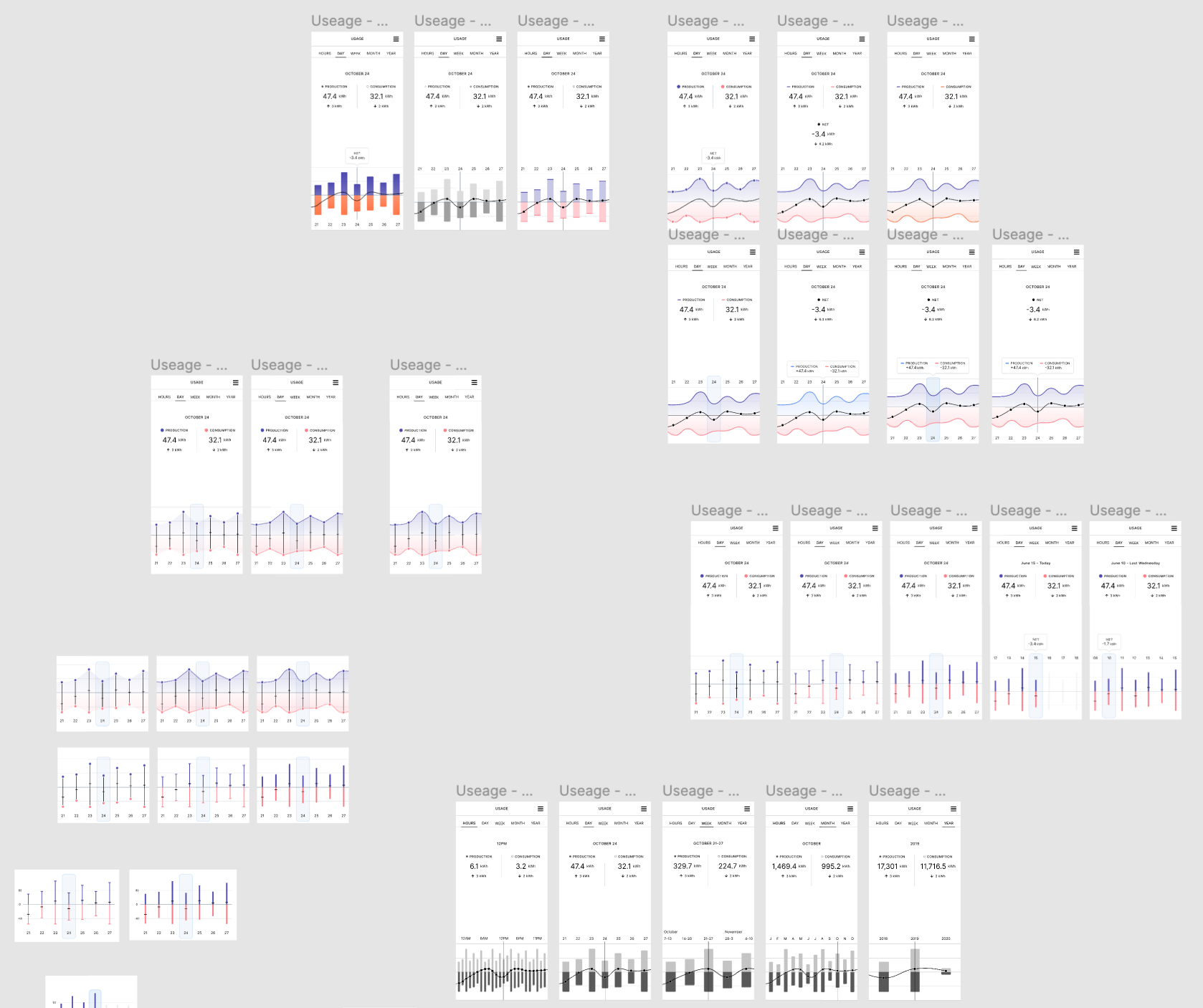
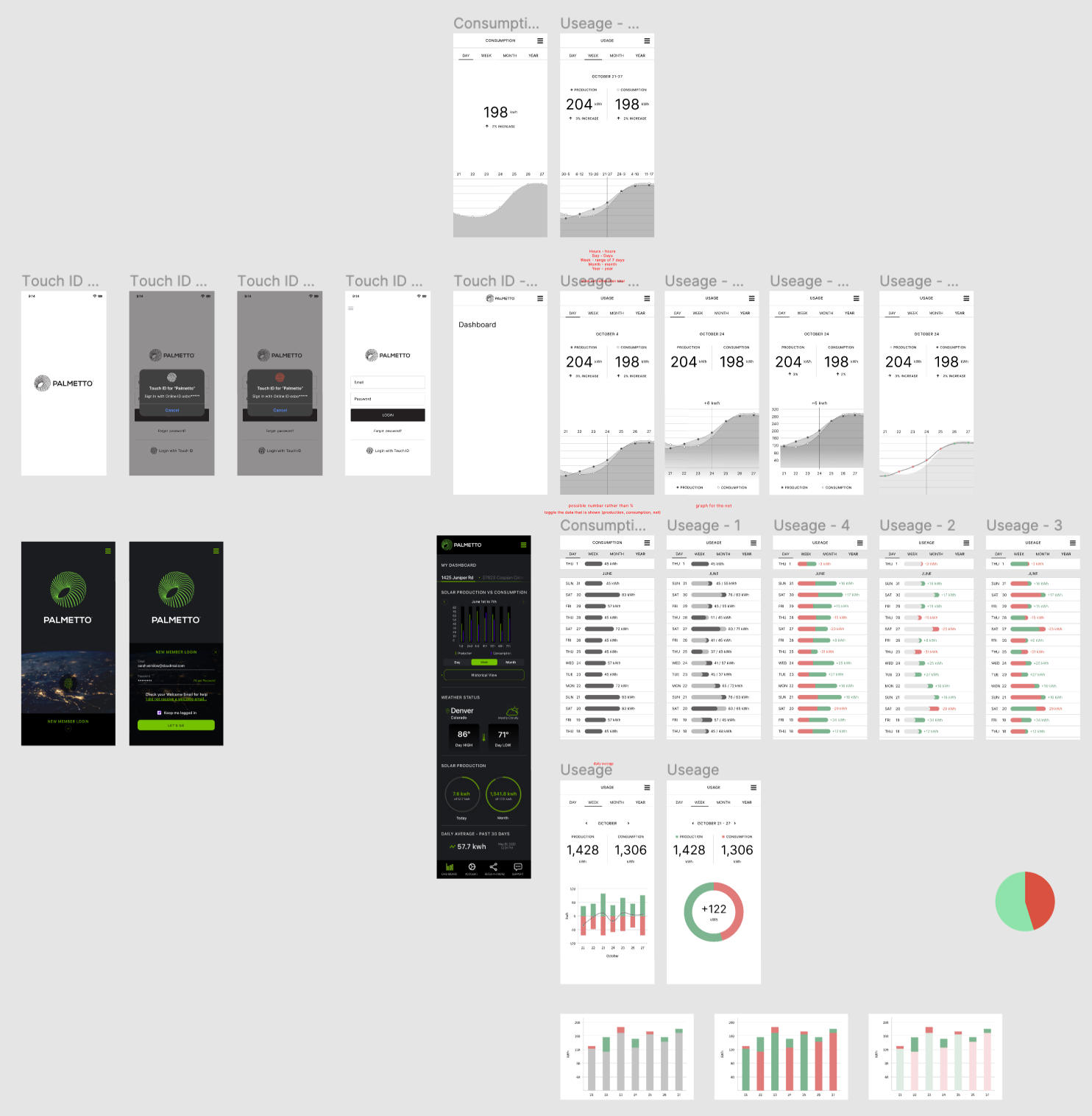
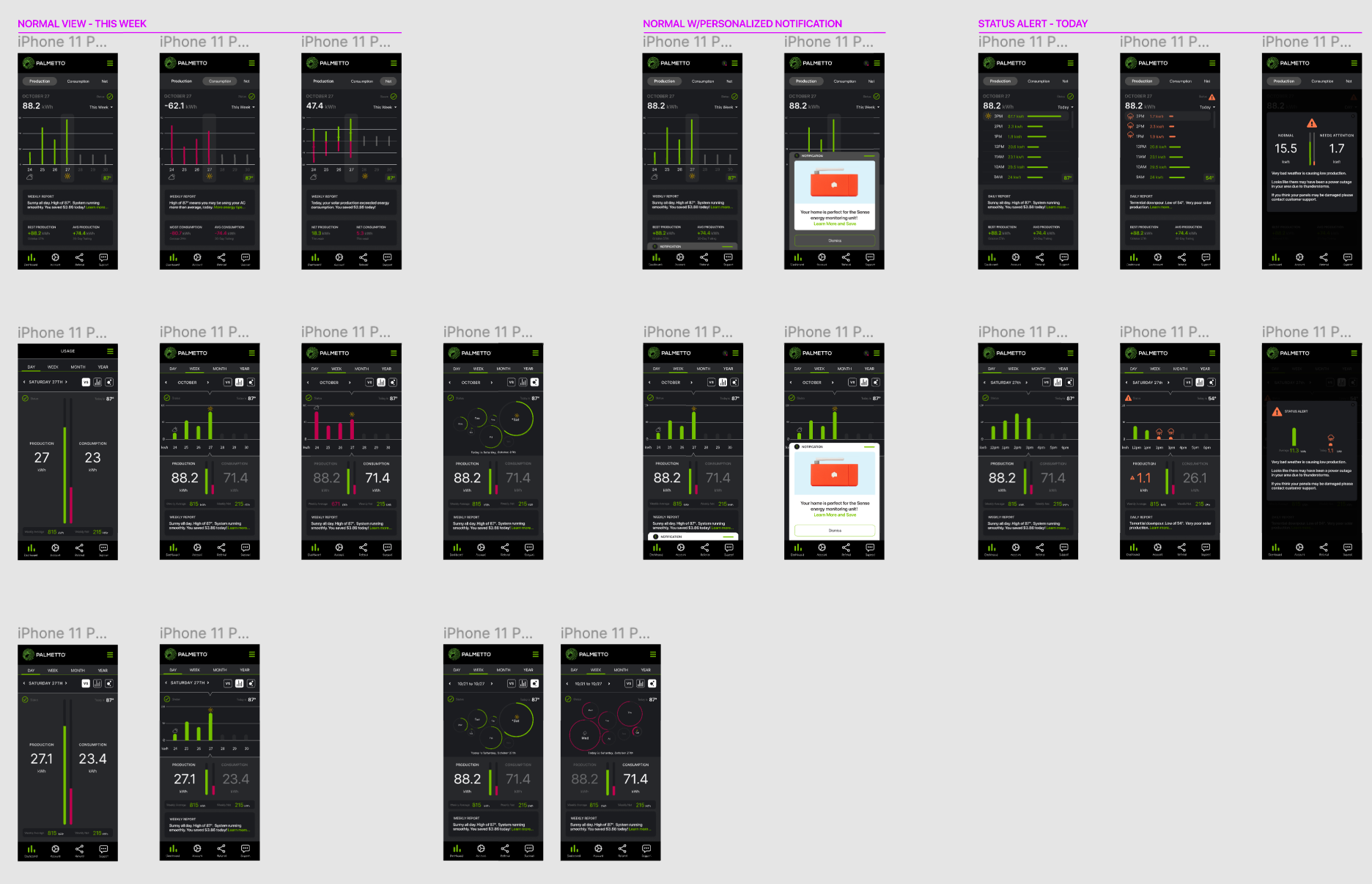
Explored data visualization concepts and light and dark modes.
Design System
To enable Palmetto’s small internal team to ship consistently after my engagement, I created a design system that covered core components, patterns, and visual language across the app and supporting web surfaces.
To enable Palmetto’s small internal team to ship consistently after my engagement, I created a design system that covered core components, patterns, and visual language across the app and supporting web surfaces.
System Outcomes
• Component library aligned with engineering constraints, enabling faster build and more reliable handoff.
• Pattern definitions for alerts, dashboards, onboarding, and settings that could be reused by future feature teams.
• Documentation of interaction guidelines so micro‑interactions could be extended without re‑inventing behavior each time.
• Component library aligned with engineering constraints, enabling faster build and more reliable handoff.
• Pattern definitions for alerts, dashboards, onboarding, and settings that could be reused by future feature teams.
• Documentation of interaction guidelines so micro‑interactions could be extended without re‑inventing behavior each time.
Prototyped micro-interaction animations to test concepts
Cross‑functional Leadership
At principal-level, I facilitated ongoing design and decision sessions with the Product Owner and Product VP, using prototypes and systems diagrams to align on scope, sequencing, and KPI impact. These sessions shifted conversations from individual screens to end‑to‑end flows and lifecycle value.
At principal-level, I facilitated ongoing design and decision sessions with the Product Owner and Product VP, using prototypes and systems diagrams to align on scope, sequencing, and KPI impact. These sessions shifted conversations from individual screens to end‑to‑end flows and lifecycle value.
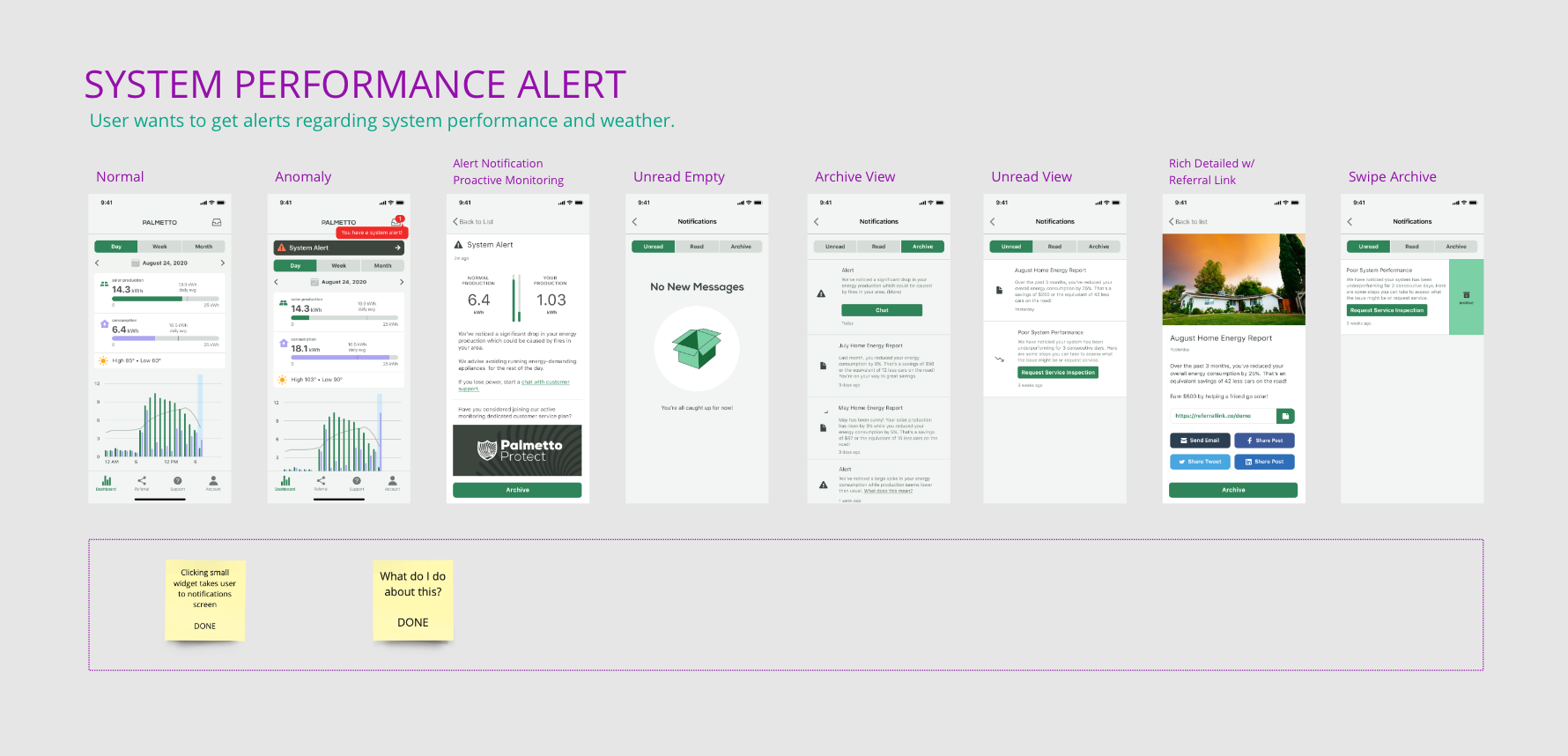
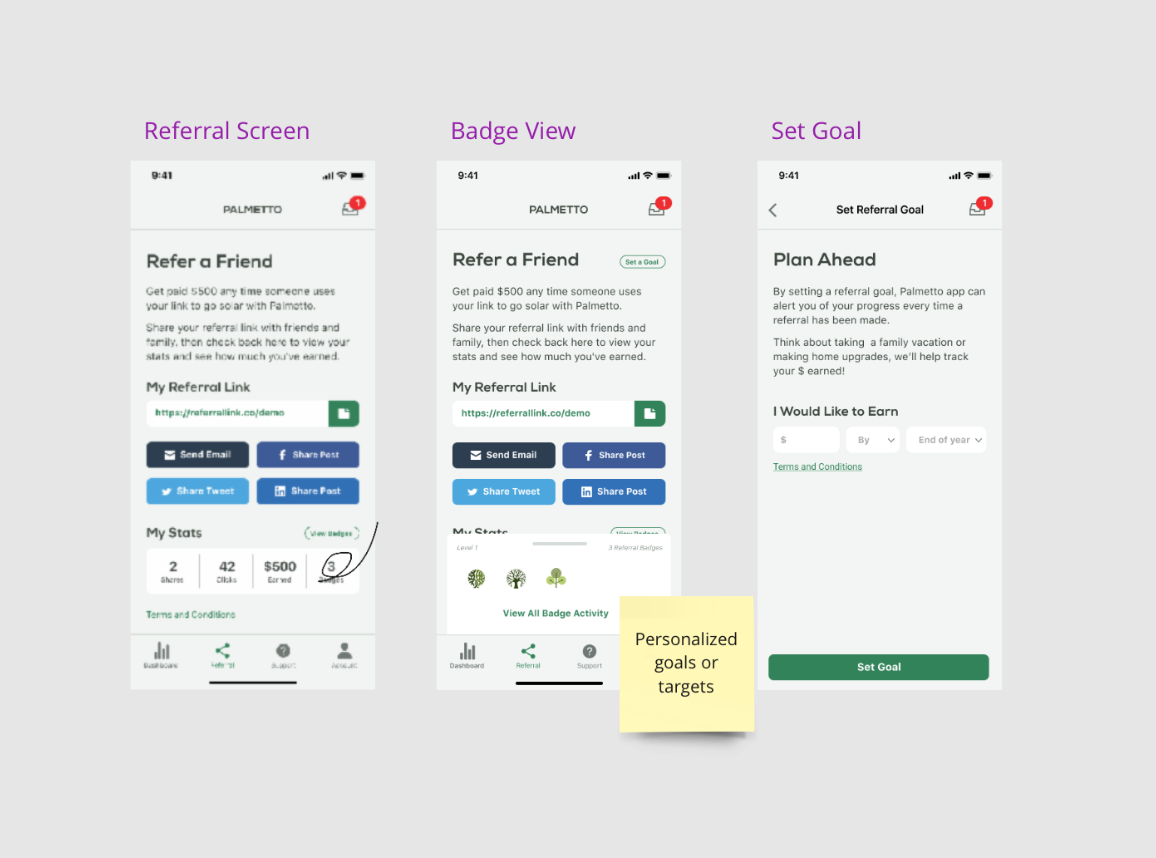
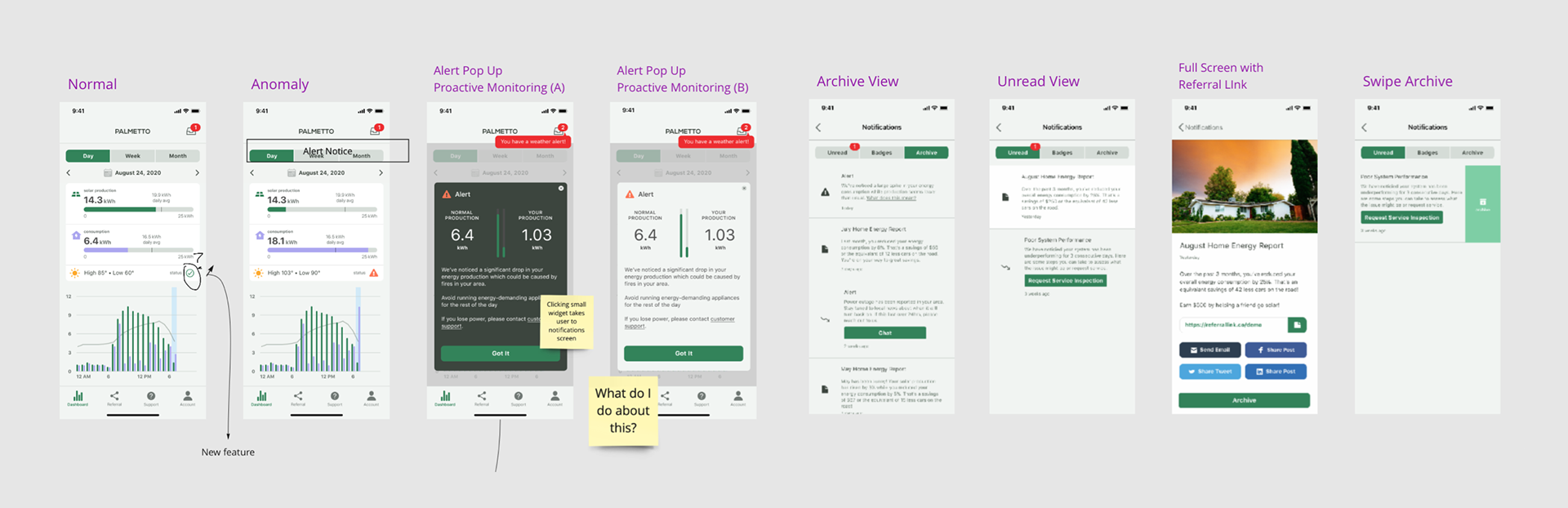
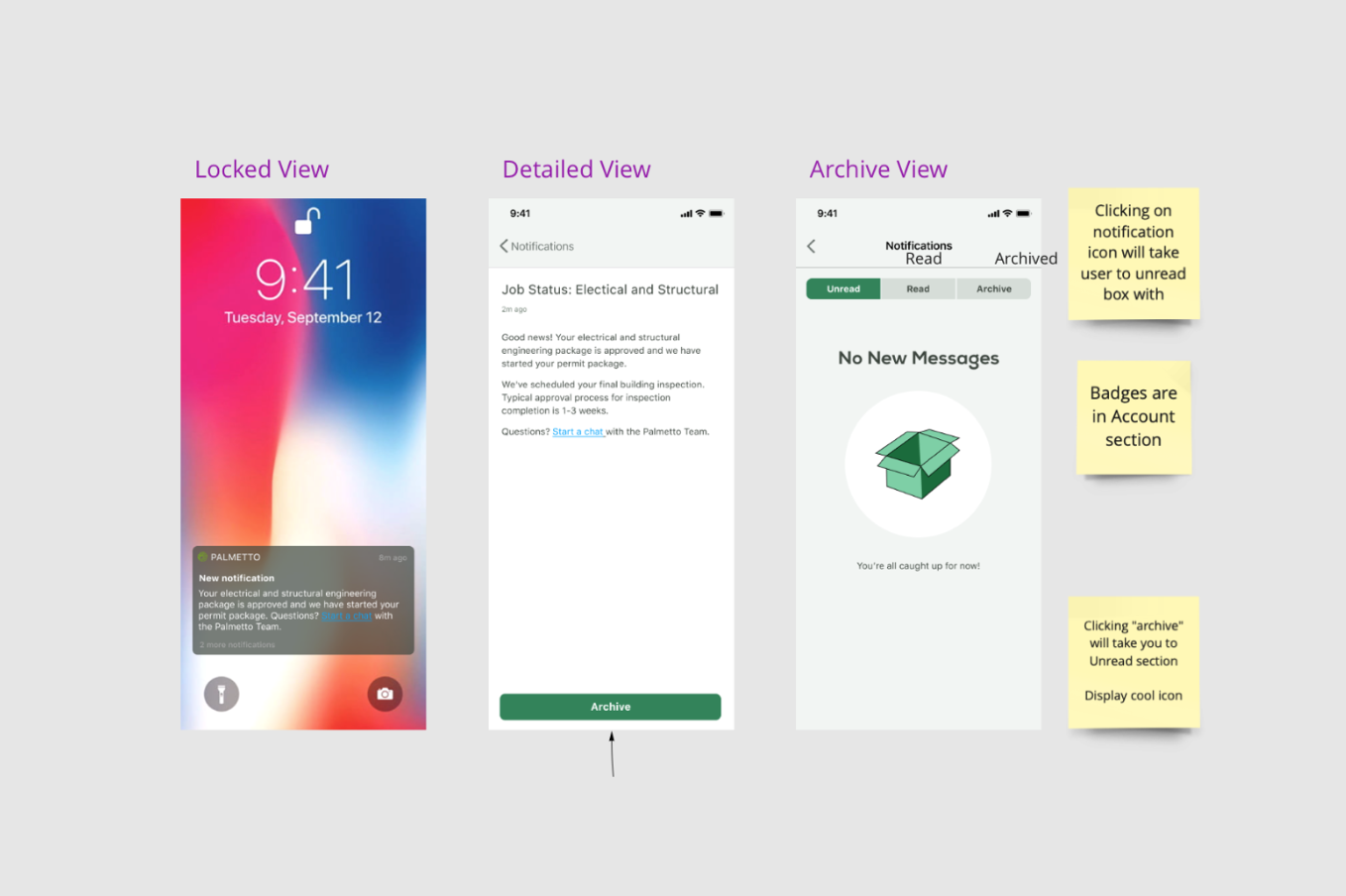
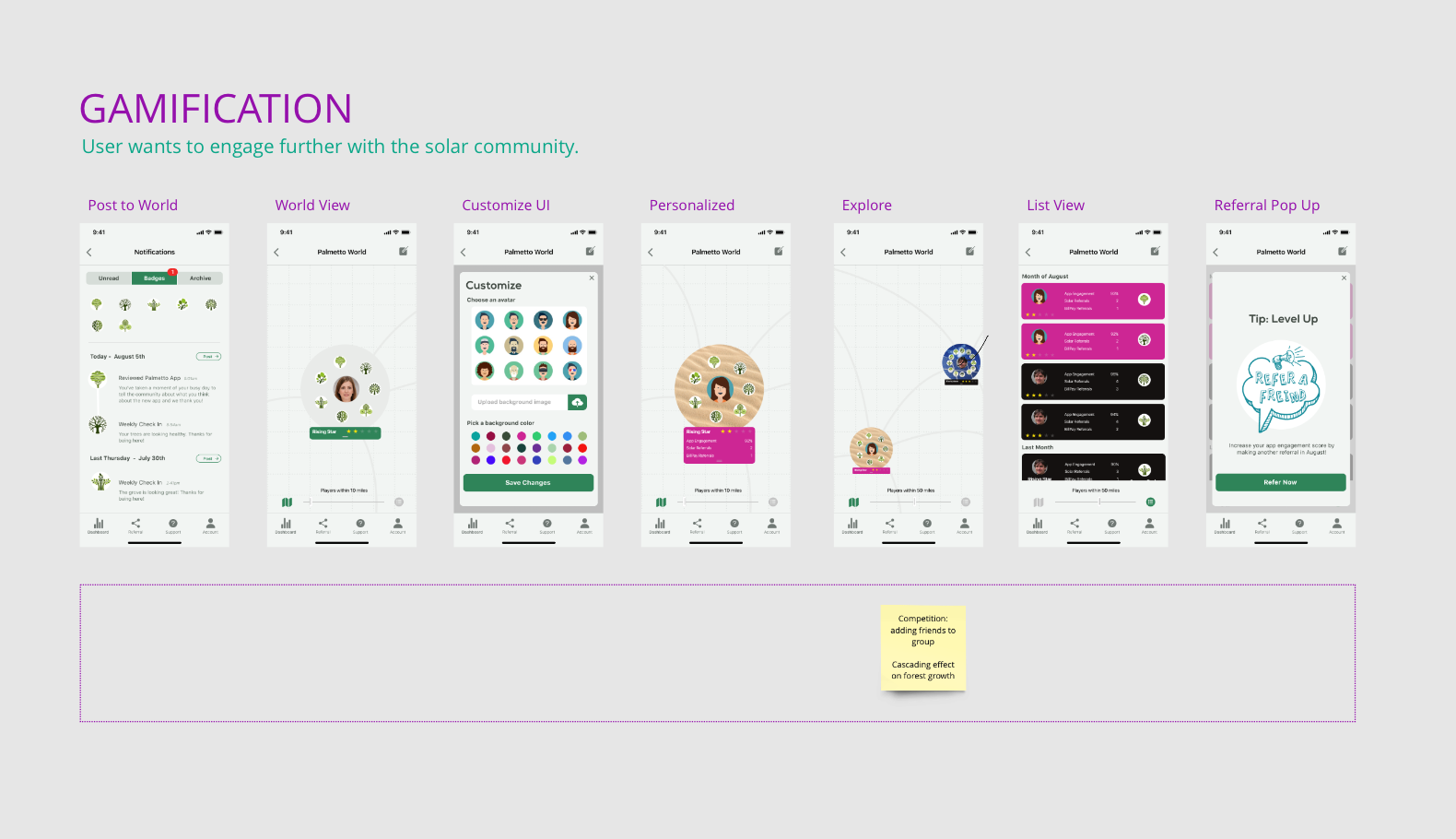
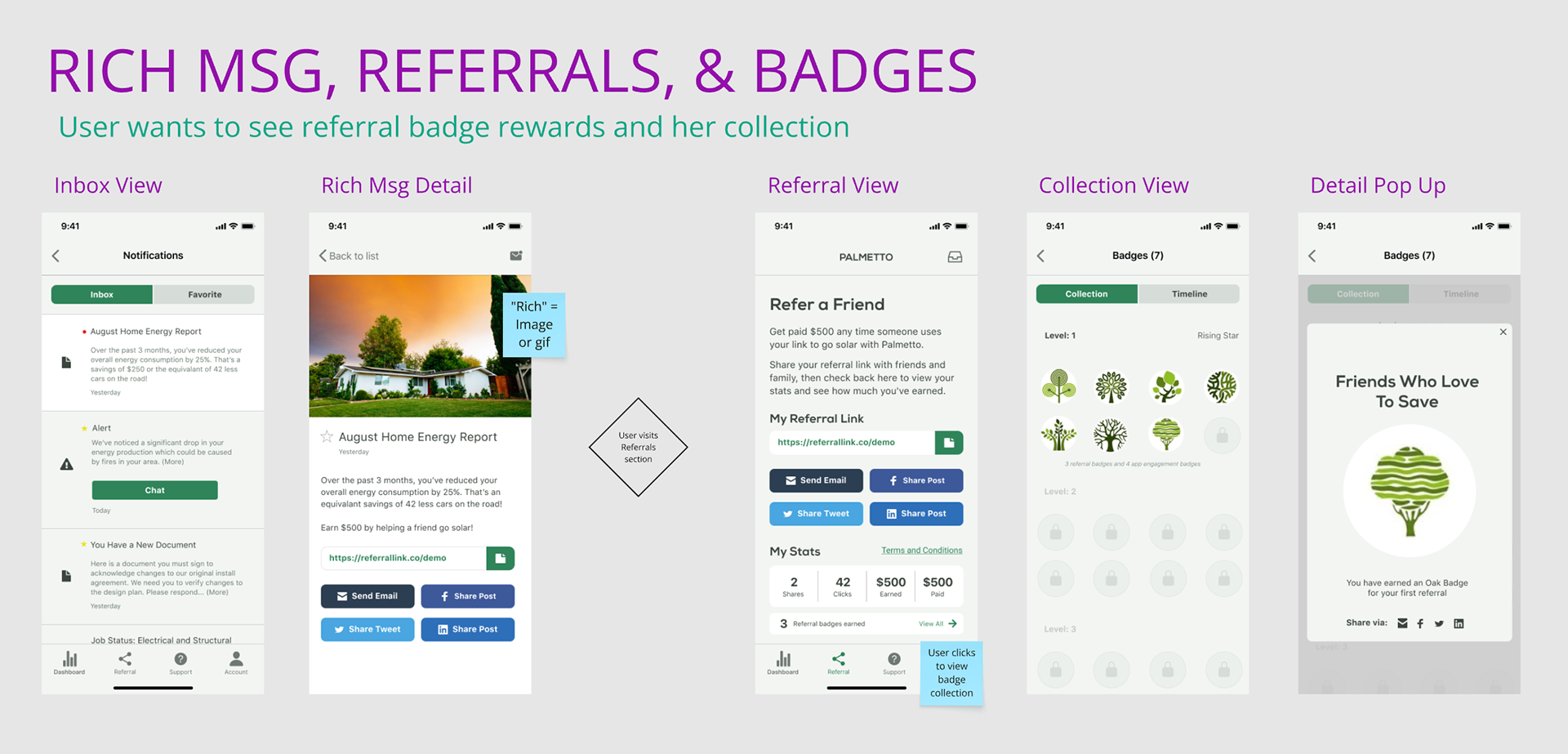
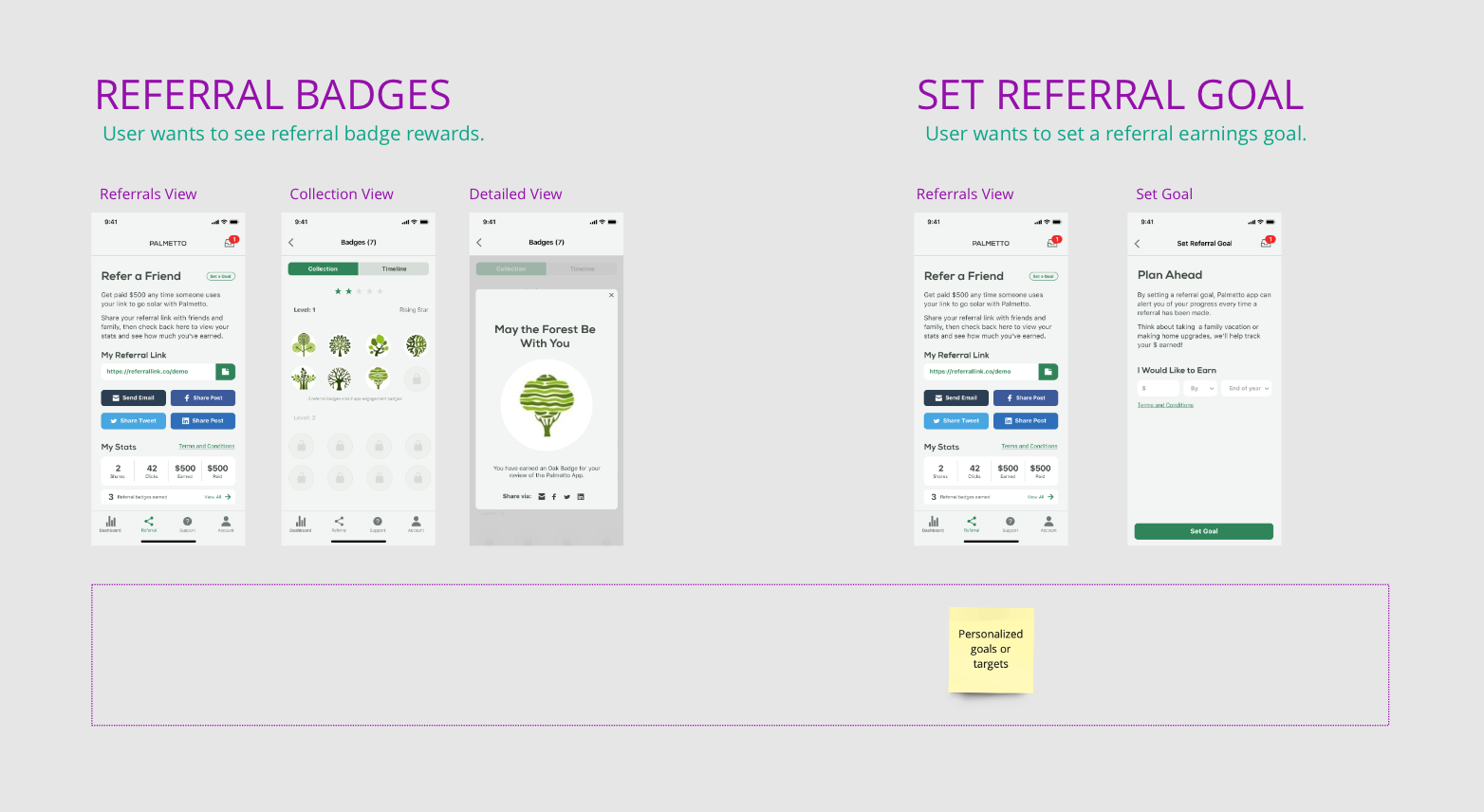
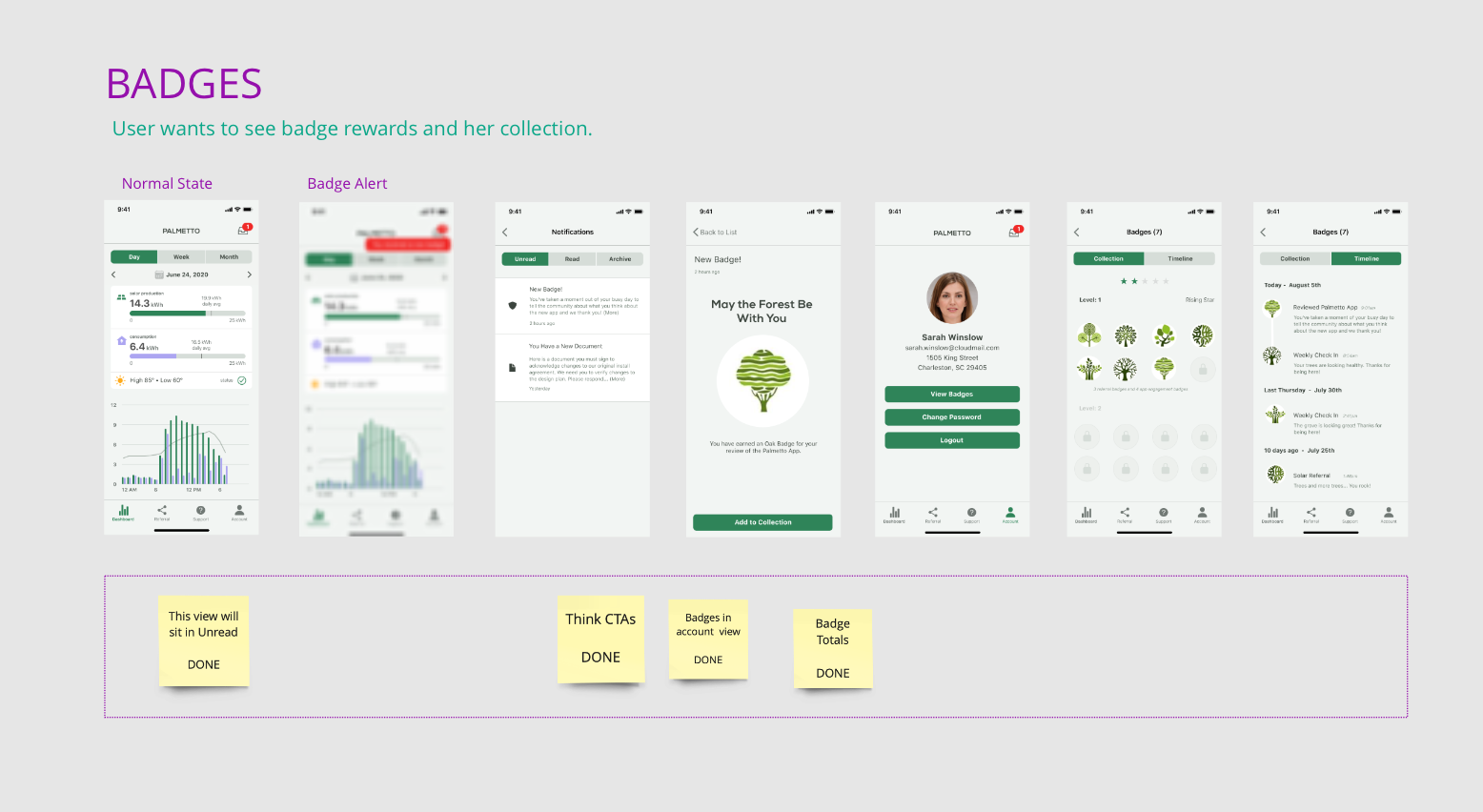
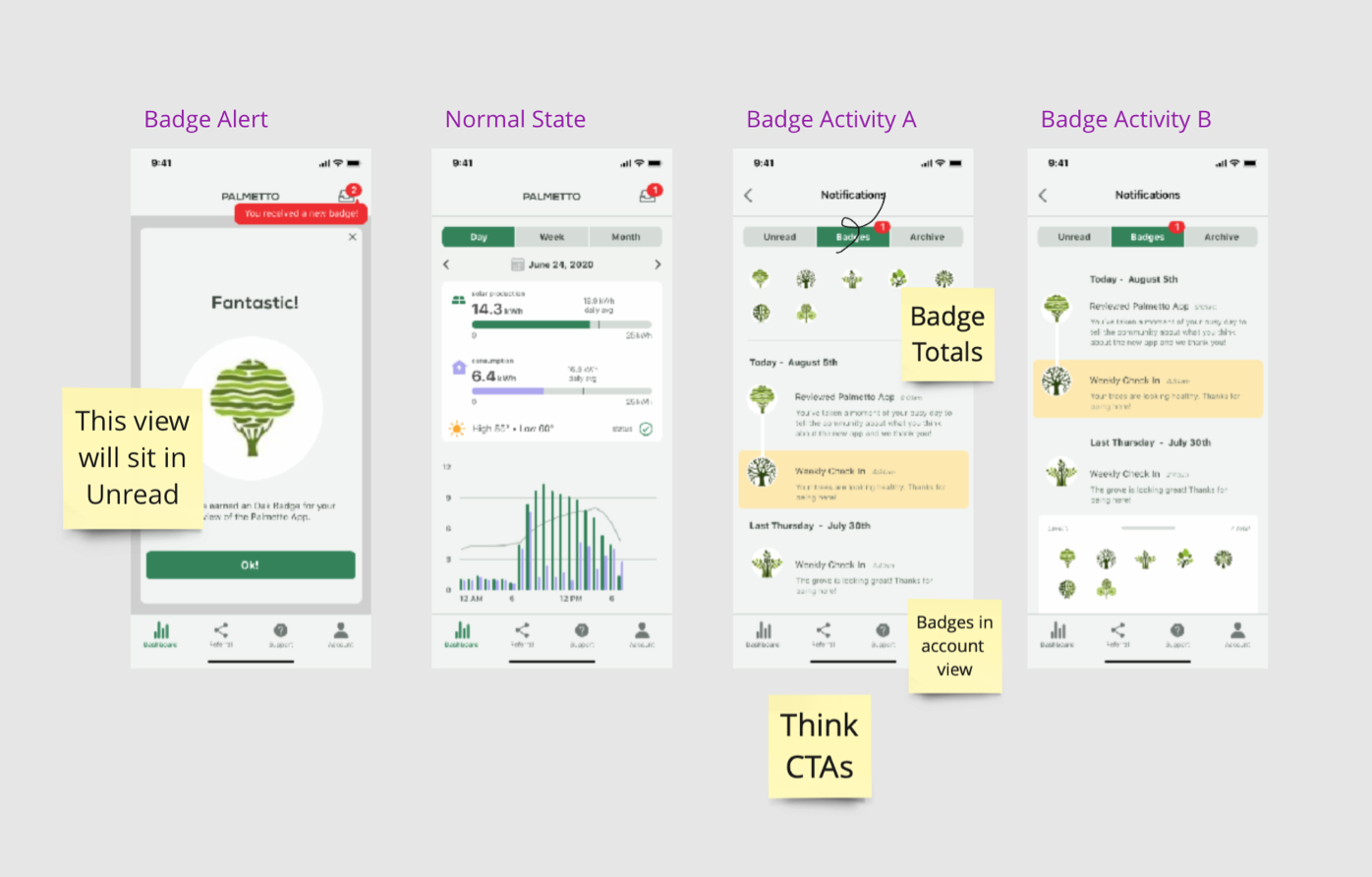
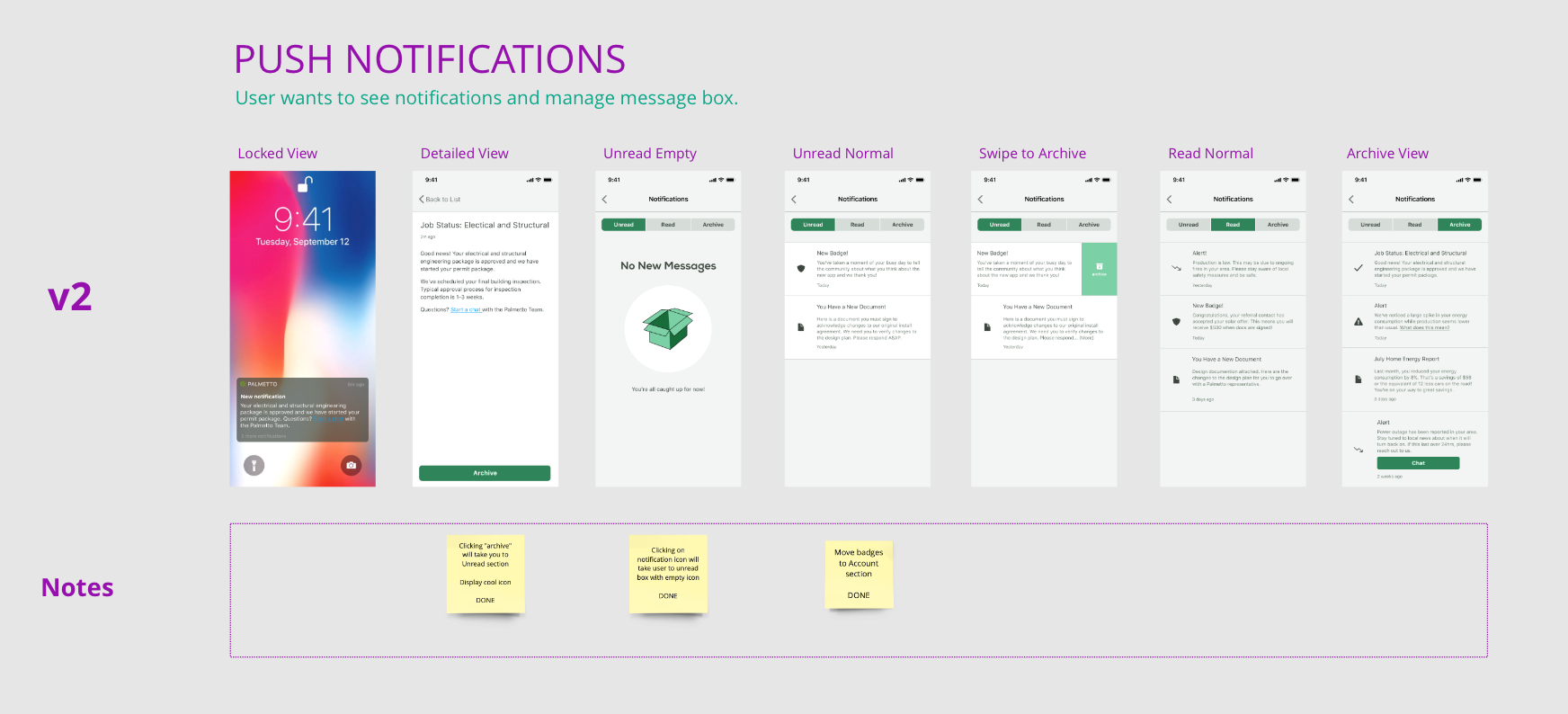
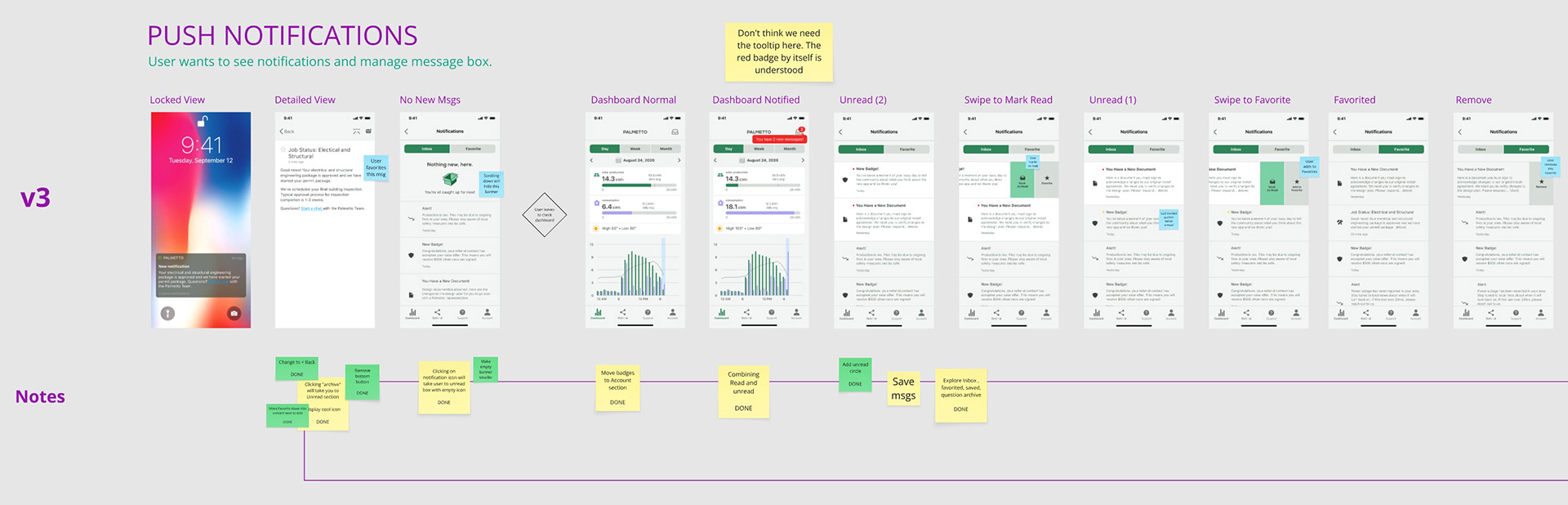
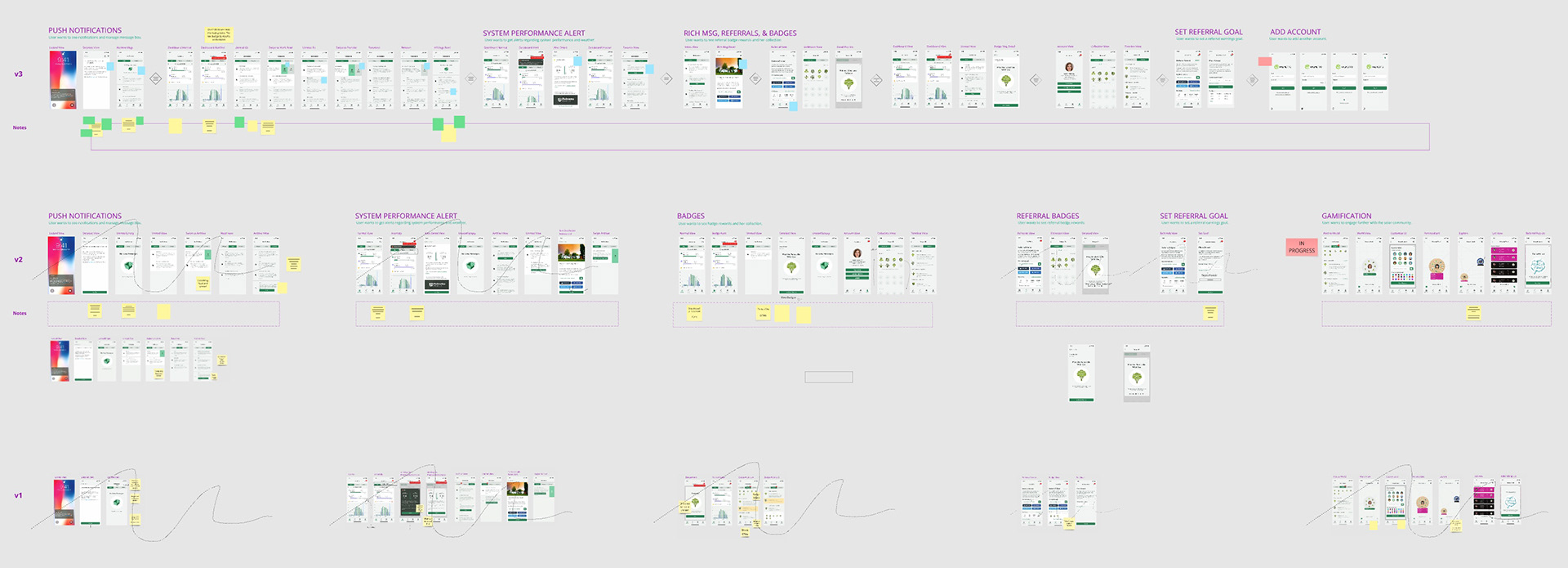
Conducted design reiteration sessions with Product Owner and Product VP
Final Delivery for Production
• Drove the MVP from concept through finalized mobile UI in under four months.
• Supported implementation and QA across iOS and Android through launch on the Apple App Store and Google Play.
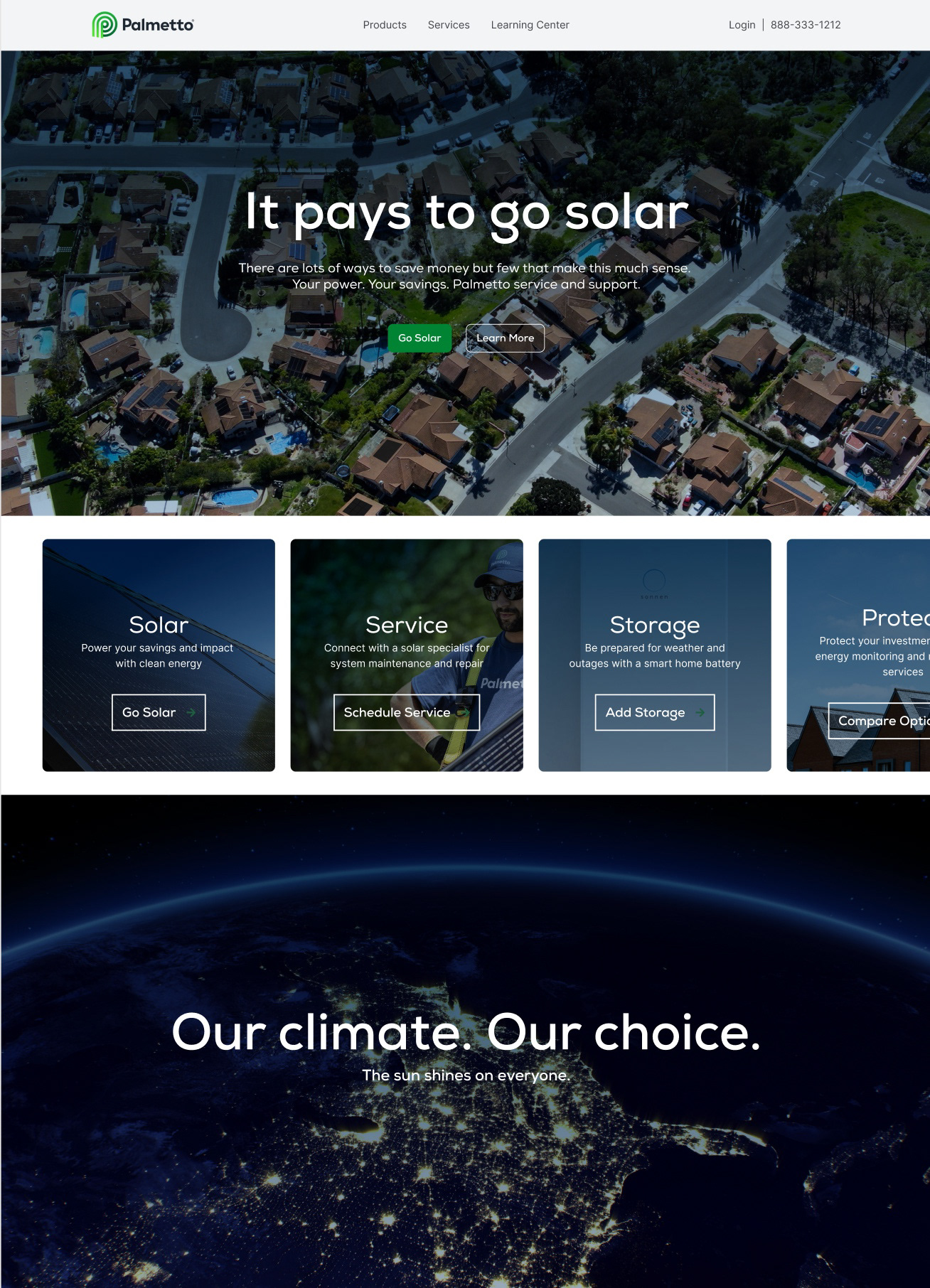
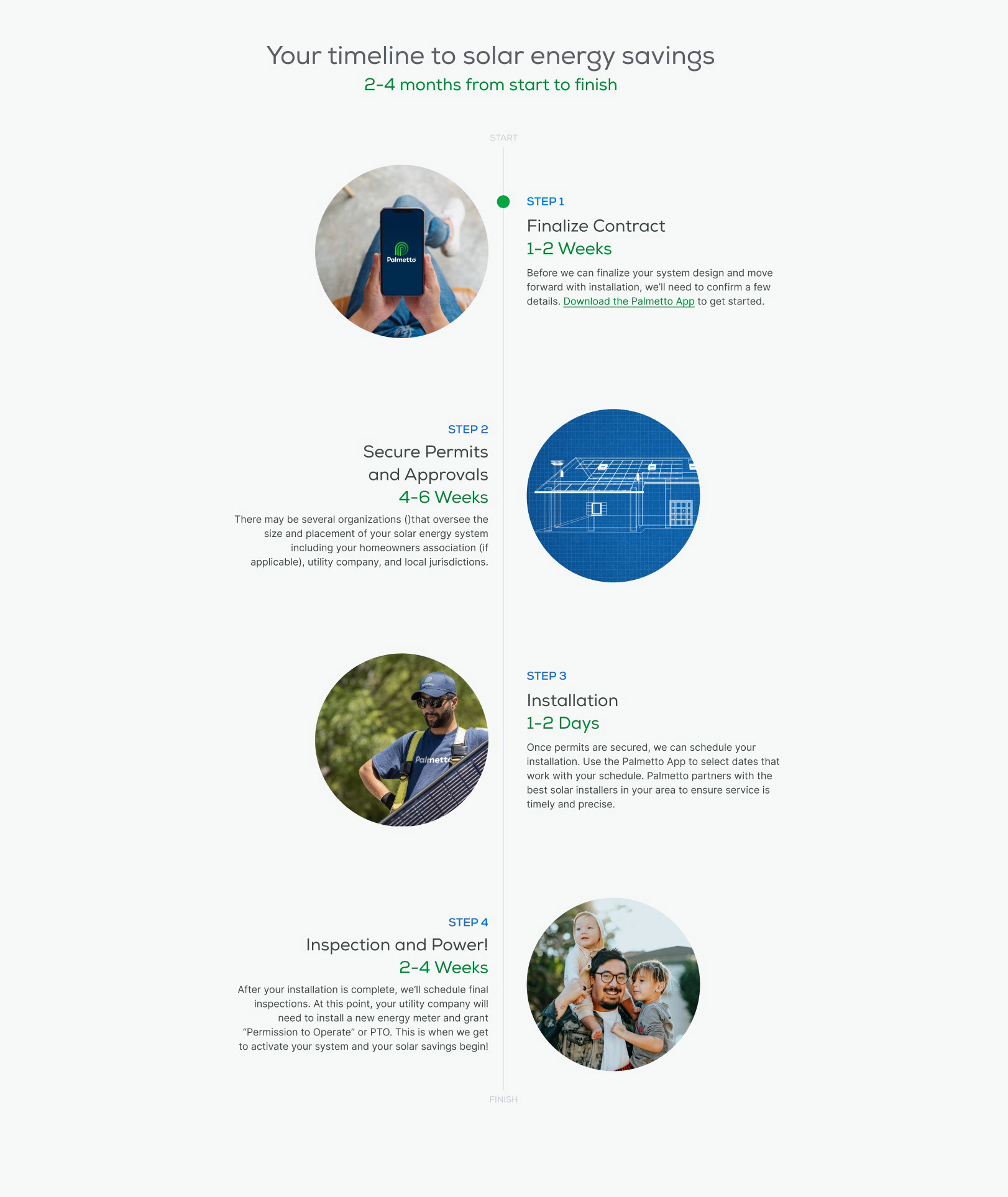
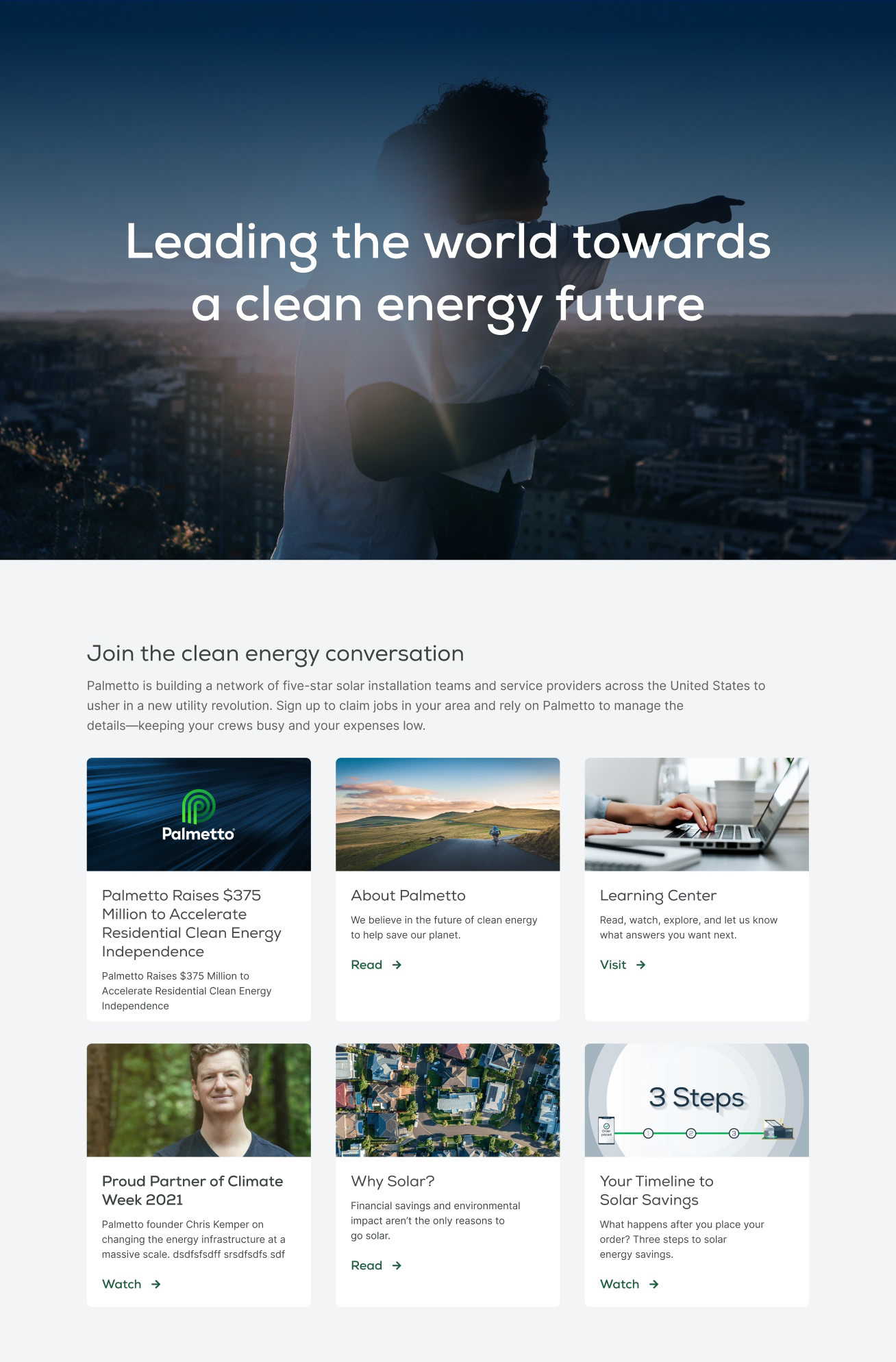
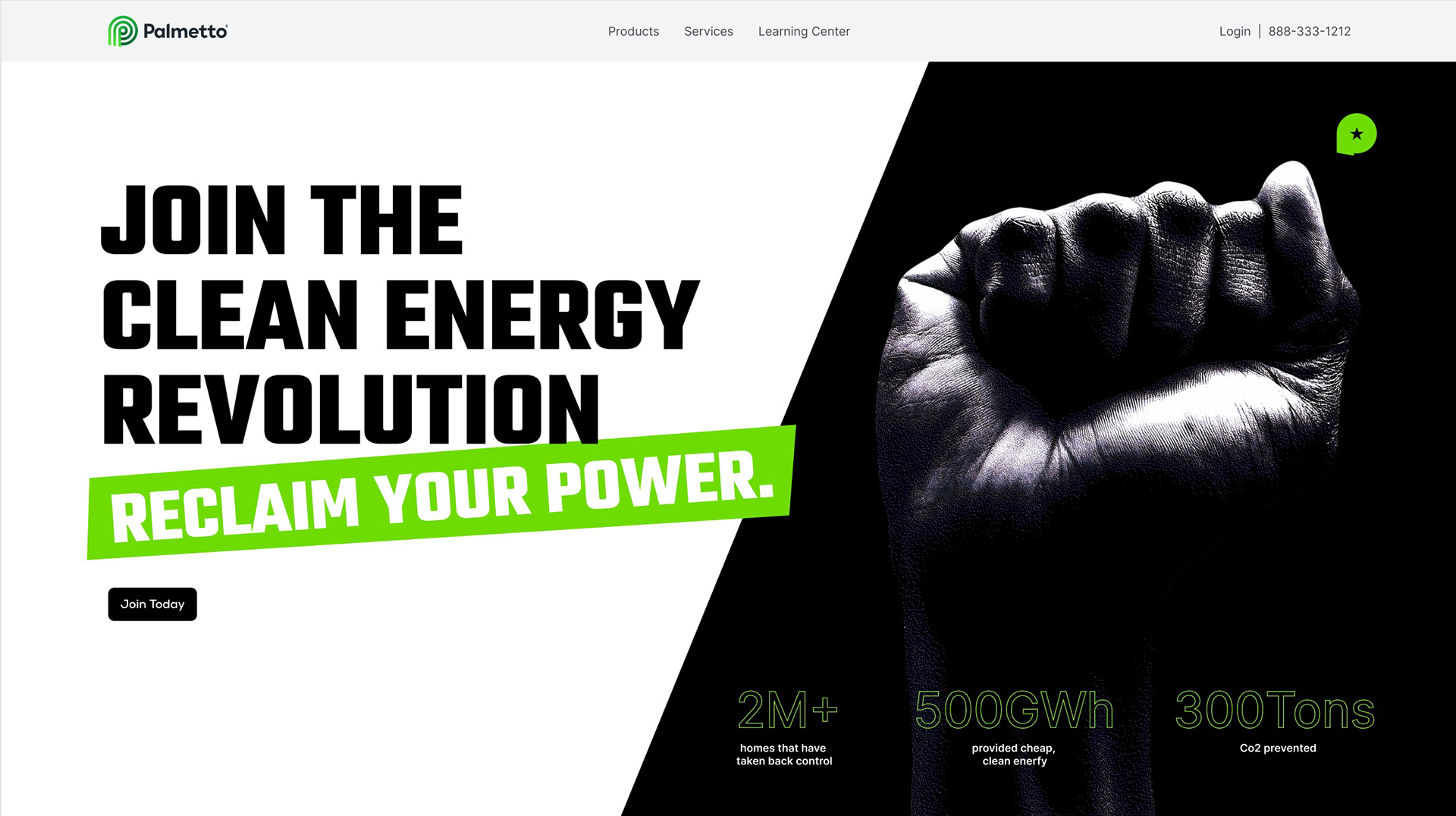
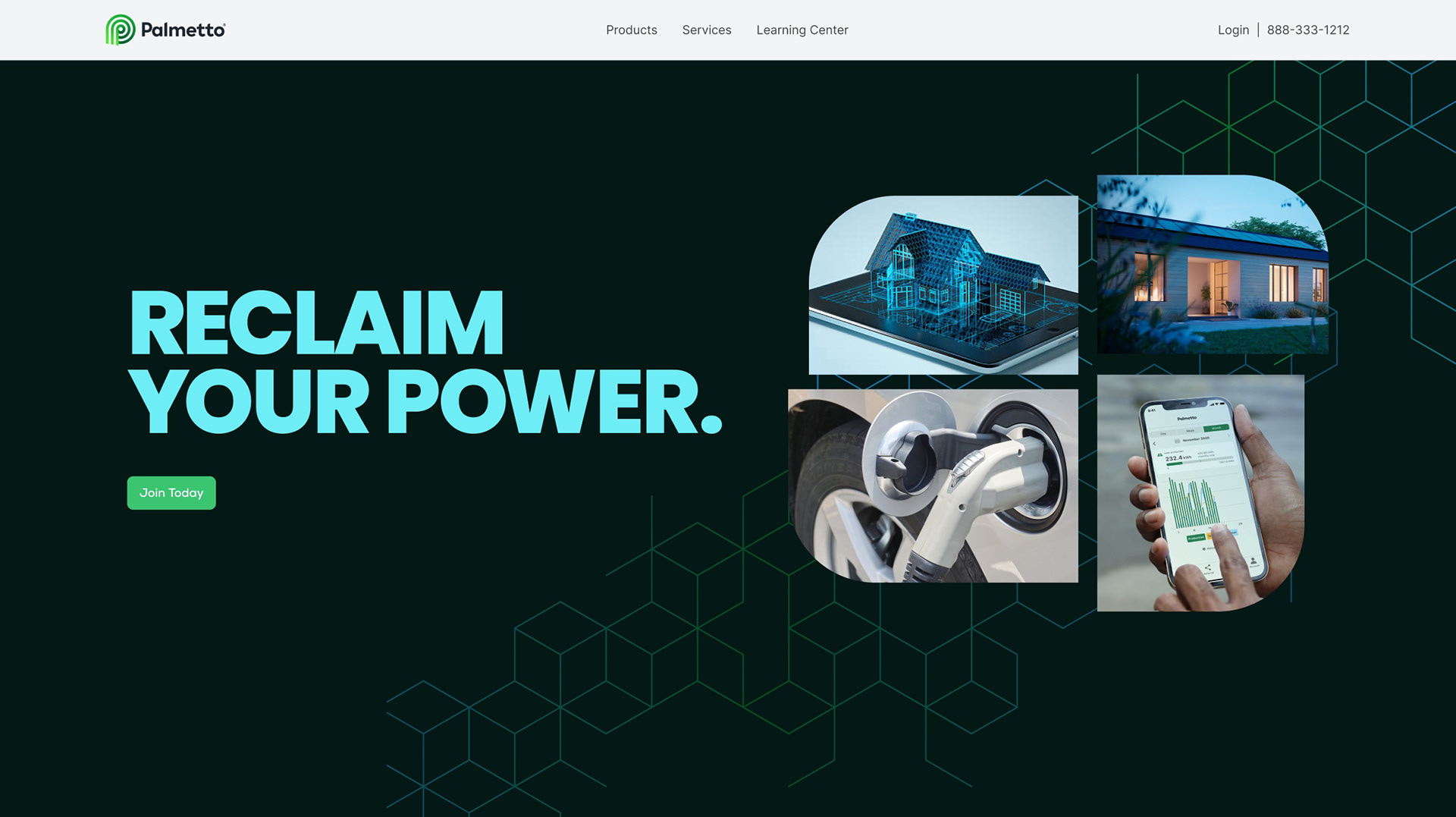
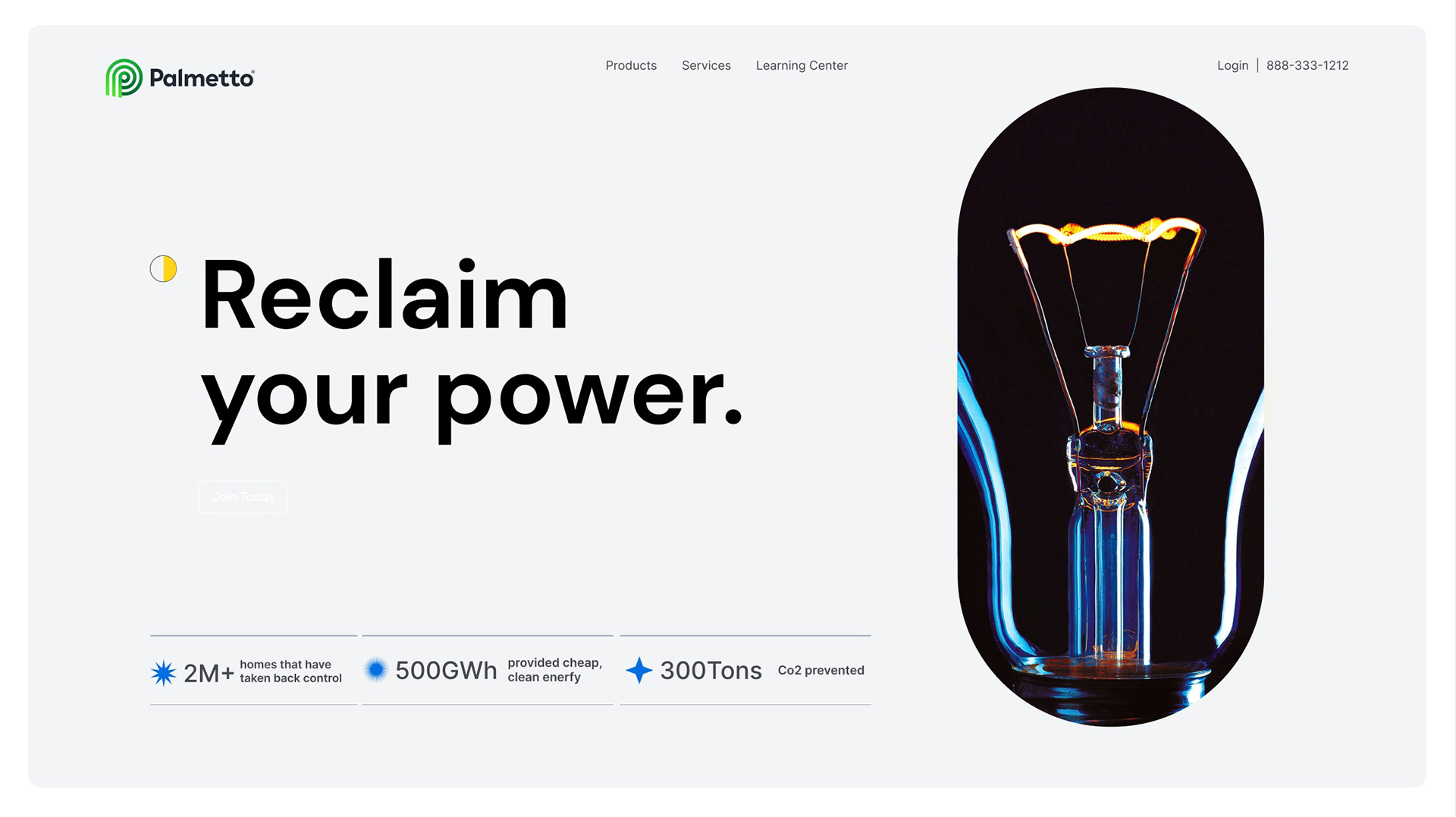
• Created hero visuals for Palmetto.com that aligned marketing storytelling with the new product reality, reinforcing a single system narrative.
• Drove the MVP from concept through finalized mobile UI in under four months.
• Supported implementation and QA across iOS and Android through launch on the Apple App Store and Google Play.
• Created hero visuals for Palmetto.com that aligned marketing storytelling with the new product reality, reinforcing a single system narrative.
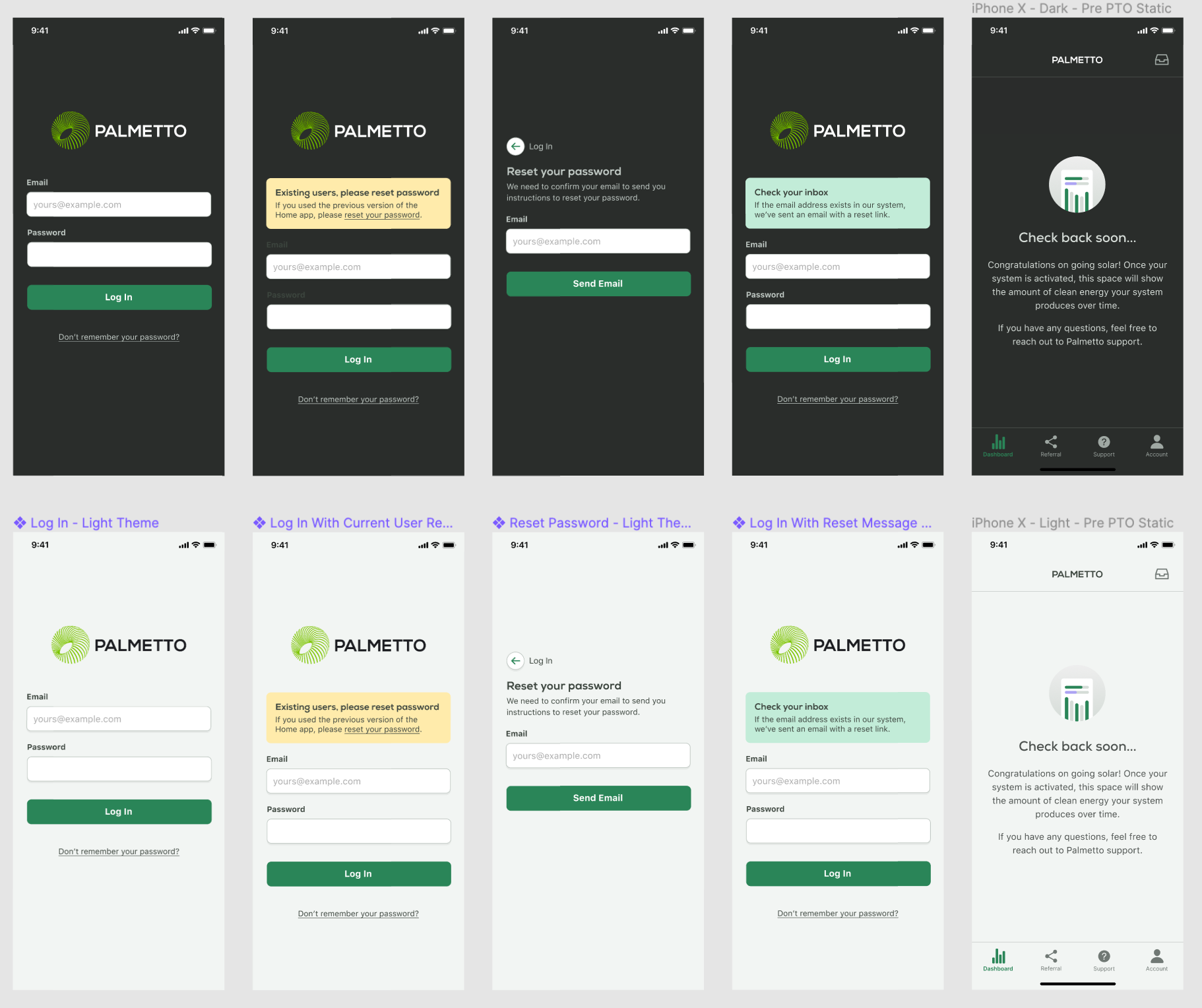
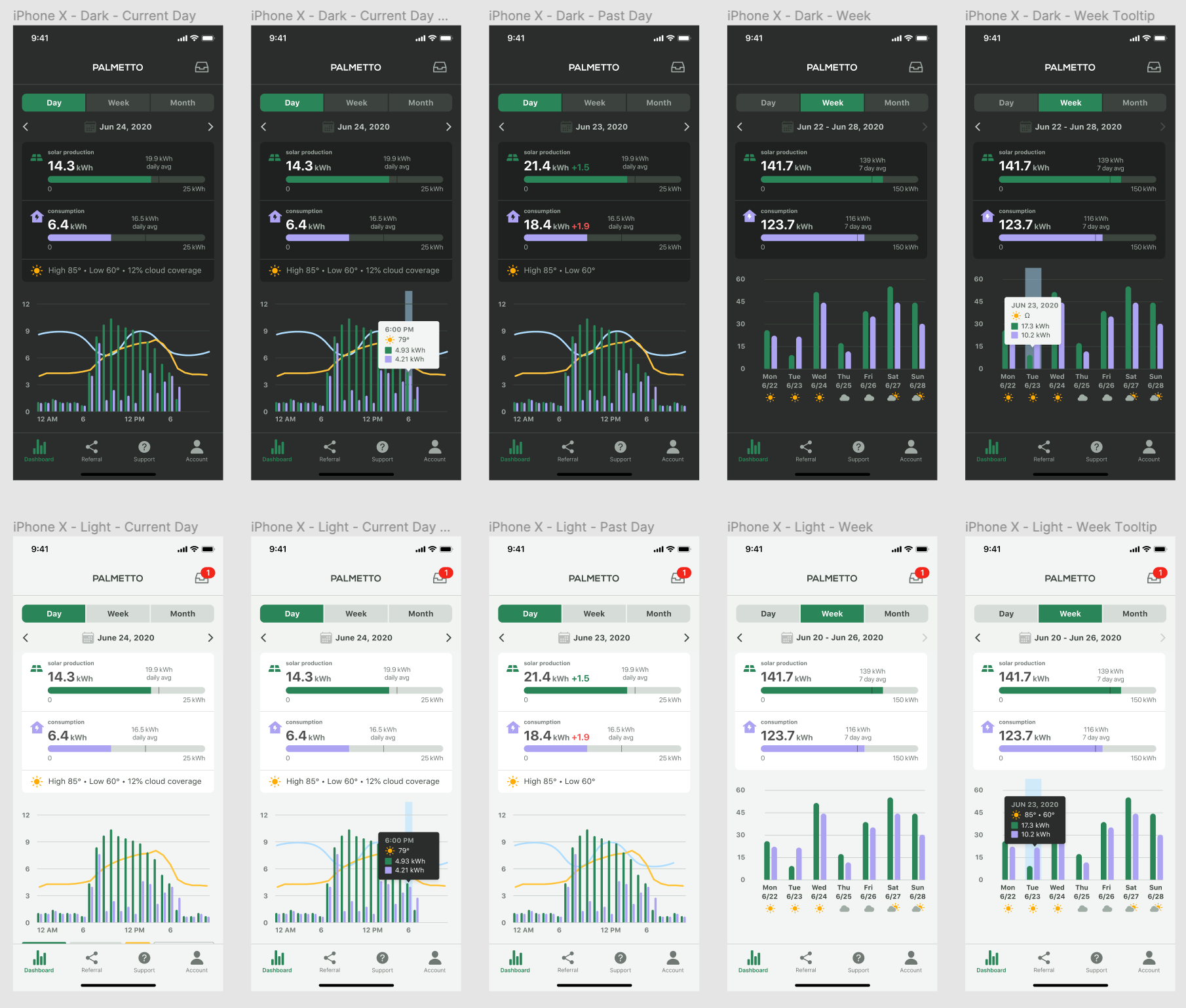
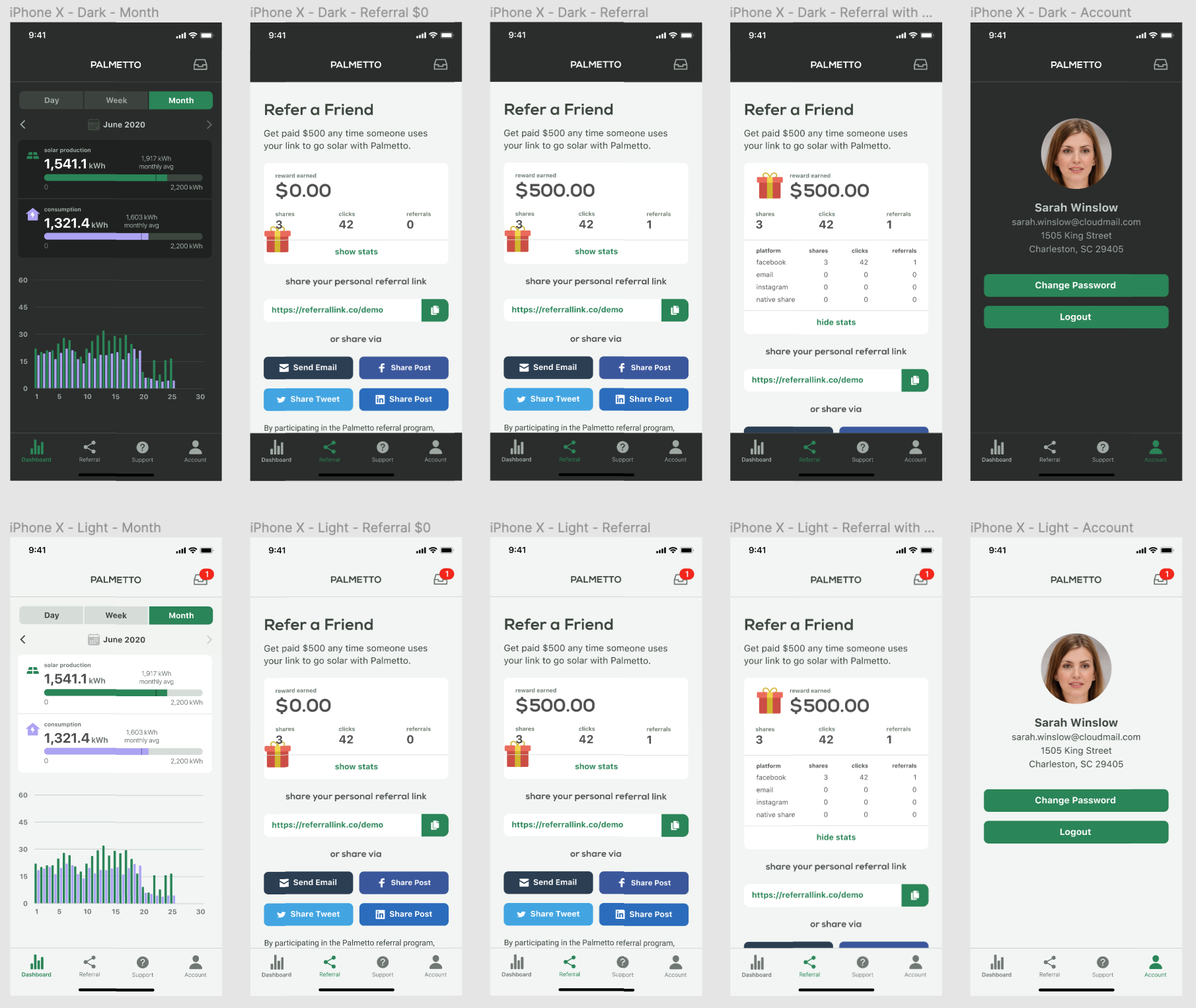
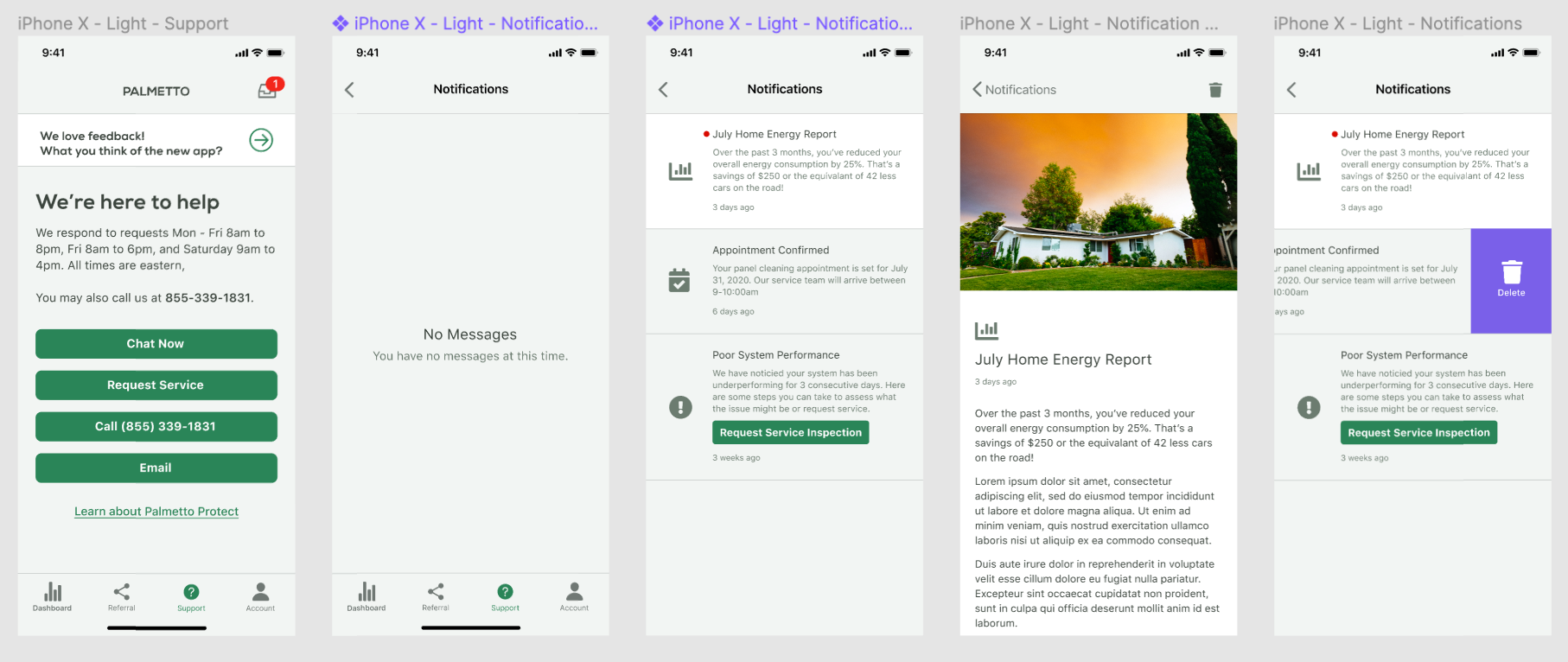
Finalized Mobile UI screen states
Public Launch: iOS + Android
Shipped simultaneously to iOS and Android—turning months of research, prototyping, and cross-functional alignment into a live product. The launch proved out our design system at scale, honored each platform's native patterns, and put real-time solar monitoring, referrals, and support directly in homeowners' pockets. A defining moment: mobile became Palmetto's primary customer touchpoint.
Shipped simultaneously to iOS and Android—turning months of research, prototyping, and cross-functional alignment into a live product. The launch proved out our design system at scale, honored each platform's native patterns, and put real-time solar monitoring, referrals, and support directly in homeowners' pockets. A defining moment: mobile became Palmetto's primary customer touchpoint.
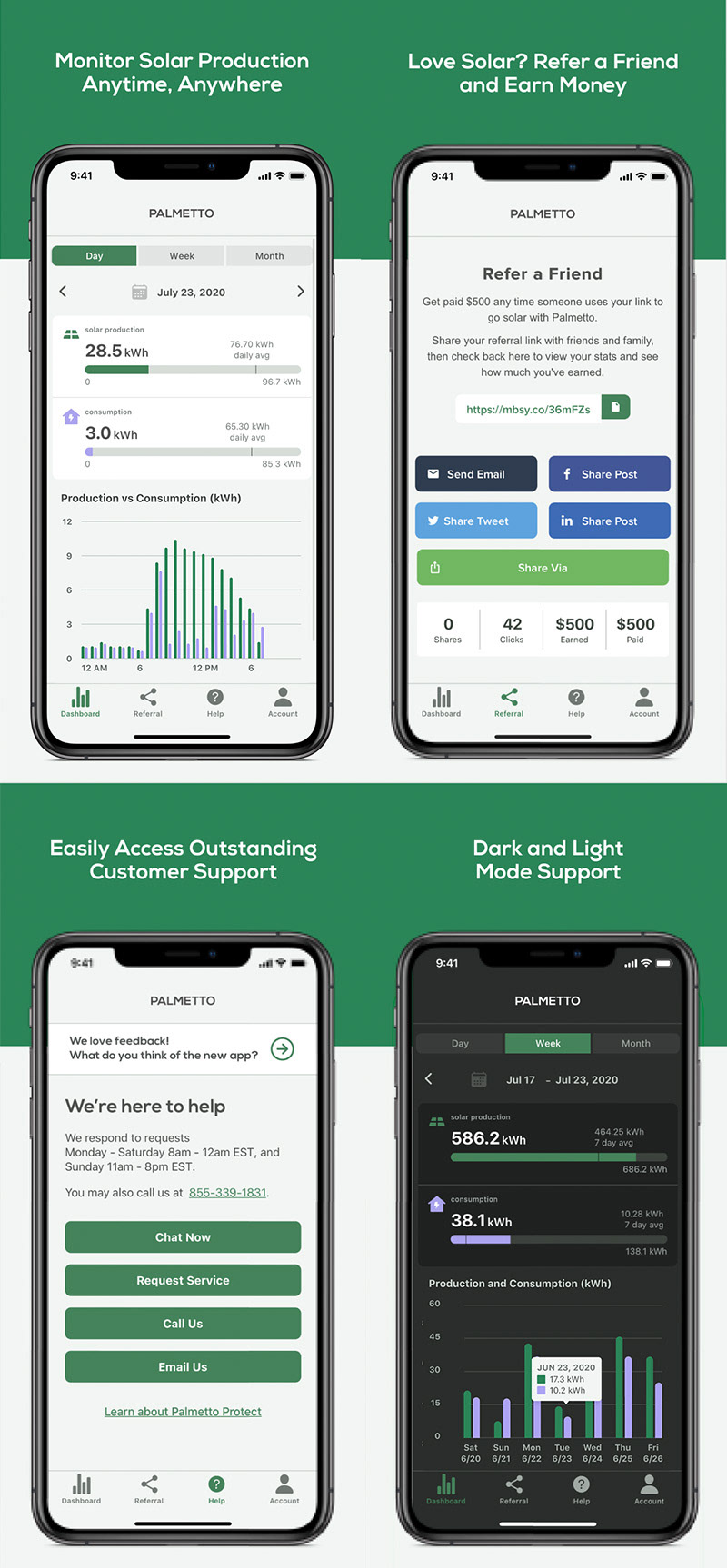
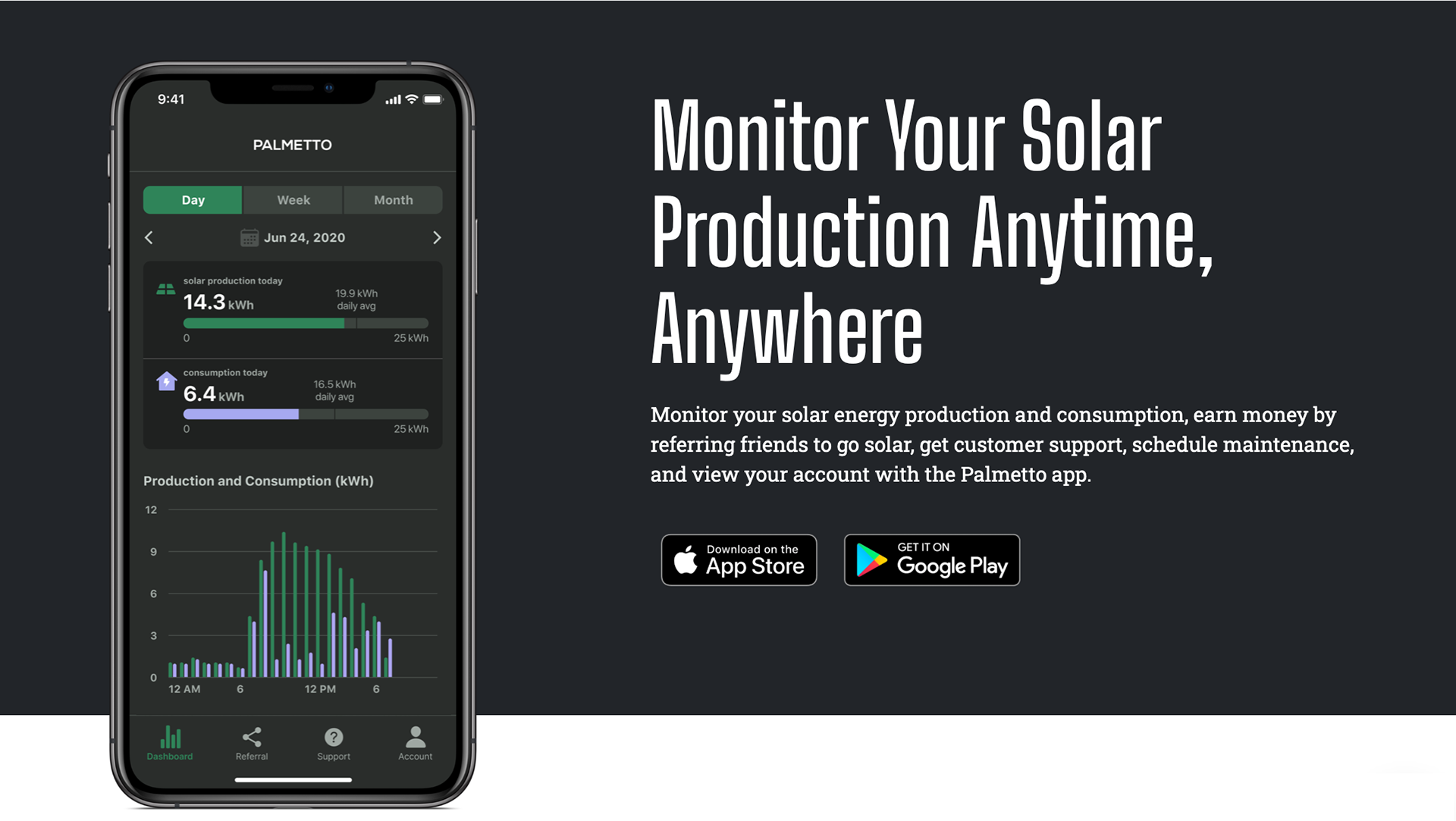
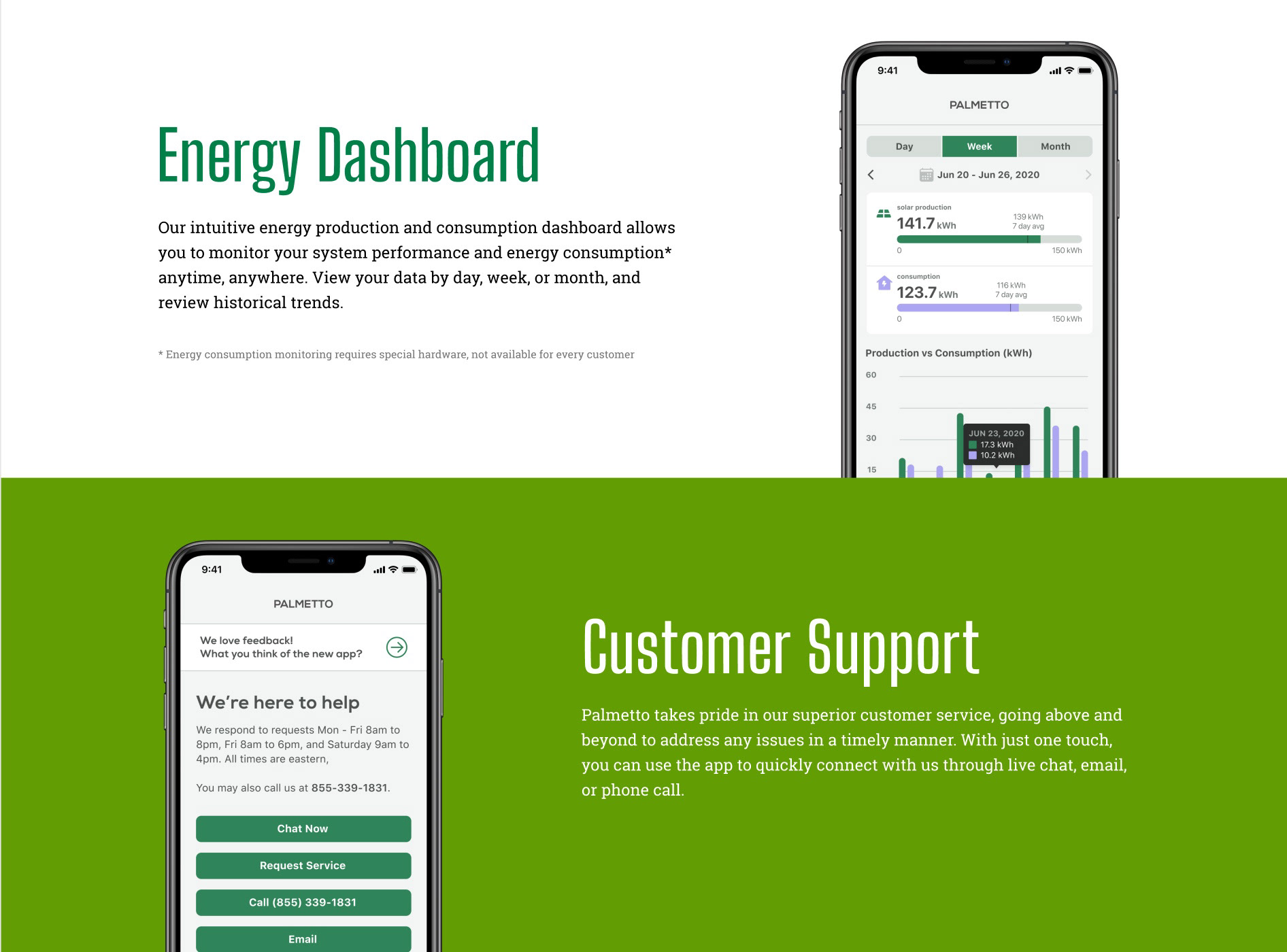
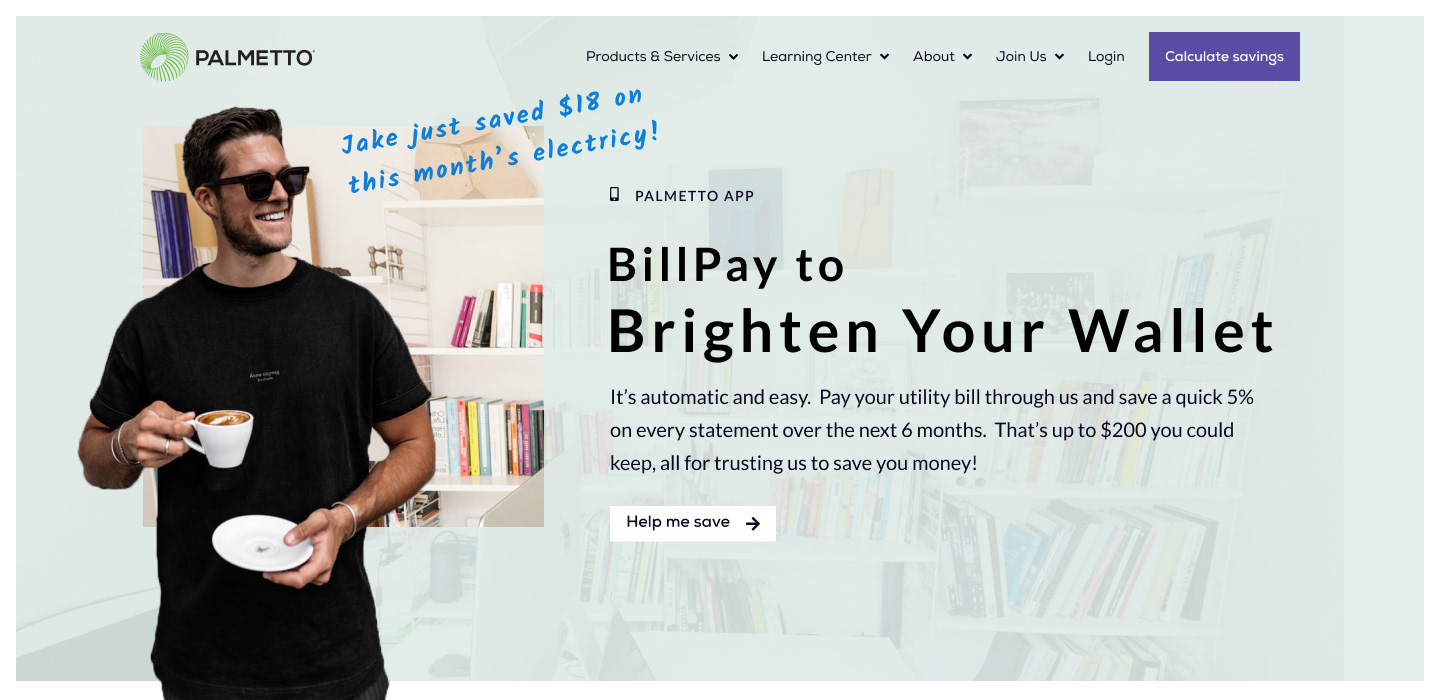
Marketing BillPay Hero Imagery
Crafted expressive hero visuals that turned BillPay's value proposition into an instantly digestible story. Real customers, real savings, real personality—paired with punchy copy like "Brighten Your Wallet" to humanize the product and drive enrollment from the first scroll.
Crafted expressive hero visuals that turned BillPay's value proposition into an instantly digestible story. Real customers, real savings, real personality—paired with punchy copy like "Brighten Your Wallet" to humanize the product and drive enrollment from the first scroll.
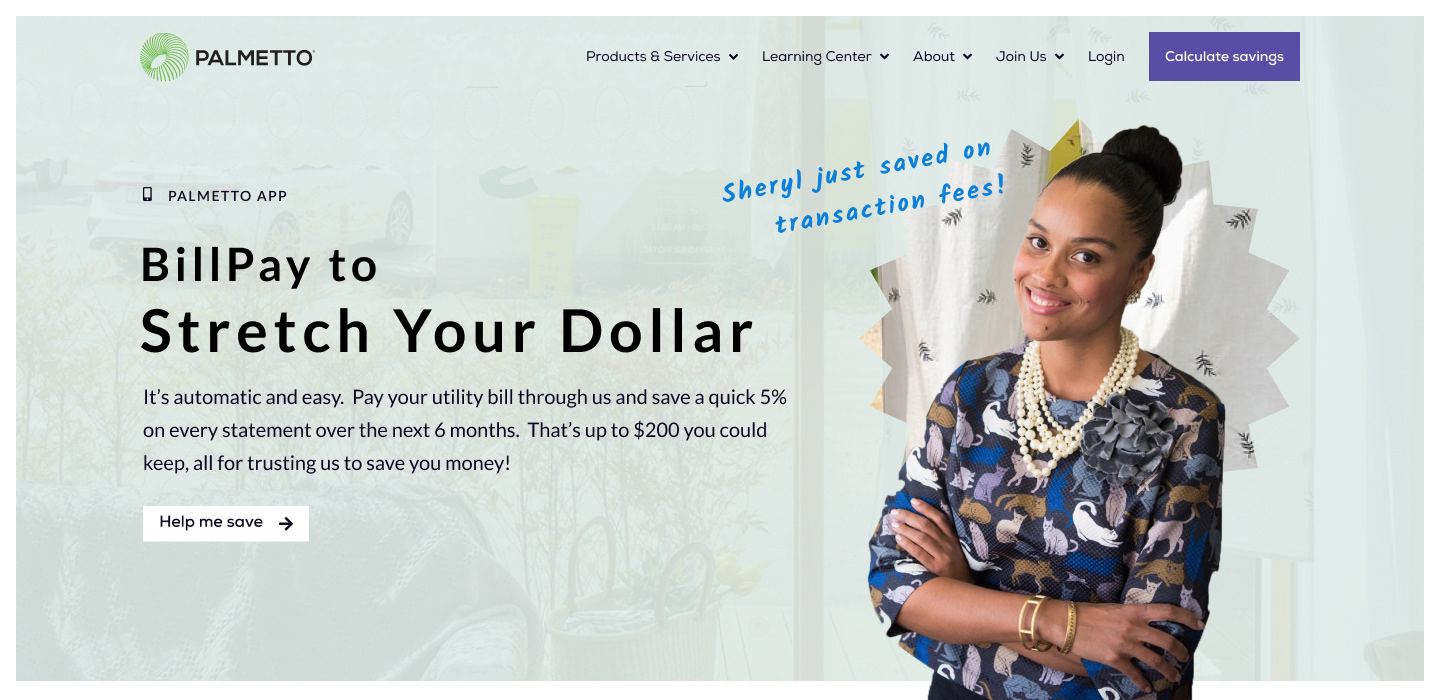
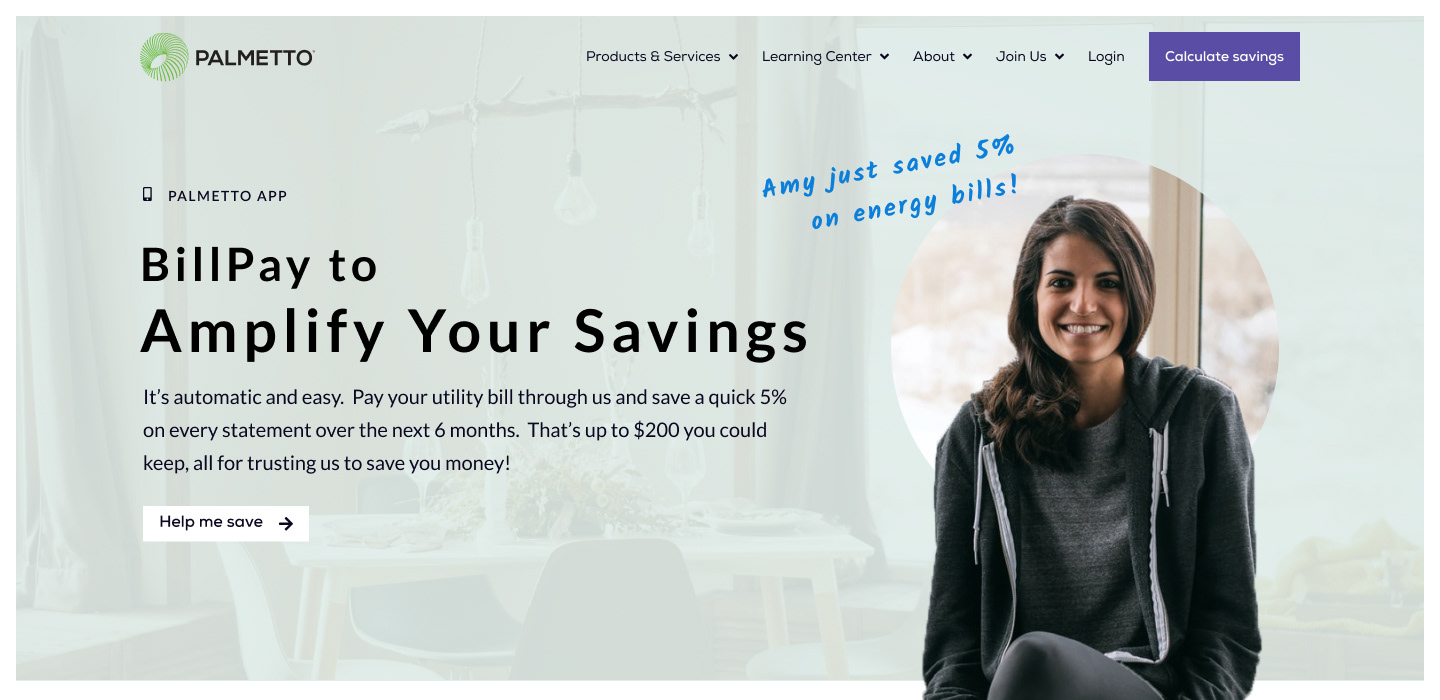
Art Direction for Palmetto.com
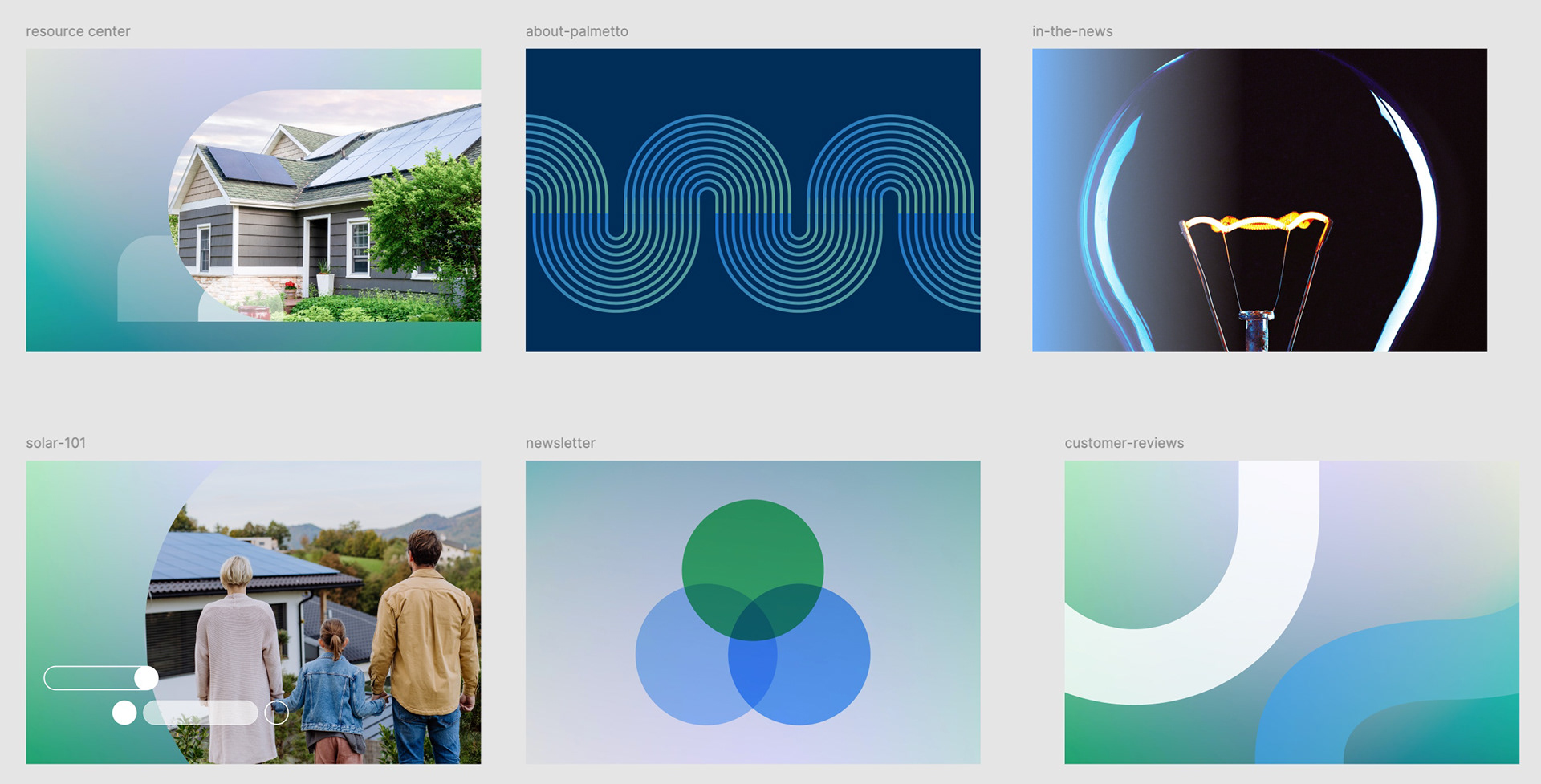
Stepped beyond product to art direct and design hero imagery for Palmetto.com—casting talent, framing shots, and partnering with marketing to make sure the homepage delivered the same polish and personality as the app. This extra lift unified the customer journey from first click to post-install, reinforcing Palmetto as a modern, trustworthy clean-energy brand worth choosing.
Stepped beyond product to art direct and design hero imagery for Palmetto.com—casting talent, framing shots, and partnering with marketing to make sure the homepage delivered the same polish and personality as the app. This extra lift unified the customer journey from first click to post-install, reinforcing Palmetto as a modern, trustworthy clean-energy brand worth choosing.
My Impact as Lead Product Designer
• Reframed the app from a failing feature into a core part of Palmetto’s service system and growth strategy.
• Created shared system maps and journeys that aligned product, engineering, operations, and marketing on a single customer experience.
• Left behind scalable design and interaction systems that continued to guide the product beyond my six‑month engagement.
• Defined product strategy and vision for the next 12–18 months of the Palmetto App.
• Reframed the app from a failing feature into a core part of Palmetto’s service system and growth strategy.
• Created shared system maps and journeys that aligned product, engineering, operations, and marketing on a single customer experience.
• Left behind scalable design and interaction systems that continued to guide the product beyond my six‑month engagement.
• Defined product strategy and vision for the next 12–18 months of the Palmetto App.
• Mapped systems across customer lifecycle, operations, and data flows (from solar production to billing, support, and marketing).
• Established Service design linking offline installation/support processes with digital touchpoints.
• Documented experience architecture across web and mobile surfaces, ensuring consistent journeys and shared design language.
• Created definition of a scalable design system and interaction patterns to support future feature teams.
• Established Service design linking offline installation/support processes with digital touchpoints.
• Documented experience architecture across web and mobile surfaces, ensuring consistent journeys and shared design language.
• Created definition of a scalable design system and interaction patterns to support future feature teams.
Measured Impact
• Engagement: 2–4x increase in monthly active users and session frequency.
• Support: 15–35% reduction in avoidable support contacts related to billing, basic system status, and “is my system working?” questions.
• Recommendation / satisfaction: +10 to +25 point NPS lift among app users over 12–18 months.
• Revenue: 5–15% uplift in LTV from lower churn plus incremental cross‑sell/upsell (storage, EV, efficiency programs) facilitated by the app.
• Engagement: 2–4x increase in monthly active users and session frequency.
• Support: 15–35% reduction in avoidable support contacts related to billing, basic system status, and “is my system working?” questions.
• Recommendation / satisfaction: +10 to +25 point NPS lift among app users over 12–18 months.
• Revenue: 5–15% uplift in LTV from lower churn plus incremental cross‑sell/upsell (storage, EV, efficiency programs) facilitated by the app.